Blitzscaling 17: Marissa Mayer on Scaling Google and Yahoo
TL;DR
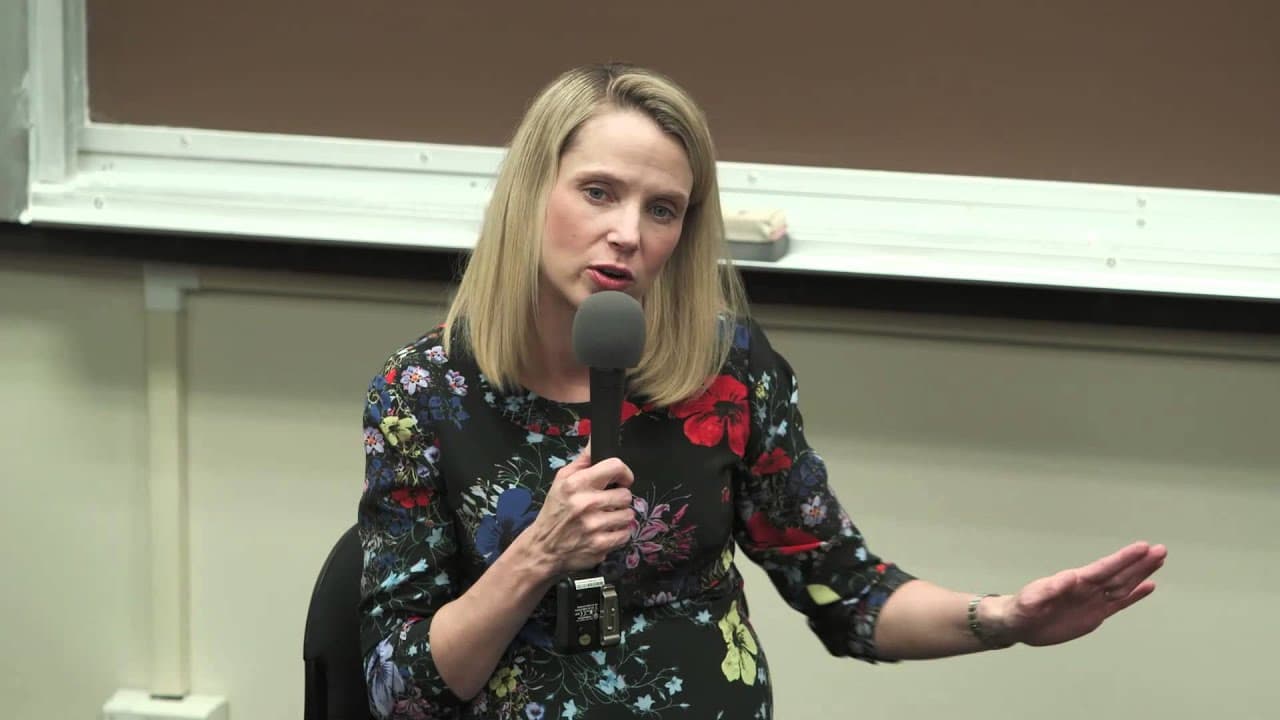
Marissa Mayer emphasizes that cultivating a strong company culture involves actively listening to employees and addressing their concerns. Implementing programs like PB&J encourages communication and transparency, allowing employees to voice issues that hinder productivity. By prioritizing collaboration and removing obstacles, organizations can significantly enhance workplace efficiency and morale.
Transcript
- So to begin with let's give a warm CS183C welcome to Yahoo CEO Marissa Mayer. (audience applauds) So one of the great things about being here at Stanford is that so many of the speakers we've had actually did their undergraduate work here and you, I believe, were class of 1997? - That's right. Yup. - And talk a little bit about your time at Stanf... Read More
Key Insights
- 💪 Building a stronger culture requires listening to employees and addressing their concerns.
- 🤩 Communication and transparency are key elements for success in any organization.
- ❓ Encouraging collaboration and removing roadblocks can significantly improve productivity and efficiency.
- 💄 Leveraging the existing culture and making improvements is often more effective than completely changing it.
- 🎙️ More videos with Marissa Mayer:
Install to Summarize YouTube Videos and Get Transcripts
Explore YouTube Video Summarizer or Get YouTube Transcript Extractor
Questions & Answers
Q: How did Marissa Mayer create a stronger culture at Yahoo?
Mayer implemented programs like PB&J, prioritized communication and transparency, and listened to employees to address concerns and improve productivity.
Q: What initiatives did Mayer implement to encourage collaboration and communication within the company?
Mayer held weekly staff meetings, deep dives, and all-hands meetings to ensure everyone was on the same page and encourage open communication and collaboration.
Q: How did Mayer address roadblocks that hindered productivity and efficiency at Yahoo?
Mayer implemented the PB&J program to address roadblocks raised by employees and ensure issues were resolved. She also focused on removing distractions and improving processes to streamline workflow.
Q: How did Mayer's approach to culture building differ from other companies?
Mayer focused on leveraging the existing culture at Yahoo and making improvements, rather than completely changing it. She prioritized communication, transparency, and efficiency to create a stronger and more productive work environment.
Summary
This video features Marissa Mayer, the CEO of Yahoo, discussing her time at Stanford and her experience working at Google. She talks about her undergraduate and graduate studies, her time as a section leader and lecturer, and her role in the hiring process at Google. She also discusses the APM program, a rotational program she launched at Google that has become a successful source of talent in Silicon Valley. Mayer shares insights she gained from her mentors at Google, including the importance of listening and removing obstacles for the team.
Questions & Answers
Q: Can you talk about how your time at Stanford and studying Symbolic Systems influenced your career path?
Mayer explains that she initially planned on becoming a doctor but switched to Symbolic Systems after realizing that she wanted a more unique experience at Stanford. She was drawn to the interdisciplinary nature of Symbolic Systems and its connection to neuroscience, which eventually led her to a career in tech.
Q: How did you get involved in teaching Symbolic Systems courses at Stanford?
Mayer started teaching Symbolic Systems courses as a section leader and later became a head TA and lecturer. She shares a humorous anecdote about her first class with a popular professor at Stanford and talks about the progression of her teaching roles.
Q: What other activities were you involved in during your time at Stanford?
Mayer mentions that she was involved in residential life, serving as an RCC and an RA. She also participated in the debate team and did some parli debate. She highlights her love for Stanford and the various activities she enjoyed during her undergraduate years.
Q: How did you end up working at Google after finishing your masters?
Mayer explains that after her masters, she worked on a summer research project in Switzerland. When she returned, she was hired by Google to teach a course and was introduced to Larry Page and Sergey Brin, who were in the process of starting Google. However, Mayer declined their invitation to meet and be involved with the startup at the time. She eventually joined Google after receiving an email from one of its first employees asking her to interview.
Q: Can you talk about the growth and scaling of Google during your time there?
Mayer discusses the challenges of scaling and growing a company rapidly. She mentions Eric Schmidt's influence in constantly reinventing processes and acknowledging that different stages of growth require the rethinking of systems and strategies. She shares an interesting approach taken by Schmidt to control hiring during a period of rapid growth.
Q: How did the APM program at Google come about and what made it successful?
Mayer explains that the APM program was developed as a way to hire and train new product managers who were technically excellent and had a deep understanding of how to apply technology. The program drew inspiration from rotational programs in other industries and aimed to provide broad exposure and hands-on experience for the associates.
Q: Why did you decide to introduce the APM program at Yahoo?
Mayer mentions that a few former Google APMs who had joined Yahoo felt the need for a similar program at Yahoo to enhance their product management discipline. The program was designed to grow talents internally and provide rotational opportunities within the company.
Q: Do you see the APM program being applicable to other companies outside of Silicon Valley?
Mayer says that the program is based on rotational programs found in other industries and could be applied to various companies. She mentions examples from companies like Viacom and McKinsey and how the principles of the APM program are relevant in broader business settings.
Q: What did you learn from Eric Schmidt and Larry Page at Google that you apply to your role as CEO of Yahoo?
Mayer learned from Eric Schmidt that top executives should focus on removing obstacles and getting things out of the team's way rather than trying to do everything themselves. She shares her approach of listening and learning from employees at Yahoo and how she prioritizes their needs and empowers them.
Q: How did you gather useful information and feedback from employees when you first joined Yahoo?
Mayer mentions that employees at Yahoo were eager to bring their perspectives and ideas to her attention. She encouraged open dialogue and created programs like PB&J (Process, Bureaucracy, and Jams) to address issues and prioritize improvements. She gave an example of how this program helped identify and resolve both small and big problems within the company.
Takeaways
Marissa Mayer's experience at Stanford, her time at Google, and her role as the CEO of Yahoo provide valuable insights for aspiring entrepreneurs and leaders. She emphasizes the importance of interdisciplinary learning, rotational programs, and continuous improvement. Mayer's approach of listening, removing obstacles, and empowering the team can lead to success in scaling and growing a company. The APM program is a valuable way to train and develop future leaders within a company. Overall, her experiences demonstrate the importance of adaptability, learning from mentors, and fostering a collaborative and innovative culture.
Summary & Key Takeaways
-
Marissa Mayer focused on strengthening the culture at Yahoo by implementing programs like PB&J, which allowed employees to raise concerns and suggest improvements.
-
She prioritized communication and transparency within the company by holding weekly staff meetings, deep dives, and all-hands meetings to ensure everyone was on the same page.
-
Mayer also emphasized the importance of listening to employees and removing any roadblocks that hindered productivity and efficiency.
Read in Other Languages (beta)
Share This Summary 📚
Summarize YouTube Videos and Get Video Transcripts with 1-Click
Try YouTube Summary with ChatGPT & Claude or YouTube Transcript Generator
Explore More Summaries from Greylock 📚
Summarize YouTube Videos and Get Video Transcripts with 1-Click
Try YouTube Summary with ChatGPT & Claude or YouTube Transcript Generator