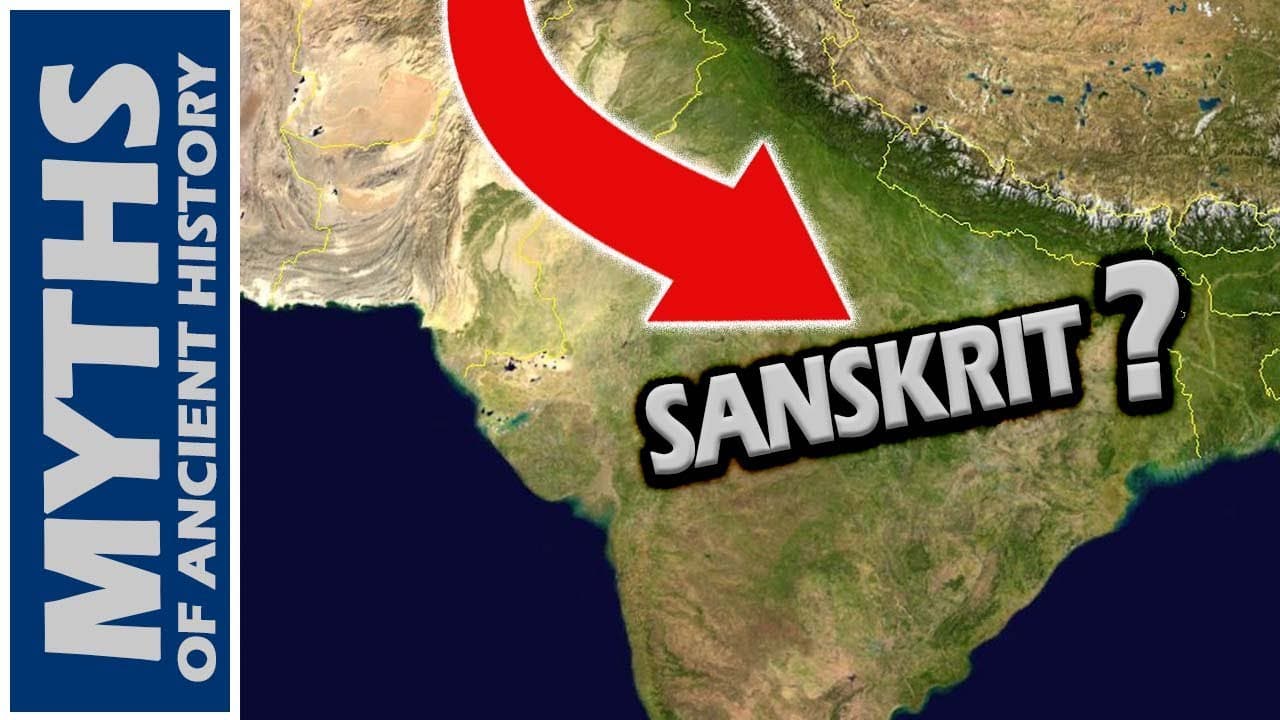
When did SANSKRIT appear in India? | The GENETIC Evidence
TL;DR
Genetic studies and archaeological evidence challenge the Aryan Invasion Theory, suggesting that Indo-Aryan migration into India is more consistent with historical facts.
Transcript
for regular videos on ancient cultures and forgotten civilizations please subscribe south asia is home to some of ancient history's greatest civilizations it was there that the indus valley civilization arose which had the earliest known standardized plumbing systems and earliest enclosed dockyards it was the first to use the lost wax casting techn... Read More
Key Insights
- 🌏 South Asia was home to advanced ancient civilizations, making significant contributions to various fields.
- ❓ The Aryan Invasion Theory has been widely debunked by genetic, archaeological, and historical evidence.
- 🌏 The Indo-Aryan Migration Theory is supported by genetic studies, which indicate significant gene flow between Central Asia and South Asia around 2000-1500 BCE.
- 🛄 The cultural continuity and absence of evidence for violent invasions in India contradict the claims of the Aryan Invasion Theory.
Install to Summarize YouTube Videos and Get Transcripts
Explore YouTube Video Summarizer or Get YouTube Transcript Extractor
Questions & Answers
Q: What is the Aryan Invasion Theory and why is it considered controversial?
The Aryan Invasion Theory proposes that Indo-Aryan people invaded and conquered the Indus Valley Civilization around 1500 BCE. Its controversial nature lies in the association of this theory with European colonialism and its impact on the origins of Hinduism.
Q: What is the Indo-Aryan Migration Theory?
The Indo-Aryan Migration Theory suggests that Indo-Aryan people migrated peacefully into northern India between 2000 and 1500 BCE, intermingling with the indigenous population and influencing the development of Hinduism.
Q: How does genetic evidence support the Indo-Aryan Migration Theory?
Genetic studies show that up to 30% of modern South Asian populations have ancestry from the Central Asian steppes, which corresponds to the timeline proposed by the Indo-Aryan Migration Theory. This gene flow occurred between 2000 and 1500 BCE.
Q: How does the genetic evidence contradict the Aryan Invasion Theory?
Genetic studies find no evidence of a significant migration or invasion into India within the past 10-15,000 years. The continuity of Indian genetic populations and cultural traits further challenges the idea of a violent invasion.
Key Insights:
- South Asia was home to advanced ancient civilizations, making significant contributions to various fields.
- The Aryan Invasion Theory has been widely debunked by genetic, archaeological, and historical evidence.
- The Indo-Aryan Migration Theory is supported by genetic studies, which indicate significant gene flow between Central Asia and South Asia around 2000-1500 BCE.
- The cultural continuity and absence of evidence for violent invasions in India contradict the claims of the Aryan Invasion Theory.
- Genetic studies provide valuable insights into the population history of ancient civilizations, challenging existing narratives.
Summary & Key Takeaways
-
South Asia is home to ancient civilizations, including the Indus Valley Civilization, which had advanced plumbing systems, dockyards, and the first use of the lost wax casting technique.
-
Ancient India pioneered sugar refinement, ink, glass blowing, and diamond cutting, and made significant contributions to mathematics, medicine, and astronomy.
-
The Aryan Invasion Theory suggests that Indo-Aryan people migrated into northern India between 2000 and 1500 BCE, but scientific evidence, including genetics, challenges this theory.
Read in Other Languages (beta)
Share This Summary 📚
Summarize YouTube Videos and Get Video Transcripts with 1-Click
Try YouTube Summary with ChatGPT & Claude or YouTube Transcript Generator
Explore More Summaries from World of Antiquity 📚


Summarize YouTube Videos and Get Video Transcripts with 1-Click
Try YouTube Summary with ChatGPT & Claude or YouTube Transcript Generator