How Can Plants Support Astronauts on Space Missions?
TL;DR
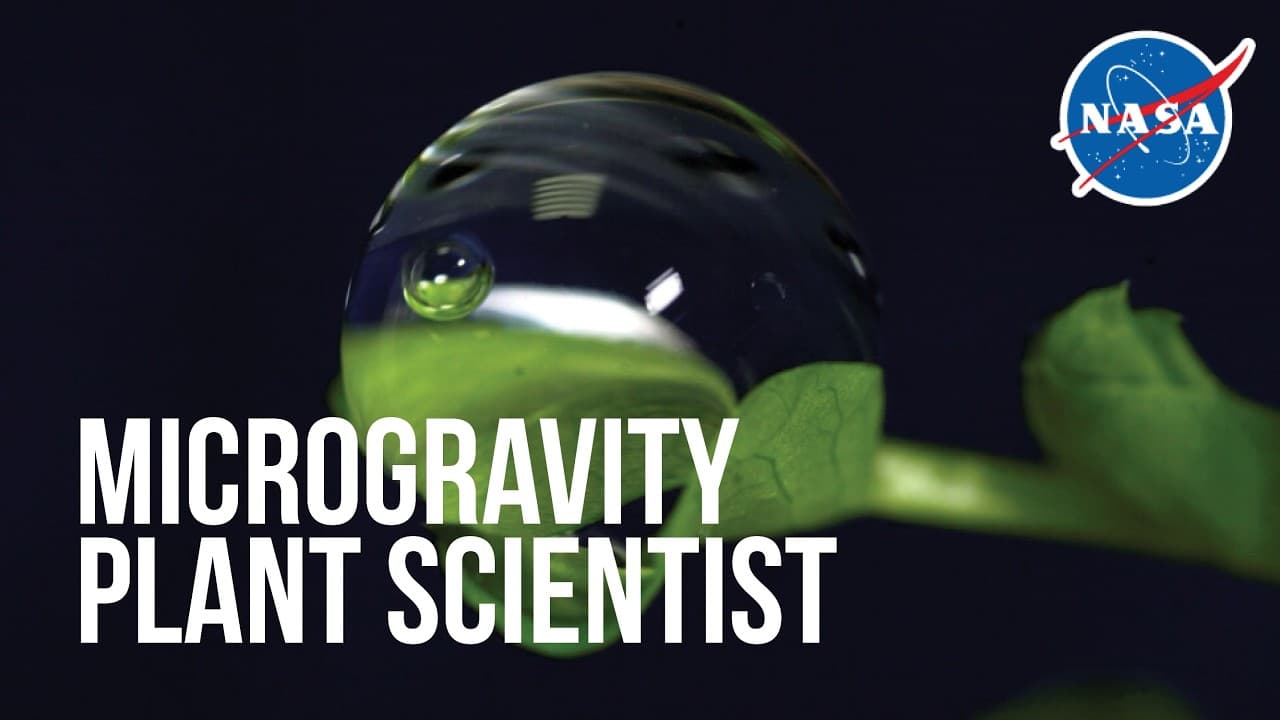
Plants, especially microgreens, are vital for astronauts as they provide fresh food, enhance psychological well-being, and contribute to life support systems by producing oxygen and reclaiming water. Utilizing advanced technologies like LED light recipes and dissolvable seed films, researchers aim to grow nutrient-rich crops in space, ensuring sustainability during long missions.
Transcript
I'm a plant scientist at NASA, and I look at plants all the time. I look at them everywhere I go because it's ingrained in me to do so. But it's-it's a lot of fun, you know, especially when I can fully understand what it is I'm eating. My name is Dr. Matthew A. Mickens. My title is Space Crop Production Project Scientist. I support the science r... Read More
Key Insights
- 👨🚀 Fresh food is crucial for astronauts' health and well-being during space missions, even when it is not readily available.
- 😋 Microgreens offer a potential solution to provide fresh, nutrient-rich food in space due to their quick growth and high nutrient content.
- 👾 Plants in space can provide life support by producing water vapor for reclamation and oxygen for the atmosphere.
- 👨🚀 Having plants in space environments contributes to astronauts' psychological well-being.
- 🌱 Advanced technologies like light recipes using LEDs and dissolvable seed film technology are being developed to enhance plant growth and ease seed handling in space.
Install to Summarize YouTube Videos and Get Transcripts
Explore YouTube Video Summarizer or Get YouTube Transcript Extractor
Questions & Answers
Q: Why is it necessary to ensure astronauts have fresh food during space exploration?
Fresh food is essential for astronauts' well-being and overall health during long-duration space missions. It provides important nutrients that can degrade over time in packaged diets.
Q: How can microgreens be a valuable crop for space exploration?
Microgreens offer a variety of options and are rich in nutrients. They can be harvested sooner, making them an ideal supplement to the packaged diet for astronauts. Their quick growth also makes them suitable for space conditions.
Q: What other benefits do plants provide in space besides food?
Plants transpire water vapor, which can be reclaimed for water supply. Additionally, they produce oxygen, making them useful for regenerating the atmosphere in both space transit vehicles and surface habitats.
Q: How does light influence plant growth and flavor in space agriculture?
Dr. Mickens specializes in light recipes using LEDs, where the color of light can impact plant growth, shape, speed, and even flavor. By adjusting the ratios of light colors, scientists can optimize plant growth in space environments.
Summary & Key Takeaways
-
Dr. Matthew A. Mickens, a plant scientist at NASA, focuses on ensuring astronauts have fresh food during space missions, particularly in environments where fresh food is not available.
-
Microgreens, such as garnet giant mustard microgreens, are being considered as a potential crop for space due to their quick growth and high nutrient content.
-
Plants in space can serve as a source of life support by producing water vapor for reclamation and oxygen for atmospheric regeneration.
Read in Other Languages (beta)
Share This Summary 📚
Summarize YouTube Videos and Get Video Transcripts with 1-Click
Try YouTube Summary with ChatGPT & Claude or YouTube Transcript Generator
Explore More Summaries from NASA STEM 📚


Summarize YouTube Videos and Get Video Transcripts with 1-Click
Try YouTube Summary with ChatGPT & Claude or YouTube Transcript Generator