What Happens When Ammonia Dissolves in Water?
TL;DR
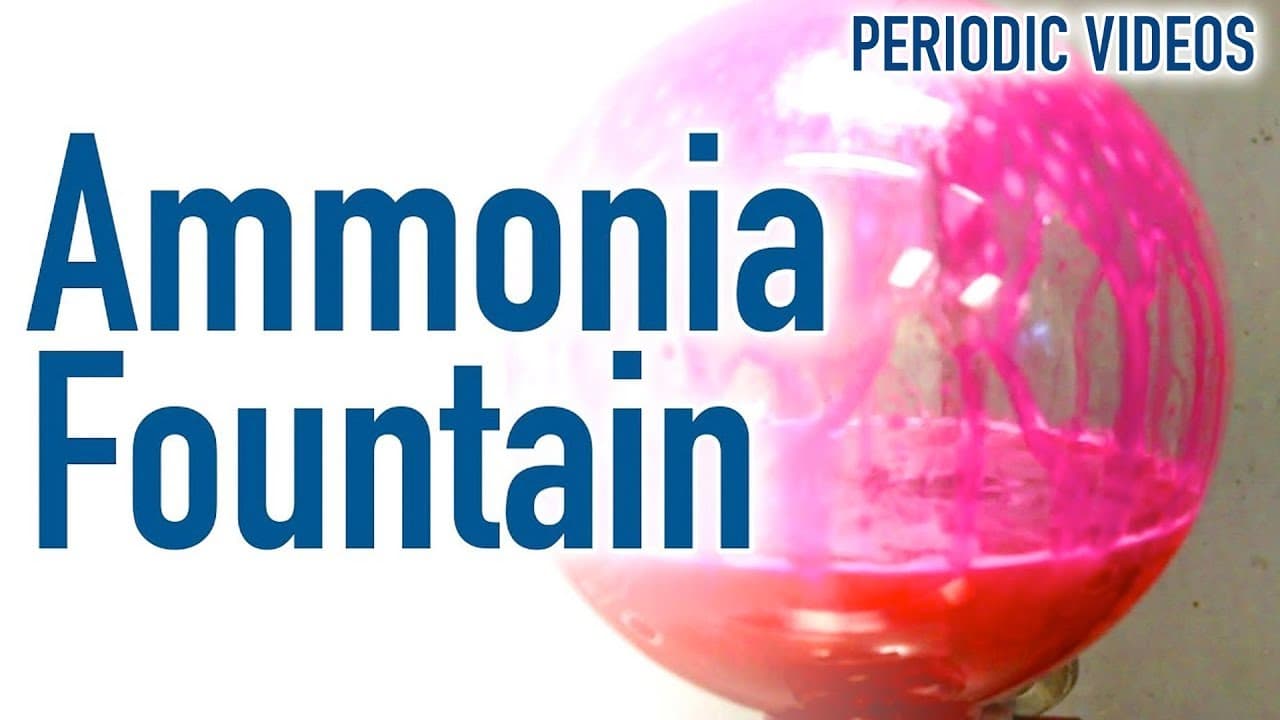
When ammonia gas dissolves in water, it creates an alkaline solution that turns red with Phenolphthalein, an indicator. The ammonia fountain illustrates gas absorption and vacuum creation, while the balloon demonstration shows how ammonia's dissolution releases heat and causes the balloon to shrink, emphasizing ammonia's lighter-than-air property.
Transcript
I'm really excited. We've got two beautiful demonstrations to show you One's a real classic - the ammonia fountain. The other one is a completely new one we've invented ourselves called Neil's balloon They're both based on the fact that ammonia gas is very soluble in water and when it dissolves in water the water goes alkaline. So if you put in an ... Read More
Key Insights
- 🫢 Ammonia gas dissolves in water to create an alkaline solution.
- 💱 Phenolphthalein is used as an indicator for alkalinity changes in the solution.
- 🫢 The ammonia fountain demonstrates gas absorption and vacuum creation.
- ✈️ Balloon experiments with ammonia showcase its lighter-than-air property.
- 🥵 Heat is released when ammonia dissolves in water, causing temperature changes.
- 💦 Safety measures are critical when working with ammonia due to its smell.
- 🪜 Changing patterns and colors in the experiments add to their aesthetic appeal.
Install to Summarize YouTube Videos and Get Transcripts
Explore YouTube Video Summarizer or Get YouTube Transcript Extractor
Questions & Answers
Q: What is the purpose of using Phenolphthalein in these experiments?
Phenolphthalein is used as an indicator to visually show the water turning red when the ammonia dissolves, indicating the alkalinity of the solution.
Q: How does the ammonia fountain experiment create a partial vacuum?
The absorption of ammonia gas by water in the fountain flask creates a partial vacuum, where atmospheric pressure forces more water into the flask, continuing the process.
Q: Why did the balloon experiment with ammonia shrink and then expand?
The balloon originally shrank as water absorbed the ammonia, but heat released from the dissolution caused the balloon to expand, showcasing the heat of reaction.
Q: What safety precautions were taken during these experiments with ammonia?
Safety precautions included using well-ventilated areas due to the ammonia smell, using cello tape for balloon experimentation, and avoiding bursting balloons for safety.
Summary & Key Takeaways
-
Ammonia gas dissolves in water, creating an alkaline solution that turns red with an indicator like Phenolphthalein.
-
The classic ammonia fountain experiment demonstrates gas absorption creating a vacuum, while the balloon demonstration shows ammonia's lighter-than-air property and heat release when dissolved.
Read in Other Languages (beta)
Share This Summary 📚
Summarize YouTube Videos and Get Video Transcripts with 1-Click
Try YouTube Summary with ChatGPT & Claude or YouTube Transcript Generator
Explore More Summaries from Periodic Videos 📚
Summarize YouTube Videos and Get Video Transcripts with 1-Click
Try YouTube Summary with ChatGPT & Claude or YouTube Transcript Generator