What Are Number Walls and How Do They Work?
TL;DR
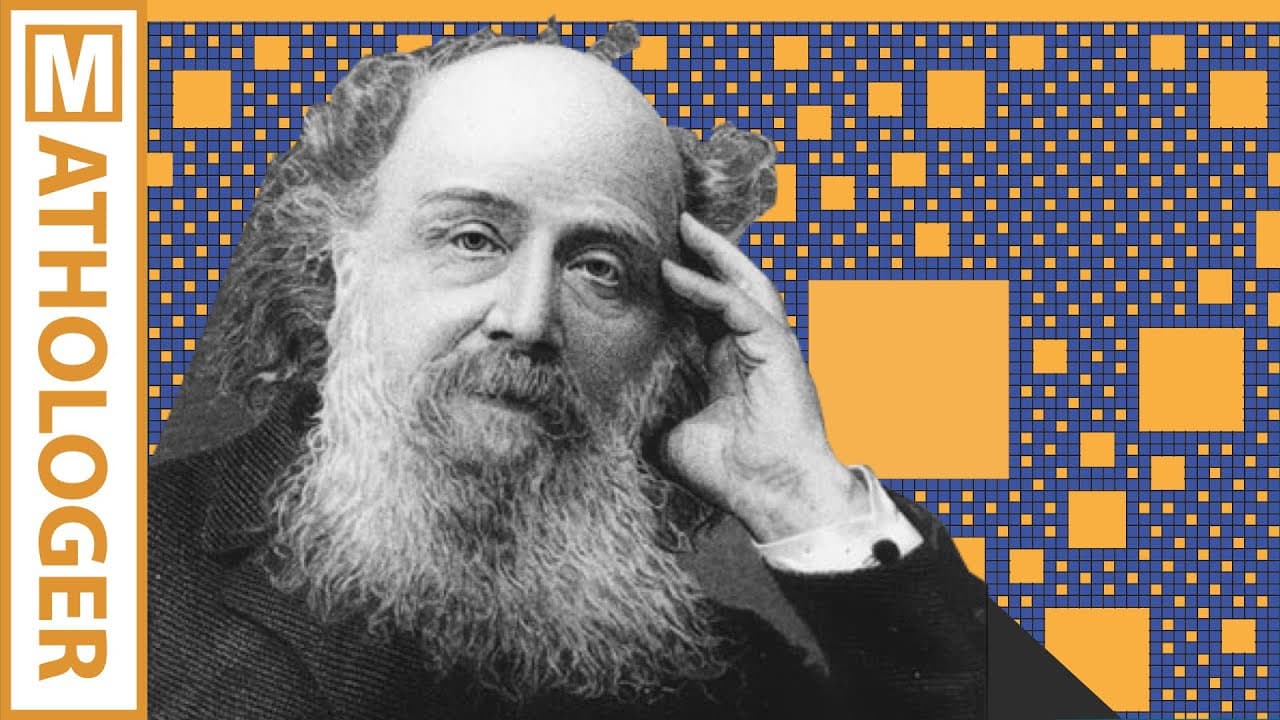
Number walls are visual tools for analyzing sequences, constructed using a cross rule where neighboring numbers interact through multiplication and addition. They serve as oracles to predict the next numbers in a sequence, especially for those defined by Fibonacci-like recurrence relations, where all rows eventually become zero. The patterns observed in number walls also reveal unique properties related to prime numbers and can be efficiently generated using specific mathematical rules.
Transcript
Welcome to another Mathologer video. So you’ve never heard of number walls? You’re definitely not alone. I’d say 99.99% of professional mathematicians will not be able to tell you what a number wall is. And this is really, really amazing considering how powerful, visually appealing and accessible number walls are. So, today’s mission is t... Read More
Key Insights
- #️⃣ Number walls are visually appealing structures that are built based on the cross rule, where neighboring numbers are connected using multiplication and addition.
- ☄️ Number walls can be used as oracles to predict what comes next in a sequence, finding the simplest possible formula for extending the sequence indefinitely.
- 👻 Sequences with a Fibonacci-like recurrence formula often result in number walls with all zeroes, allowing for the extraction of both recurrence and function formulas.
- #️⃣ Square windows in number walls can exhibit patterns based on the divisibility of numbers, such as sequences with prime numbers.
- 😵 The generation of number walls can be explained using determinants, but the cross and horseshoe rules are more computationally efficient for practical calculations.
Install to Summarize YouTube Videos and Get Transcripts
Explore YouTube Video Summarizer or Get YouTube Transcript Extractor
Questions & Answers
Q: What is a number wall?
A number wall is a structure that consists of rows of numbers connected based on the cross rule, where neighboring numbers follow a specific multiplication and addition pattern.
Q: How can number walls be used as oracles?
Number walls can be used to analyze partial sequences and find the simplest formula for extending the sequence indefinitely. This allows for predicting what comes next in the sequence with a high level of accuracy.
Q: What types of sequences can number walls analyze?
Number walls can be used to analyze polynomial sequences, exponential functions, and sequences with a Fibonacci-like recurrence formula. These sequences often result in number walls with all zeroes.
Q: How are number walls different from difference tables?
Number walls are more powerful than difference tables when it comes to predicting what comes next in a sequence. Number walls can provide simpler formulas for extending a sequence, while difference tables may produce complex formulas.
Summary & Key Takeaways
-
Number walls are visually appealing structures that consist of rows of numbers connected in a peculiar way.
-
Neighboring numbers in number walls follow a cross rule, where the red number times the red number plus the green number times the green number equals the blue number squared.
-
Number walls are useful for analyzing sequences and finding the simplest possible formula for extending a partial sequence, making them powerful tools for predicting what comes next.
Read in Other Languages (beta)
Share This Summary 📚
Summarize YouTube Videos and Get Video Transcripts with 1-Click
Try YouTube Summary with ChatGPT & Claude or YouTube Transcript Generator
Explore More Summaries from Mathologer 📚





Summarize YouTube Videos and Get Video Transcripts with 1-Click
Try YouTube Summary with ChatGPT & Claude or YouTube Transcript Generator