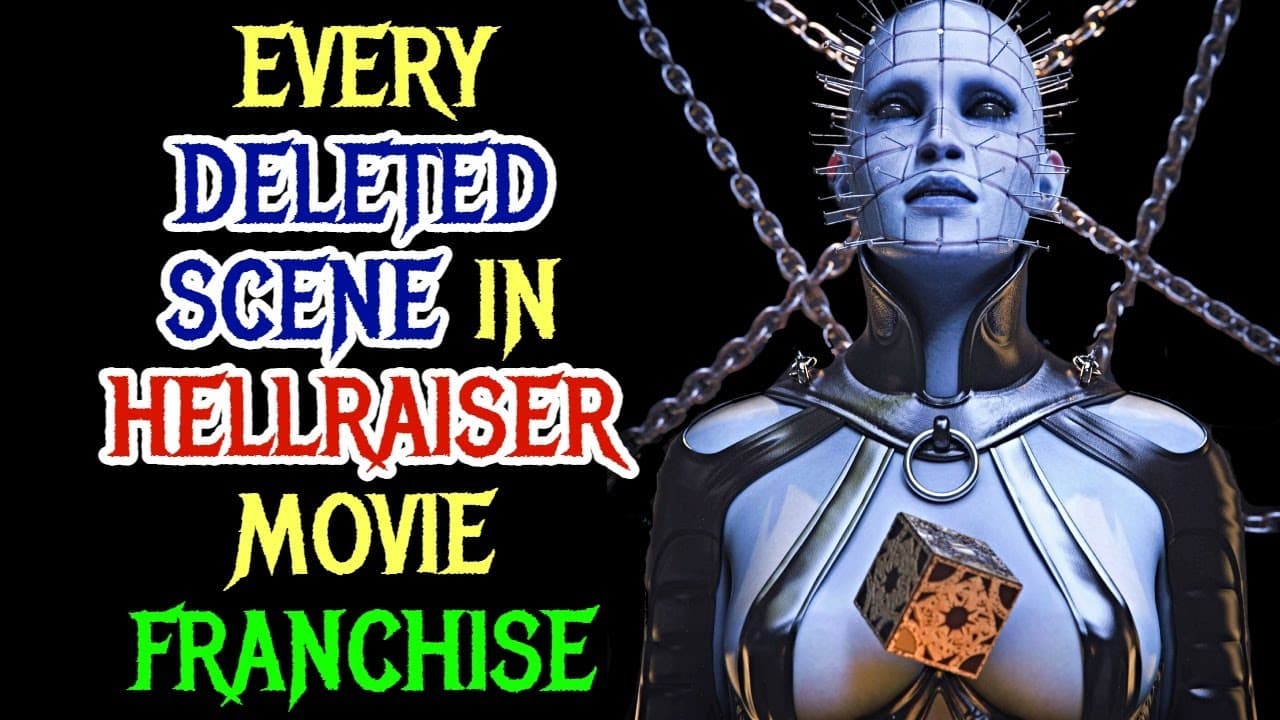
40 (Every) Deleted Scene From Hellraiser Movie Franchise - Explored
TL;DR
An exploration of deleted scenes from the Hellraiser films reveals deeper character insights and heightened horror elements.
Transcript
foreign fans of the Hellraiser movie franchise we've all experienced that Pang of curiosity about the scenes that never made it to the final cut those elusive moments that were left on The Cutting Room floor tantalizingly teasing us with what could have been well fellow cinephiles it's time to dig deep into the dark depths of pinhead's domain and e... Read More
Key Insights
- 😱 Cut scenes from the original Hellraiser films often delve into graphic violence that heightens the emotional intensity and horror of pivotal moments.
- 〽️ Censorship issues greatly influenced the portrayal of erotic themes between characters, altering their dynamics within the narrative.
- 🎑 Deleted scenes offer insights into character backgrounds and motivations that were crucial to enhancing the overall storyline.
- 😱 The exploration of horror extends beyond physical torment to psychological depth, emphasizing the consequences of characters' obsessions and choices.
- 🥺 Many deleted scenes reveal the filmmakers’ original creative vision, which was often compromised by studio decisions leading to a diluted horror experience.
- 😈 Certain scenes provide an important reflection on the overarching narrative of good versus evil and the consequences of indulgence in desires.
- 🤑 The existence of uncut versions of the films offers a richer experience for fans, aligning closely with the creators' intended messages and themes.
Install to Summarize YouTube Videos and Get Transcripts
Explore YouTube Video Summarizer or Get YouTube Transcript Extractor
Questions & Answers
Q: What was the significance of the hammer scenes cut from Hellraiser 1987?
The hammer scenes provided crucial context to Julia's character and her brutal actions. By including a close-up of the hammer lodged in the victim's head, the film would have delivered a stronger emotional impact and underscored the brutality of the murder, amplifying the horror that surrounds Julia's character.
Q: How did censorship affect the portrayal of Frank and Julia's relationship in Hellraiser?
The Motion Picture Association of America imposed restrictions on the erotic content, forcing Clive Barker to tone down a flashback sequence initially meant to highlight Frank and Julia's sexual relationship. The original film had more explicit elements, including buttock thrusts. These changes altered the intensity of their dynamic and the mood of the film.
Q: Can you explain the "cenobite surgeons" scene cut from Hellraiser 2?
The cenobite surgeons scene adds tension by featuring Kirsty and Tiffany escaping from disguised surgeons who transform into cenobites. This highlights the horror elements of the hospital setting and gives a glimpse into the cenobites' terrifying nature, amplifying the sense of danger for the characters.
Q: What happened with Hellraiser Bloodline's original plot?
The original vision of Hellraiser Bloodline was to be an anthology with three interwoven stories set across different time periods. However, after studio interference, it evolved into a “Hellraiser in space” concept, losing the unique narrative developed by director Kevin Yeager, which diluted the overall horror experience.
Q: How do deleted scenes in Hellraiser Hellseeker contribute to character development?
Deleted scenes in Hellraiser Hellseeker, such as the extended dialogue about Kirsty's father Larry, provide additional emotional depth. They reveal his fate in hell, which would have created a stronger motivation for Kirsty throughout the film and added layers to her character’s emotional struggle.
Q: What was the intended role of the character Spike in Hellraiser films?
Spike was conceived as a complex cenobite with a dark backstory, having committed heinous acts before being transformed by Pinhead. His intended inclusion would have explored deeper themes of justice and punishment within the cenobite mythos, enhancing the chilling nature of the franchise.
Q: How did the DVD releases of the Hellraiser films differ from theatrical cuts?
Various DVD and LaserDisc releases contained alternate versions of the Hellraiser films, including uncut scenes of graphic violence and sexuality absent in the theatrical cuts. These versions provided deeper narrative threads and amplified the horror, offering fans a more authentic experience of the original vision for the films.
Q: What themes do the deleted scenes explore that were left out of the final cuts?
The deleted scenes from the Hellraiser franchise explore themes of violence, despair, and the psychological complexity of characters. They reveal the nuances of manipulation and obsession, especially in the relationships between Frank, Julia, and Kirsty, showcasing the multifaceted nature of the horror genre.
Summary & Key Takeaways
-
The analysis dives deep into deleted scenes from the Hellraiser franchise, highlighting brutal moments that enhance the stories, featuring characters like Frank, Julia, and Kirsty.
-
Key scenes that were cut due to graphic content reveal the struggles filmmakers faced with censorship, showcasing unsettling themes of violence, eroticism, and psychological horror.
-
The content emphasizes how these deleted scenes provide fans a broader understanding of character motivations and the overall dark narrative woven throughout the Hellraiser series.
Read in Other Languages (beta)
Share This Summary 📚
Summarize YouTube Videos and Get Video Transcripts with 1-Click
Try YouTube Summary with ChatGPT & Claude or YouTube Transcript Generator
Explore More Summaries from Marvelous Videos 📚





Summarize YouTube Videos and Get Video Transcripts with 1-Click
Try YouTube Summary with ChatGPT & Claude or YouTube Transcript Generator