How Plant Grafting Actually Works and Why It's So Cool
TL;DR
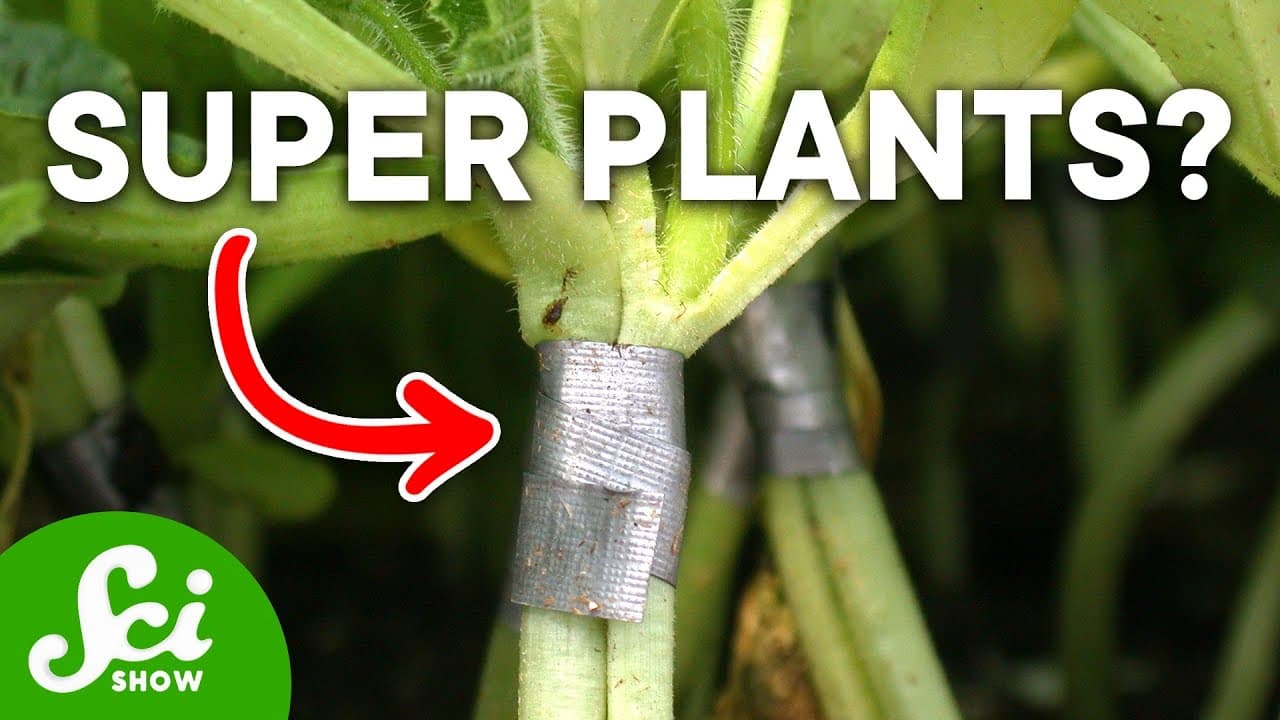
Grafting is a technique that allows plant growers to combine different parts of plants to create a super-plant, resulting in earlier fruit production, disease resistance, and the ability to clone desirable fruit varieties.
Transcript
[♪ INTRO] If you take a seed from your orange and plant it in the ground, it’ll grow into a tree. But, to get fruit, you might have to wait as long as 15 years. Which is kind of a bummer for the impatient types among us. You can’t blame the plant, since it has to grow up and go through the plant version of puberty before it can start making flowers... Read More
Key Insights
- 🌱 Grafting is an ancient technique that has been used for at least 2,500 years to manipulate plants and create desired traits.
- 👻 Grafting can be used to shorten the time it takes for a plant to produce fruit, allowing for earlier harvests.
- 🌱 Grafting is not limited to plants of the same species and can sometimes be successful between different species and genuses.
- 🍌 In addition to fruit production, grafting has been used to manipulate a tree's size, fruit characteristics, and resistance to pests and diseases.
- 🍇 Grafting played a crucial role in saving the wine industry by combining European grape shoots with American grape roots to create resistant plants.
- 👻 A major application of grafting is asexual propagation, which allows for the cloning of fruit trees with desirable traits.
- 💗 Different rootstocks can be used to control a tree's size and adapt it to different growing conditions.
Install to Summarize YouTube Videos and Get Transcripts
Explore YouTube Video Summarizer or Get YouTube Transcript Extractor
Questions & Answers
Q: How does grafting work?
Grafting involves fusing the root of one plant with the shoot of another. The two parts are pressed together and with enough moisture and pressure, they fuse into one plant.
Q: Can grafting work between different species of plants?
Yes, grafting can sometimes work between different species, although it is more common to graft plants of the same species. In some cases, grafting can even work between plants of different genuses.
Q: What are the advantages of grafting?
Grafting allows for earlier fruit production, disease resistance, and the ability to clone desirable fruit varieties. It also enables growers to manipulate a tree's size and fruit characteristics.
Q: How has grafting helped in the wine industry?
Grafting saved the wine industry in the late 1800s when a pest from the Americas threatened European grapevines. By grafting shoots from European grapes onto American grape roots, growers created resistant plants and saved the industry.
Summary & Key Takeaways
-
Grafting involves combining the root of one plant with the shoot of another, resulting in a fused plant that combines the desired traits of both plants.
-
Grafting can be used to shorten the time it takes for a plant to produce fruit, as well as to eliminate viruses and other pathogens.
-
Grafting has been used for thousands of years to manipulate plants and create desired traits, such as resistance to pests and diseases.
Read in Other Languages (beta)
Share This Summary 📚
Summarize YouTube Videos and Get Video Transcripts with 1-Click
Try YouTube Summary with ChatGPT & Claude or YouTube Transcript Generator
Explore More Summaries from SciShow 📚


Summarize YouTube Videos and Get Video Transcripts with 1-Click
Try YouTube Summary with ChatGPT & Claude or YouTube Transcript Generator