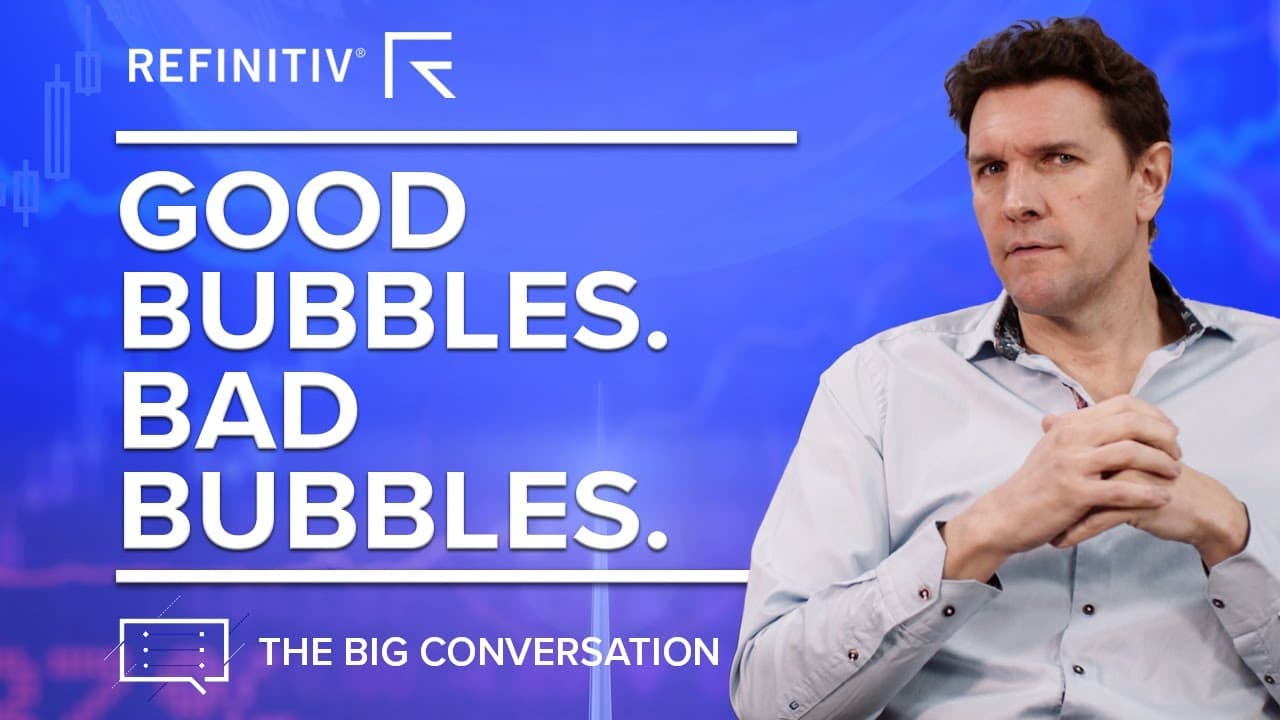
Good Bubbles Bad Bubbles | The Big Conversation | Refinitiv
TL;DR
The analysis explores the history of financial bubbles and the different dimensions that distinguish them, raising questions about the current market and the role of central banks in preventing meltdowns.
Transcript
Word searches for the phrase ‘equity bubble’ have soared in recent weeks during the retail rush into names such as Gamestop and AMC. The fear of a bubble has stalked the US equity market ever since the performance of the S&P disconnected from corporate earnings in 2015, since when the market has shrugged off a couple of 20% drawdowns to make a seri... Read More
Key Insights
- 👁️🗨️ Financial bubbles can be categorized based on the object of speculation and whether they impact only capital markets or the entire credit system.
- 🪛 Bubbles driven by fundamental changes in technology have often had positive long-term effects, while those driven purely by price expectation tend to have catastrophic consequences.
- 😣 The impact of bubbles can vary widely, from mild economic recessions to severe financial crises.
- 😘 The actions of central banks, such as QE and low rates, have supported the equity market and stabilized the bond market, but the long-term effects on the economy are uncertain.
- ❤️🩹 The US yield curve is showing contrasting outlooks on growth, with the front end reflecting skepticism and the long end pricing for inflation.
- 🥺 The reflation narrative is often mixed up with the inflation narrative, leading to confusion about the outlook for the US economy.
Install to Summarize YouTube Videos and Get Transcripts
Explore YouTube Video Summarizer or Get YouTube Transcript Extractor
Questions & Answers
Q: Do all bubbles have the same impact on the economy?
No, the impact of bubbles can vary. While some bubbles have limited economic consequences, others, like the credit bubble of 2008, lead to severe economic crises. The distinction lies in whether the bubble affects only the capital markets or the broader credit system.
Q: How does the current market environment compare to previous bubbles?
The current market environment shows instances of exuberance, such as the Gamestop frenzy. However, the actions of central banks, through measures like QE and low rates, have prevented a 2008-style meltdown. The focus should be on the actions of central banks rather than just the equity market.
Q: What distinguishes bubbles driven by price expectation from other bubbles?
Bubbles driven purely by price expectation are rare, and their subsequent price decline tends to be catastrophic. Bubbles are a result of human psychology, but the impacts and consequences can vary greatly.
Q: What role do central banks play in bubbles?
Central banks have become agents of speculation by continuously backstopping the credit system through QE and low rates. While they have been successful in preventing a major collapse so far, their actions may create future issues and risks for the economy.
Summary & Key Takeaways
-
The fear of a bubble in the US equity market has grown with the recent retail rush into stocks like Gamestop and AMC. The focus on short-term risks may overshadow long-term trends represented by bubbles.
-
Bubbles have occurred throughout history, often driven by speculation on assets or fundamental changes in technology. While some bubbles had little economic impact, others led to major financial calamities.
-
The distinction between bubbles confined to capital markets and those that impact the entire credit system is crucial. Bubbles that affect the credit system, like the 2008 credit bubble, have far-reaching economic consequences.
Read in Other Languages (beta)
Share This Summary 📚
Summarize YouTube Videos and Get Video Transcripts with 1-Click
Try YouTube Summary with ChatGPT & Claude or YouTube Transcript Generator
Explore More Summaries from Real Vision 📚


Summarize YouTube Videos and Get Video Transcripts with 1-Click
Try YouTube Summary with ChatGPT & Claude or YouTube Transcript Generator