"Pakistan Will Break Up Into Parts" - Abhijit Chavda Explains
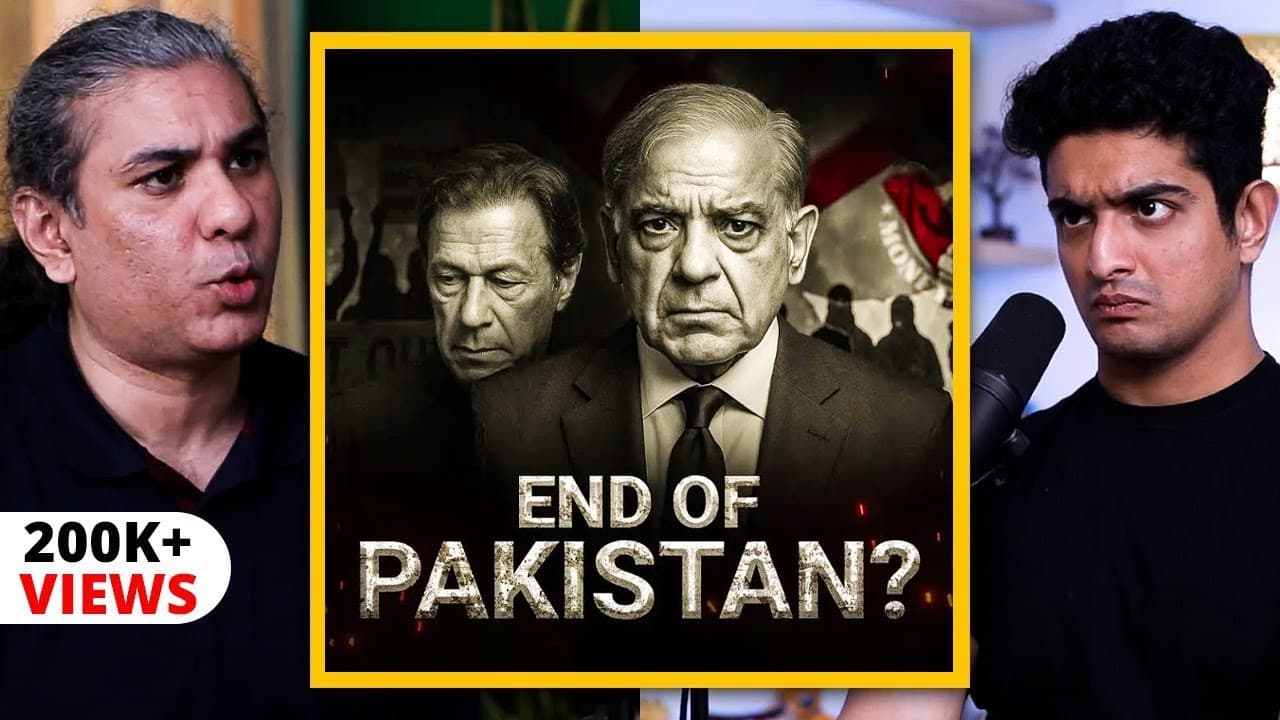
TL;DR
Pakistan faces severe economic challenges and geopolitical issues exacerbated by external influences.
Transcript
they say podcasts are going to replace books I don't know about that but I do think TRS Clips will assist your learning process we have to talk a little bit about Pakistan we have a lot of Pakistani listeners um it's such a complex topic um what's happening in that country especially with the Taliban taking over Afghanistan uh I believe this econom... Read More
Key Insights
- 🇵🇰 Pakistan's economy teeters on the verge of collapse due to overwhelming external debt, with little exporting capacity.
- 🌍 The Pakistan Army operates as a dominant political force, prioritizing its financial interests over national welfare.
- 🤙 Major societal divides exist in Pakistan, fueled by historical grievances and calls for independence from marginalized regions.
- 🪜 Natural disasters add another layer to Pakistan's challenges, causing extensive humanitarian crises and infrastructural damages.
- 🤨 China's economic involvement raises questions about sovereignty and the potential for Pakistan's involuntary dependence.
- ✊ Historical interventions by foreign powers have significantly influenced the development of terrorism and economic instability in the region.
- ✌️ The nuclear capacity of Pakistan complicates regional dynamics, requiring careful handling and international scrutiny to ensure peace.
Install to Summarize YouTube Videos and Get Transcripts
Explore YouTube Video Summarizer or Get YouTube Transcript Extractor
Questions & Answers
Q: Why is Pakistan's economy described as being on the edge of collapse?
The analysis indicates that Pakistan's economy is in a fragile state due to high debt levels and minimal exports. The country consistently relies on bailouts from the IMF, China, or the US to avoid crisis, highlighting a lack of sustainable economic growth.
Q: What role does the Pakistan Army play in the nation's operations?
The Pakistan Army wields considerable influence in governing the nation, functioning almost as the ruling entity. Its interests align more with military enrichment rather than public welfare, controlling businesses and resources but failing to uplift the broader population economically.
Q: How do regional issues within Pakistan contribute to its struggles?
Pakistan is home to various ethnic and regional tensions, such as those in Balochistan and Sindh, where movements for independence highlight the discontent within its borders. The lack of investment in resource-rich regions exacerbates the struggles of these communities.
Q: What external influences are affecting Pakistan, particularly concerning China?
China's growing economic presence in Pakistan, particularly through infrastructure projects and investments, has sparked discussions of "economic colonization." The strategic partnership poses a threat, as regions like Balochistan become focal points for Chinese geopolitical ambitions.
Q: What impact did recent natural disasters have on Pakistan?
Catastrophic floods devastated parts of Pakistan, leading to significant loss of lives, homes, and infrastructure. This recent tragedy adds to the existing challenges, complicating recovery efforts and highlighting the nation's susceptibility to climate impacts due to inadequate infrastructure.
Q: How has the historical context shaped Pakistan's modern issues?
The creation of Pakistan emerged from British geopolitical interests, designed to counterbalance India. Over time, the U.S. and later China have influenced its trajectory, funding Pakistan for strategic purposes, which has entrenched cycles of violence and economic dependency.
Q: What are the implications of nuclear capabilities in Pakistan?
The presence of nuclear weapons in Pakistan raises concerns about regional stability and security, especially given the country's current turmoil. Addressing these nuclear capabilities is essential for any long-term sustainable solution regarding the nation's geopolitical challenges.
Q: What is the perspective on the future of Pakistan presented in the analysis?
The analysis suggests that Pakistan is an artificially created nation facing potential restructuring. It advocates for autonomy or independence for various regions, indicating a perceived need for major political reevaluation to create a peaceful and prosperous future for its people.
Summary & Key Takeaways
-
Pakistan's economy is on the brink of collapse, heavily reliant on bailouts from entities like the IMF and China, leading to a cycle of debt without significant exports.
-
The Pakistan Army exerts control over the nation, with wealth generation benefiting military leaders rather than the general populace, leaving many citizens in poverty and oppression.
-
Regional disparities and socio-political tensions, compounded by natural disasters and foreign investments, contribute to Pakistan's precarious situation, with calls for re-evaluation of its territorial integrity.
Read in Other Languages (beta)
Share This Summary 📚
Summarize YouTube Videos and Get Video Transcripts with 1-Click
Try YouTube Summary with ChatGPT & Claude or YouTube Transcript Generator
Explore More Summaries from TRS Clips 📚





Summarize YouTube Videos and Get Video Transcripts with 1-Click
Try YouTube Summary with ChatGPT & Claude or YouTube Transcript Generator