The Second-Ever Case of Full HIV Remission | SciShow News
TL;DR
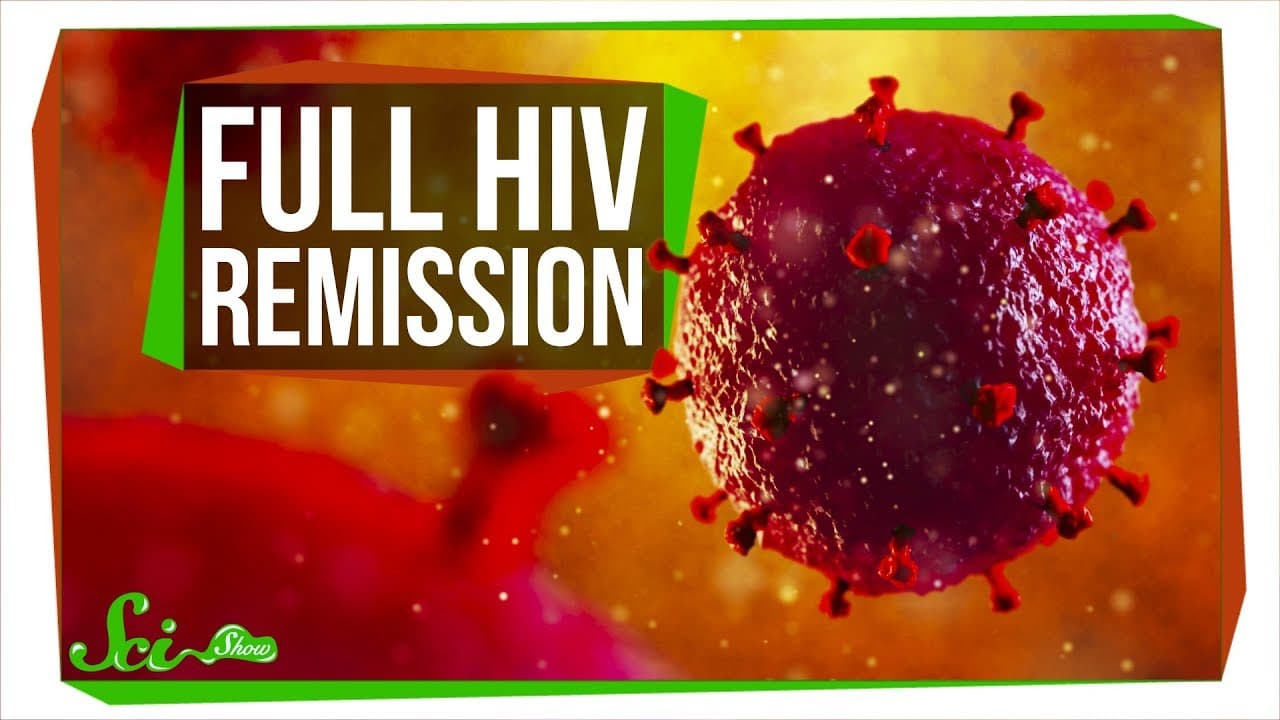
Researchers report a second case of full HIV remission through a bone marrow transplant, offering hope for future HIV treatment or a potential cure.
Transcript
[INTRO ♪] A little over a decade ago, doctors did something remarkable: they cured someone of HIV. Ever since that person—known as the Berlin patient—received a set of bone marrow transplants in 2007 and 2008, his HIV hasn’t come back. Now, a new group of researchers seem to have done it again. In a study published this week in the journal Nature, ... Read More
Key Insights
- 💨 HIV is currently treatable with antiretroviral therapy, but finding a way to achieve permanent remission or a cure is a high priority.
- ☠️ Bone marrow transplants have shown promising results in achieving HIV remission by introducing HIV-resistant blood cells.
- 🤞 The "London patient" case offers hope for developing better strategies for HIV treatment or a potential cure.
- 💅 The procedure, however, is not a definite cure for everyone and has risks and limitations.
- 👮 Understanding the trade-offs and side effects of treatments that impair or eliminate co-receptors is crucial.
- 🥶 Identifying alternative methods to target co-receptors could lead to more accessible and safer treatments.
- ❓ Availability of compatible donors with the necessary mutations is a challenge.
Install to Summarize YouTube Videos and Get Transcripts
Explore YouTube Video Summarizer or Get YouTube Transcript Extractor
Questions & Answers
Q: What is the significance of the "London patient" case in HIV research?
The "London patient" case provides further evidence that bone marrow transplants can lead to HIV remission, offering hope for potential HIV treatment or a cure.
Q: How does the bone marrow transplant work to achieve HIV remission?
The bone marrow transplant involves replacing the patient's bone marrow with that of a donor who has a mutation that makes them resistant to HIV. This leads to the production of HIV-resistant blood cells.
Q: What are the risks and limitations of bone marrow transplants for HIV treatment?
Bone marrow transplants are major procedures with serious risks, including life-threatening complications and rejection of the transplanted marrow. Additionally, finding compatible donors with the necessary mutations is a challenge.
Q: What are the implications of this research for future HIV treatment or a potential cure?
The success of the "London patient" case gives researchers renewed hope and suggests that targeted therapies focusing on co-receptors like CCR5 could lead to affordable and safer treatments or a potential cure for HIV.
Summary & Key Takeaways
-
European researchers report on the second-ever case of full HIV remission, known as the "London patient," through a bone marrow transplant.
-
The patient received a transplant from a donor who is resistant to HIV, resulting in the production of HIV-resistant blood cells.
-
While the procedure is not a definite cure for everyone, it offers hope for developing better strategies for HIV treatment.
Read in Other Languages (beta)
Share This Summary 📚
Summarize YouTube Videos and Get Video Transcripts with 1-Click
Try YouTube Summary with ChatGPT & Claude or YouTube Transcript Generator
Explore More Summaries from SciShow 📚


Summarize YouTube Videos and Get Video Transcripts with 1-Click
Try YouTube Summary with ChatGPT & Claude or YouTube Transcript Generator