How Are Ballpoint Pens Manufactured?
TL;DR
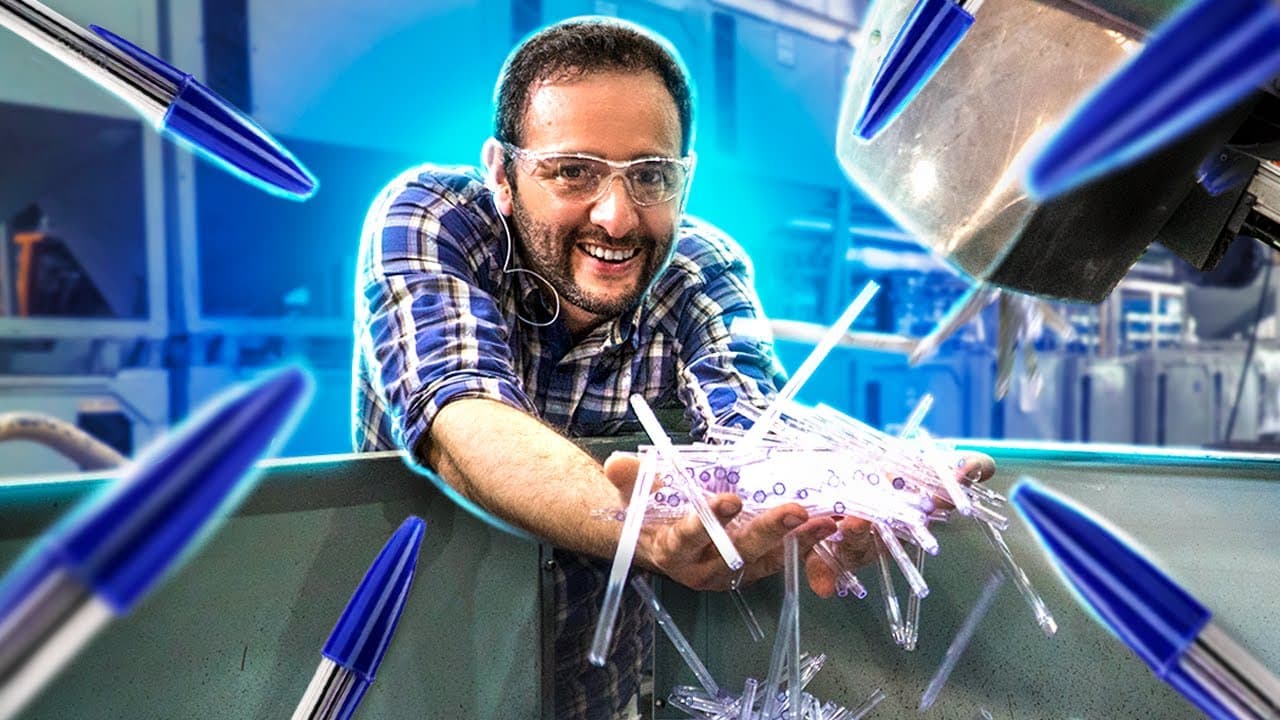
Ballpoint pens are created through a detailed manufacturing process involving plastic injection molding and ink filling. The pen body is made from polystyrene, while the cap uses polypropylene. The ink, stored under pressure to avoid air bubbles, is injected into the pen's tube, ensuring smooth writing. The pen tip features a tungsten carbide ball that facilitates ink flow onto paper.
Transcript
Today we came to Manaus to show you how the ballpoint pen is made. Let's go! Let's start with the pen body. It is made from a plastic called polystyrene. In most pens, it will be transparent, so looking like this it looks like glass and this stuff comes in pellets. It's a format that looks like dog food, it's produced right here in Manaus. The pell... Read More
Key Insights
- Ballpoint pens are primarily made from polystyrene, a type of plastic that is heated and molded into shape.
- The pen body is designed with a small hole to prevent a vacuum, allowing ink to flow smoothly.
- Pen caps are made from polypropylene, which is flexible and opaque, ensuring a snug fit on the pen.
- The ink used in ballpoint pens is formulated to be both liquid and quick-drying, preventing smudging.
- A tungsten carbide ball in the pen tip allows for smooth ink transfer onto paper.
- Static energy generated during the manufacturing process can cause lightweight pieces to move unexpectedly.
- Ink tubes are centrifuged to remove air bubbles, ensuring consistent ink flow and preventing leaks.
- Each component of the pen is meticulously checked for defects to maintain quality and functionality.
Install to Summarize YouTube Videos and Get Transcripts
Explore YouTube Video Summarizer or Get YouTube Transcript Extractor
Questions & Answers
Q: How is the body of a ballpoint pen made?
The body of a ballpoint pen is made from polystyrene plastic, which is heated to 210 degrees Celsius and injected into a mold. This process, lasting only 12 seconds, shapes the plastic into the pen body. The mold is crucial for precision and includes a small hole to prevent vacuum formation, allowing ink to flow smoothly.
Q: What materials are used in ballpoint pen manufacturing?
Ballpoint pens are primarily made from polystyrene for the body and polypropylene for the cap. The nib holder may use a bronze color material. The ink used is a secret formula, imported and designed to be sticky and quick-drying. Tungsten carbide is used for the ball in the pen tip, ensuring durability and smooth writing.
Q: Why does the pen cap have a hole?
The pen cap has a hole to prevent asphyxiation if swallowed by a child, allowing air to pass through. This hole does not impact the ink's longevity, as the ink is formulated to withstand air exposure without drying out. This design ensures both safety and functionality in everyday use.
Q: How is the ink in ballpoint pens formulated?
The ink in ballpoint pens is formulated to be sticky and quick-drying, ensuring it adheres well to paper and prevents smudging. The ink has a golden color in large quantities and is stored under pressure to avoid air bubbles. This formulation ensures consistent flow and prevents the ink from disappearing over time.
Q: What role does the tungsten carbide ball play in a pen?
The tungsten carbide ball in a ballpoint pen tip is crucial for transferring ink onto paper. It is extremely hard and durable, allowing it to rotate smoothly as the pen moves. This rotation picks up ink from the reservoir and deposits it on the paper, facilitating a consistent and smooth writing experience.
Q: How are air bubbles removed from the ink in ballpoint pens?
Air bubbles are removed from the ink by placing the filled ink tubes in a centrifuge. The centrifuge spins, forcing the ink towards the tip and expelling any air bubbles. This process ensures that the ink remains compact and prevents the pen from stopping prematurely or leaking during use.
Q: What is the significance of the mold in pen manufacturing?
The mold in pen manufacturing is vital for shaping the plastic into the precise form of the pen body and cap. It ensures that each pen is uniform and meets quality standards. The mold's precision prevents defects and ensures that features like the pen's smooth surface and functional design are consistently achieved.
Q: How does the manufacturing process ensure pen quality?
The manufacturing process ensures pen quality through meticulous checks at each stage. Components are tested for defects, such as burrs or misalignments, which could affect functionality. The ink is centrifuged to remove air bubbles, and the pen tip is scanned to ensure all parts are present. These steps guarantee a reliable final product.
Summary & Key Takeaways
-
Ballpoint pens are made using polystyrene for the body and polypropylene for the cap. The manufacturing process involves heating and molding plastic, injecting ink, and assembling components. The pen's design includes features like a small hole to prevent vacuum formation, ensuring smooth ink flow.
-
The pen tip contains a tungsten carbide ball that facilitates the transfer of ink onto paper. The ink is specially formulated to be both liquid and quick-drying, preventing smudging and ensuring longevity. Quality checks are conducted at each stage to maintain the pen’s functionality.
-
Ink tubes are centrifuged to remove air bubbles, which helps maintain consistent ink flow and prevents leaks. The manufacturing process is efficient, with each component being tested for defects. This ensures that the final product is reliable and capable of writing over a mile.
Read in Other Languages (beta)
Share This Summary 📚
Summarize YouTube Videos and Get Video Transcripts with 1-Click
Try YouTube Summary with ChatGPT & Claude or YouTube Transcript Generator
Explore More Summaries from Manual do Mundo 📚


Summarize YouTube Videos and Get Video Transcripts with 1-Click
Try YouTube Summary with ChatGPT & Claude or YouTube Transcript Generator