Why Humanity Turns to War
TL;DR
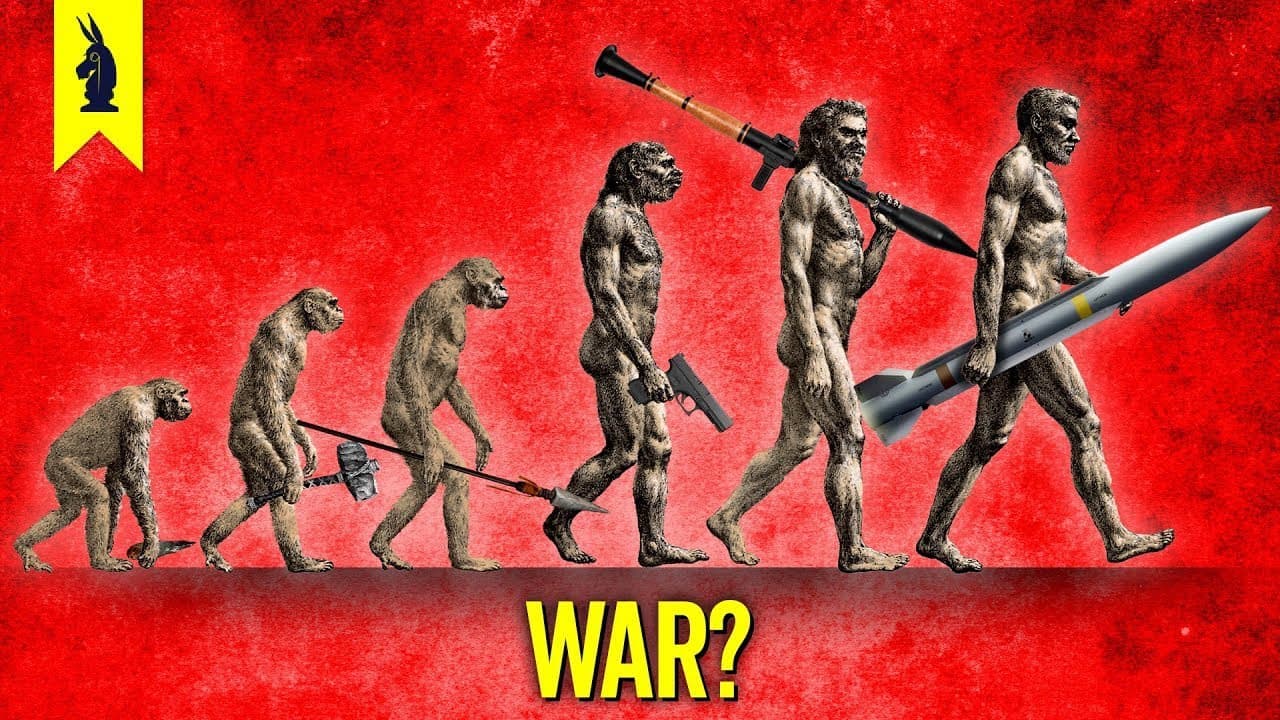
The discussion questions whether war is an inevitable part of human existence or a construct of complex societies.
Transcript
(smooth music) - What's up guys? Michael here to talk about "South Park", wait what was that? Sure. Sorry, we're actually talking about war. The past few weeks, the media's been saturated with the latest upsetting updates about Russia's attack on Ukraine. And because we have beating hearts, the whole situation has had us pretty disturbed. It's not ... Read More
Key Insights
- 🏆 War has been a consistently recorded feature of human history, but the assumption of its inevitability is contested.
- 🌥️ Historical evidence reveals that many societies have successfully avoided large-scale conflicts for significant periods.
- ❓ The emergence of hierarchical structures and complex social systems correlates with increased likelihood of warfare.
- 🖐️ National identity, formed relatively recently in human history, plays a crucial role in mobilizing populations toward conflict.
- ❓ Theories suggest that the narrative of humanity's natural violence may overshadow the reality of our capacity for peaceful coexistence.
- ✋ Modern warfare typically results in high civilian casualties, raising ethical concerns about contemporary conflict.
- 🫱 Scholars advocate for a reevaluation of our understanding of war, suggesting that peace is a viable and preferable future.
Install to Summarize YouTube Videos and Get Transcripts
Explore YouTube Video Summarizer or Get YouTube Transcript Extractor
Questions & Answers
Q: What philosophical viewpoints are discussed regarding the nature of war?
The content highlights perspectives from philosophers such as Thomas Hobbes, who believed life is inherently violent, and contrasts this with anthropologists like Douglas Fry, who argue that modern assumptions about violence in humans are flawed and that many societies historically resolved conflicts without war.
Q: How has nationalism influenced warfare according to the discussion?
The concept of nationalism creates strong group identities that can lead people to engage in warfare more readily. As societies evolved from loosely defined communities to nation-states, there was a corresponding rise in conflict driven by these constructed identities, as illustrated by scholars like Benedict Anderson and John Hutchinson.
Q: What role does imagination play in the context of war?
Imagination is presented as a driving force behind warfare. It's often the way we perceive and conceptualize our "enemies" that fuels conflict, rather than a tangible need for direct enmity. This mindset, more than reality-based triggers, contributes significantly to the onset of wars.
Q: How does anthropological research challenge the notion that humans are naturally violent?
Anthropological studies, particularly those investigating early human societies, suggest that evidence of violence may often be misinterpreted. For instance, signs of conflict on ancient skeletons have been reassessed to indicate other causes, emphasizing a historical pattern of resolution through non-violent means rather than widespread warfare.
Q: Can war be prevented, and what factors might influence this?
The narrative suggests that with the right political will and innovations, societies could potentially build frameworks to prevent war. Given humanity's adaptive nature, it raises the idea that we can learn from our history of conflict and embrace more peaceful conflict resolution methods.
Q: What are the implications of viewing war as a natural state of humanity?
If war is accepted as a natural aspect of human existence, it can hinder efforts to create lasting peace. This fatalistic view may prevent meaningful attempts to resolve conflicts or challenge the structures that lead to war, perpetuating a cycle of violence.
Summary & Key Takeaways
-
The content examines war's prevalence in human history, questioning its perceived inevitability and examining philosophical views from thinkers like Hobbes and Fry.
-
It contrasts the assumption of human violence being natural with evidence suggesting that peaceful resolution of conflict has been more common in human societies.
-
The rise of nationalism in modern history is explored as a significant factor influencing the propensity for war, complicating the relationship between identity and conflict.
Read in Other Languages (beta)
Share This Summary 📚
Summarize YouTube Videos and Get Video Transcripts with 1-Click
Try YouTube Summary with ChatGPT & Claude or YouTube Transcript Generator