Alon Baram & Laurie Bayet: Learning to Recognize Digits and Faces from Few Examples
TL;DR
Researchers are working on implementing an algorithm for invariant recognition in computer vision, aiming to reduce the number of examples needed for learning.
Transcript
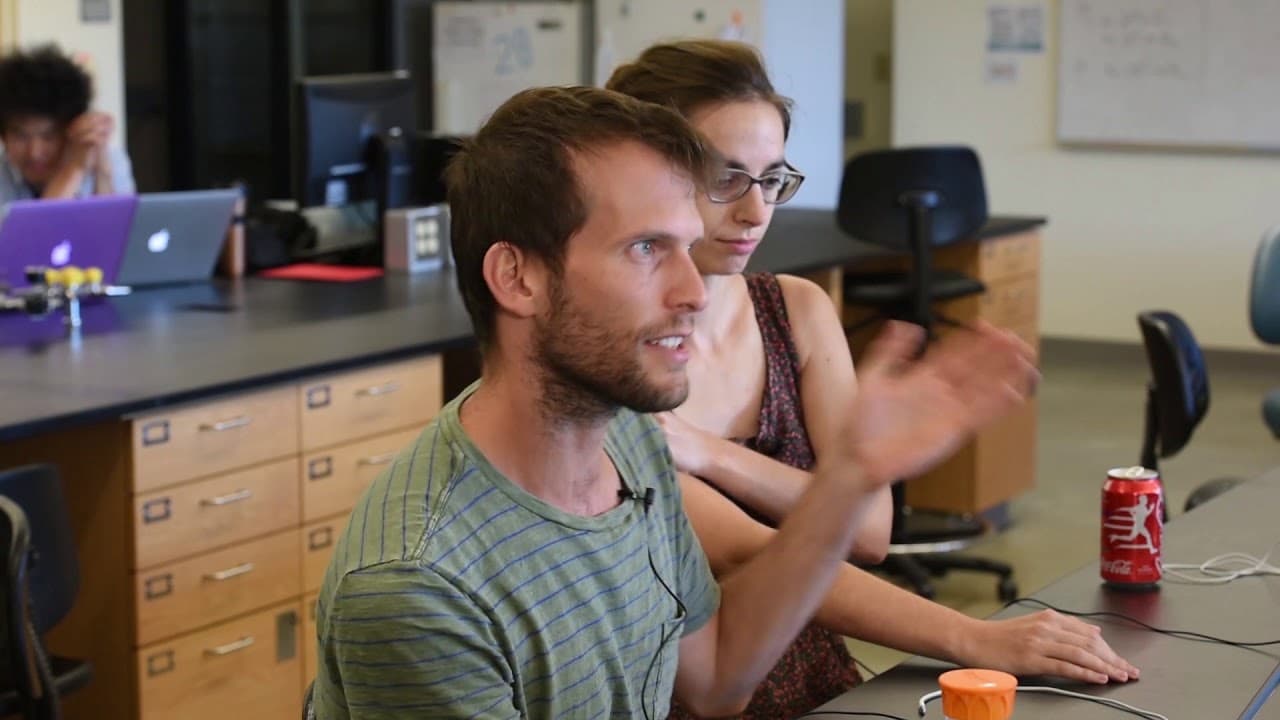
my name is Laurie Bayon I'm a postdoc at the University of Rochester and Boston Children's Hospital working on developmental cognitive neuroscience my name is Alan and I am studying currently at Oxford I'm doing my PhD and their professor Tim burns and I'm currently working on computational cognitive neuroscience and I are trying to use a paper by ... Read More
Key Insights
- 🧑🏭 Invariant recognition is important for computer vision algorithms to accurately identify objects despite variations in their appearance due to factors like rotation and translation.
- 🍅 The researchers are using a paper on tomato photo encoders as a basis for their implementation.
- 🪡 The algorithm aims to reduce the sample complexity and the number of examples needed for learning.
- ❓ By creating a signature that is invariant to manipulations, the algorithm can accurately recognize unseen individuals or objects.
- 💦 The researchers are currently working on implementing the algorithm for digit recognition and plan to extend it to facial recognition.
- 🥅 The long-term goal is to improve the efficiency of algorithms like deep neural nets by reducing the number of examples needed for learning.
- 📽️ The researchers approach the project from different angles, one focused on engineering and the other on a developmental perspective.
Install to Summarize YouTube Videos and Get Transcripts
Explore YouTube Video Summarizer or Get YouTube Transcript Extractor
Questions & Answers
Q: What is the purpose of implementing invariant recognition in computer vision?
The purpose is to reduce the number of examples needed for learning in algorithms like deep neural nets, making image classification more efficient.
Q: What manipulation factors are considered in computer vision?
Translation (shifting an image), rotation, and scaling are important factors in computer vision.
Q: How are researchers testing the algorithm's performance?
They are using existing datasets for digit recognition and videos of people's heads to evaluate the algorithm's ability to recognize individuals from various angles.
Q: What are the potential applications of this research?
The research aims to improve the efficiency of algorithms in tasks like facial recognition, object classification, and image analysis.
Summary & Key Takeaways
-
The researchers are studying computational cognitive neuroscience to achieve invariant recognition in computer vision.
-
They are exploring the idea of creating a signature that is invariant to manipulation such as translations, rotations, and scaling.
-
The researchers are using existing datasets and videos of people's heads to test the algorithm's ability to recognize unseen individuals under various angles.
Read in Other Languages (beta)
Share This Summary 📚
Summarize YouTube Videos and Get Video Transcripts with 1-Click
Try YouTube Summary with ChatGPT & Claude or YouTube Transcript Generator
Explore More Summaries from MIT OpenCourseWare 📚



Summarize YouTube Videos and Get Video Transcripts with 1-Click
Try YouTube Summary with ChatGPT & Claude or YouTube Transcript Generator