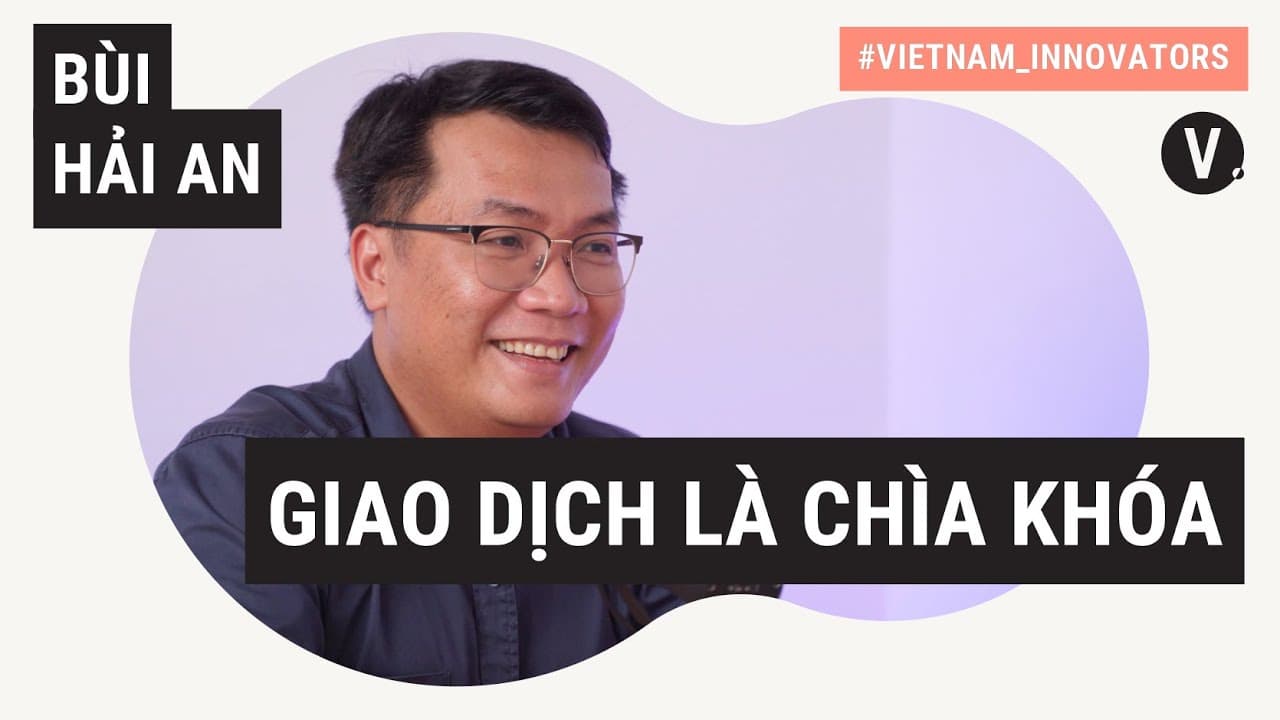
"Giao dịch chính là chìa khóa" - Bùi Hải An, CCO tại Timo | Vietnam Innovators VN EP14
TL;DR
Bùi Hải An shares his innovative journey in Vietnam's fintech industry.
Transcript
Thank you for tuning in for today’s episode of Vietnam Innovators. Vietnamese edition. Before we start, I would like to make a small request. If you’re a frequent listener of Vietnam Innovators podcast, I would love to listen to your feedbacks. You can send your feedbacks to my email, which is [email protected] I’m looking forward to hearing your... Read More
Key Insights
- Bùi Hải An's career began in software engineering before transitioning into co-founding multiple companies in education, publishing, and fintech.
- His experience in digital marketing and CRM systems has been pivotal in his roles, especially in technology startups.
- Silicon Straits Saigon was instrumental in developing MVPs for startups, leading to successful collaborations with companies like Grab.
- The decision to build a unique retail system for 7/11 Vietnam was driven by the need for technological adaptability, which traditional systems lacked.
- O2 Financial, co-founded by An, focuses on fintech solutions, including platforms like BravoHR for employee benefits management.
- Timo, a digital bank, emphasizes customer-centric solutions and has transitioned partnerships from VP Bank to Viet Capital Bank for better alignment.
- Digital banks differ from traditional banks by focusing on transaction-based models rather than wealth-based models, offering more flexible and innovative financial services.
- Vietnam's fintech market is rapidly growing, with digital banks and fintech companies adapting quickly to technological advancements and regulatory environments.
Install to Summarize YouTube Videos and Get Transcripts
Explore YouTube Video Summarizer or Get YouTube Transcript Extractor
Questions & Answers
Q: What is the significance of Bùi Hải An's role at Timo?
Bùi Hải An, as the CCO of Timo, plays a crucial role in focusing on customer experiences and integrating their feedback into product development. His position emphasizes the importance of understanding customer needs and providing tailored financial solutions, setting Timo apart in the competitive fintech landscape.
Q: How did Bùi Hải An contribute to the success of Silicon Straits Saigon?
At Silicon Straits Saigon, Bùi Hải An contributed by developing MVPs for startups, particularly those from Singapore and Indonesia. This involvement helped startups test their ideas and raise funds, while also contributing to the growth of Silicon Straits Saigon, which expanded to over 100 employees, most of whom were engineers.
Q: Why did 7/11 Vietnam choose to develop a new retail system?
7/11 Vietnam opted to create a new retail system instead of using the existing Japanese system to allow for technological integration, such as with multiple e-wallets. The decision was driven by the need for adaptability and innovation, which the outdated Japanese system could not provide, ultimately supporting 7/11's success in Vietnam.
Q: What is BravoHR and its significance in O2 Financial?
BravoHR, developed by O2 Financial, is a platform designed to manage employee benefits and interactions. It is used by over 20 companies and emphasizes flexible benefits, allowing employees to choose perks that suit their needs, thereby enhancing HR efficiency and employee satisfaction.
Q: How does Timo differentiate itself from traditional banks?
Timo differentiates itself from traditional banks by operating as a digital financial platform, focusing on transaction-based models rather than wealth-based models. This approach allows Timo to offer innovative financial services, such as exchange-traded funds and insurance, directly through its app, catering to the evolving needs of its customers.
Q: What challenges does Bùi Hải An face in his role at Timo?
Bùi Hải An faces the challenge of having numerous innovative ideas but limited time to implement them. He emphasizes the importance of addressing customer needs and translating ideas into reality, which involves navigating technological and operational complexities in the fintech sector.
Q: What is the potential of Vietnam's fintech market according to Bùi Hải An?
Bùi Hải An views Vietnam's fintech market as having immense potential due to the low rate of bank account ownership and online transactions. The market is characterized by rapid adoption of foreign technologies, providing opportunities for fintech companies to innovate and address the financial needs of Vietnamese consumers.
Q: How does Timo plan to maintain its competitive edge in the fintech industry?
Timo plans to maintain its competitive edge by focusing on customer needs and enhancing partnerships. By understanding and addressing customer problems, and forming alliances with other fintech and traditional finance companies, Timo aims to expand its service offerings and build trust with its customers.
Summary & Key Takeaways
-
Bùi Hải An's journey in the fintech industry is marked by his transition from software engineering to co-founding multiple companies, focusing on innovative solutions in technology and finance.
-
His role at Timo, a digital bank, highlights the importance of customer-centric approaches in developing financial solutions, distinguishing digital banks from traditional ones through transaction-based models.
-
Vietnam's fintech market is experiencing rapid growth, driven by technological advancements and a supportive regulatory environment, with digital banks like Timo playing a pivotal role in this transformation.
Read in Other Languages (beta)
Share This Summary 📚
Summarize YouTube Videos and Get Video Transcripts with 1-Click
Try YouTube Summary with ChatGPT & Claude or YouTube Transcript Generator
Explore More Summaries from Vietcetera 📚





Summarize YouTube Videos and Get Video Transcripts with 1-Click
Try YouTube Summary with ChatGPT & Claude or YouTube Transcript Generator