How to Help Your Baby Roll Over: 4 Key Tips
TL;DR
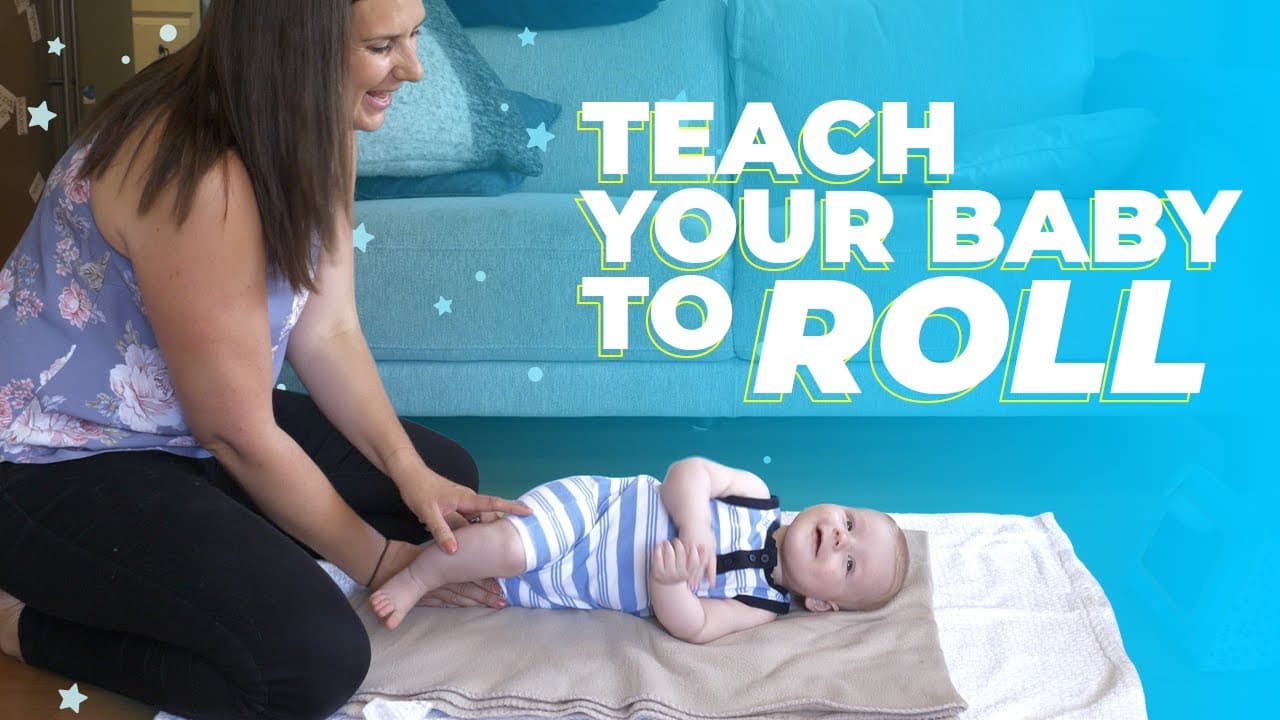
To help your baby roll over, start by assisting them with gentle guided movements as early as two weeks, if medically appropriate. Use motivating toys to encourage them to follow your movements, and ensure ample tummy time to strengthen necessary muscles. Regular playtime on their back can also enhance their tummy muscle development, facilitating the rolling process.
Transcript
- As an occupational therapist, parents often ask me what they can do to help their baby learn to roll from their back to their tummy. In this video, you're gonna learn what age you can start to expect your baby to roll from their back onto their tummy. And most importantly, for simple activities that you can do with your baby right now, wh... Read More
Key Insights
- Babies typically start learning to roll over between four to seven months, following a natural progression of skills.
- Assisting your baby in rolling over can help them learn the motor pattern required for the movement, making it less intimidating.
- Using toys can motivate babies to roll over by encouraging them to follow the toy with their eyes and head.
- Tummy time is crucial for developing neck, shoulder, and back muscles, all necessary for rolling over.
- Playtime on their back helps babies strengthen their tummy muscles, which are essential for rolling over.
- Parents can start assisting their baby to roll from as early as two weeks, provided there are no medical complications.
- Positioning toys above and to the side of the baby can promote shoulder lifting and trunk rotation.
- Regular practice of these activities can help babies gain the strength and confidence needed to roll over independently.
Install to Summarize YouTube Videos and Get Transcripts
Explore YouTube Video Summarizer or Get YouTube Transcript Extractor
Questions & Answers
Q: What age do babies typically start to roll over?
Babies generally begin learning to roll over between four to seven months. This development is part of a natural progression of skills, starting with holding their head in midline and progressing to tracking toys with their eyes and head.
Q: How can assisting a baby in rolling over be beneficial?
Assisting a baby in rolling over helps them learn the motor pattern required for the movement, making it less intimidating. This practice allows babies to become familiar with the motion, providing opportunities to strengthen the necessary muscles even before they can roll independently.
Q: How can toys be used to encourage a baby to roll over?
Toys can motivate babies to roll over by encouraging them to follow the toy with their eyes and head. Positioning toys above and to the side of the baby promotes shoulder lifting and trunk rotation, both essential for rolling over.
Q: Why is tummy time important for babies learning to roll over?
Tummy time is crucial for developing neck, shoulder, and back muscles, which are necessary for rolling over. It helps babies work on neck control, head control, and shoulder stability, all of which contribute to their ability to roll over.
Q: When can parents start assisting their baby to roll over?
Parents can start assisting their baby to roll over as early as two weeks, provided there are no medical complications. This early assistance helps babies become familiar with the motor pattern and provides them with opportunities to practice and strengthen the necessary muscles.
Q: How does playtime on their back help babies learn to roll over?
Playtime on their back helps babies strengthen their tummy muscles, which are essential for rolling over. Activities like kicking their legs activate their tummy muscles, providing an opportunity to work on making these muscles stronger, aiding in the rolling process.
Q: What should parents do if their baby struggles with tummy time?
If a baby struggles with tummy time, parents can refer to resources like videos that cover different tummy time positions and tips to make it easier. Gradually increasing the difficulty as the baby gets stronger can help them enjoy and benefit from tummy time.
Q: What is the role of muscle strength in a baby's ability to roll over?
Muscle strength is crucial for a baby's ability to roll over. Developing neck, shoulder, back, and tummy muscles through activities like tummy time and assisted rolling helps babies gain the strength and confidence needed to perform the complete rolling motion independently.
Summary & Key Takeaways
-
The video provides tips and activities to help babies learn to roll over, a skill typically developed between four to seven months. It emphasizes the importance of assisting babies in rolling, using toys for motivation, and encouraging tummy time.
-
Assisting babies in rolling over helps them become familiar with the motor pattern, making the movement less intimidating. Parents can start this as early as two weeks if there are no medical complications.
-
Using toys strategically can motivate babies to roll over by encouraging them to follow the toy with their eyes and head, promoting shoulder lifting and trunk rotation essential for rolling.
Read in Other Languages (beta)
Share This Summary 📚
Summarize YouTube Videos and Get Video Transcripts with 1-Click
Try YouTube Summary with ChatGPT & Claude or YouTube Transcript Generator
Explore More Summaries from Emma Hubbard 📚




Summarize YouTube Videos and Get Video Transcripts with 1-Click
Try YouTube Summary with ChatGPT & Claude or YouTube Transcript Generator