How To Draft a Sleeve Pattern (Both Imperial + Metric Measurements)
TL;DR
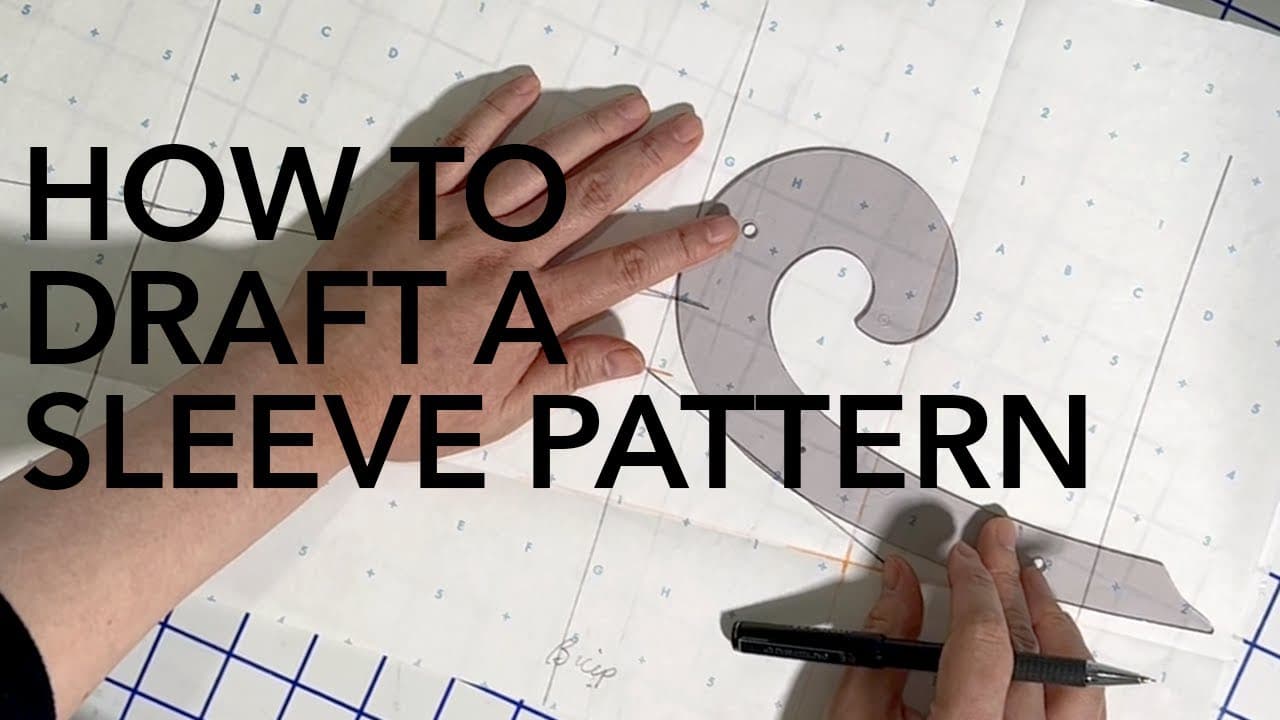
This video provides a step-by-step tutorial on how to draft a sleeve pattern, including measurements, tool recommendations, and techniques.
Transcript
hey hey party people today we're going to draft a sleeve pattern so if you've been following along in the garment construction playlist i had guest lecturer mariah here on the channel and she drew the basic bodice and then she drafted she copied the muslin draft onto paper patterns here's the front and here's the back these are her patterns and so ... Read More
Key Insights
- 🏙️ Drafting a sleeve pattern involves several steps, including measuring and drawing various lines for the cap, wrist, bicep, and elbow.
- 😒 It is important to use the correct materials, such as pattern drafting paper, a graph ruler, and a French curve, for accurate results.
- 👲 Adjustments can be made to the sleeve pattern, such as carving out the front armhole and adjusting the height of the sleeve cap, to create a better fit.
- ❓ Marking punch holes with red dots helps ensure that they are not overlooked during the pattern making process.
- 💇 The sleeve pattern should be cut out and fitted on a model to make further adjustments before finalizing the pattern with seam allowances.
- ✏️ It is recommended to use a thinner pencil for pattern making to achieve precision, but a darker pencil may be used for better visibility on camera.
- 🪡 The sleeve pattern should be trued to ensure that the seams match up correctly when sewing.
Install to Summarize YouTube Videos and Get Transcripts
Explore YouTube Video Summarizer or Get YouTube Transcript Extractor
Questions & Answers
Q: What materials are needed for drafting a sleeve pattern?
The materials needed include pattern drafting paper, a graph ruler, scotch tape, an awl, a red pen, a pencil, an eraser, paper scissors, and a French curve.
Q: How do you determine the measurements for the cap line, wrist line, bicep line, and elbow line?
The cap line is typically two inches from the top of the paper, the wrist line can be measured based on the fit model or using a standard measurement like 22.5 inches, the bicep line is measured from the armpit to the point of the shoulder, and the elbow line is determined by adding half the distance between the bicep line and the wrist line.
Q: Why is it important to mark punch holes with red dots?
Punch holes are easily missed, so marking them with red dots ensures that they are noticed. This helps with accuracy in pattern making and ensures that important details are not overlooked.
Q: What adjustments should be made to the sleeve pattern after cutting it out?
The front armhole should be carved out more than the back armhole to accommodate the forward movement of the arms. Additionally, the height of the sleeve cap can be adjusted to provide the desired amount of ease.
Summary & Key Takeaways
-
The video demonstrates how to draft a sleeve pattern that matches a previously created bodice pattern.
-
It outlines the materials needed for the process, such as pattern drafting paper, a graph ruler, scotch tape, an awl, and a red pen.
-
The tutorial covers various steps, including drawing the cap line, wrist line, bicep line, and elbow line, as well as folding and truing the pattern.
Read in Other Languages (beta)
Share This Summary 📚
Summarize YouTube Videos and Get Video Transcripts with 1-Click
Try YouTube Summary with ChatGPT & Claude or YouTube Transcript Generator
Explore More Summaries from Zoe Hong 📚



Summarize YouTube Videos and Get Video Transcripts with 1-Click
Try YouTube Summary with ChatGPT & Claude or YouTube Transcript Generator