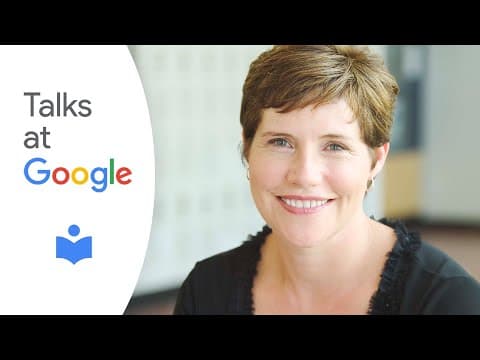
Sukhinder Singh Cassidy | Choose Possibility: Take Risks and Thrive | Talks at Google

TL;DR
Silicon Valley leaders discuss the importance of normalizing failure, encouraging risk-taking, and supporting caregivers to create a healthy work culture.
Transcript
[MUSIC PLAYING] ALLAN THYGESEN: Well, good morning, everyone. I'm Allan Thygesen, and I lead Google's business teams for the Americas and also our global partner teams. I'm really excited to be here today with an old colleague and friend, Sukhinder, for a special talk at Google. So let me quickly introduce Sukhinder. As many of you know, she's a le... Read More
Key Insights
- 💦 Normalizing failure and celebrating the learnings that come from it is essential in creating a healthy work culture.
- 🥡 Taking risks should be framed as hypothesis learning, and the focus should be on continuous improvement and growth rather than attaining perfection.
- 👩🔬 Gender differences in risk-taking exist, with research showing that women tend to be more risk-averse. Leaders can address this by creating opportunities, providing support, and challenging biases.
- ✳️ Leaders can model healthy risk-taking by becoming publishers rather than authors, allowing their teams to take ownership and providing validation and celebration of their risks.
- 💦 A diverse and inclusive work environment, along with caregiver support, is crucial in fostering a culture of risk-taking and success.
Install to Summarize YouTube Videos and Get Transcripts
Explore YouTube Video Summarizer or Get YouTube Transcript Extractor
Questions & Answers
Q: What led Sukhinder Singh Cassidy to write her book "Choose Possibility"?
Sukhinder wrote the book to challenge the belief that success in one's career is the result of one big decision. She wanted to emphasize the importance of continuously choosing and taking risks throughout one's career, rather than relying on a single pivotal choice.
Q: How did Sukhinder Cassidy overcome failure and embrace risk?
Sukhinder shares two ways she tackled failure. Firstly, she learned from taking numerous little risks throughout her career, which allowed her to become more comfortable with failure. Secondly, she experienced a significant failure with her startup Polyvore, which ultimately became a confidence builder and prepared her to take even bigger risks in the future.
Q: How can leaders model healthy risk-taking?
Leaders can model healthy risk-taking by stepping out of the role of author and becoming a publisher, allowing their teams to take ownership of their ideas and visions. They can also celebrate and validate the small risks taken by their teams, creating an environment where failure is normalized and learning is prioritized.
Q: What steps can be taken to address gender differences in risk-taking?
Research suggests that women tend to be more risk-averse than men. To address this, leaders can provide opportunities for women to take risks, celebrate their risk-taking, and ensure a diverse and inclusive work environment. Additionally, leaders should challenge their own biases and provide support and mentorship to help women overcome barriers and take calculated risks.
Summary & Key Takeaways
-
Sukhinder Singh Cassidy, a leading technology executive and entrepreneur, discusses the importance of embracing risk as a series of smaller steps rather than one big step. She emphasizes the need to normalize failure and celebrate the learnings that come from it.
-
Sukhinder shares her own career experiences, including taking risks that didn't work out, such as the failure of her startup Joyus. She highlights the importance of learning and resilience in navigating failure and leveraging that knowledge for future opportunities.
-
Allan Thygesen, leader of Google's business teams for the Americas, weighs in on the value of embracing failure and vulnerability as a leader. He emphasizes the need for leaders to create a safe environment for risk-taking and encourage employees to take calculated risks.
-
The discussion also touches on gender differences in risk-taking, with research suggesting that women are more risk-averse. The speakers discuss the need for leaders to address bias and create opportunities for diverse groups to take risks on an equal playing field.
Read in Other Languages (beta)
Share This Summary 📚
Summarize YouTube Videos and Get Video Transcripts with 1-Click
Try YouTube Summary with ChatGPT & Claude or YouTube Transcript Generator
Explore More Summaries from Talks at Google 📚
Summarize YouTube Videos and Get Video Transcripts with 1-Click
Try YouTube Summary with ChatGPT & Claude or YouTube Transcript Generator