The Unexpected, Underwater Plant Fighting Climate Change | Carlos M. Duarte | TED Countdown
TL;DR
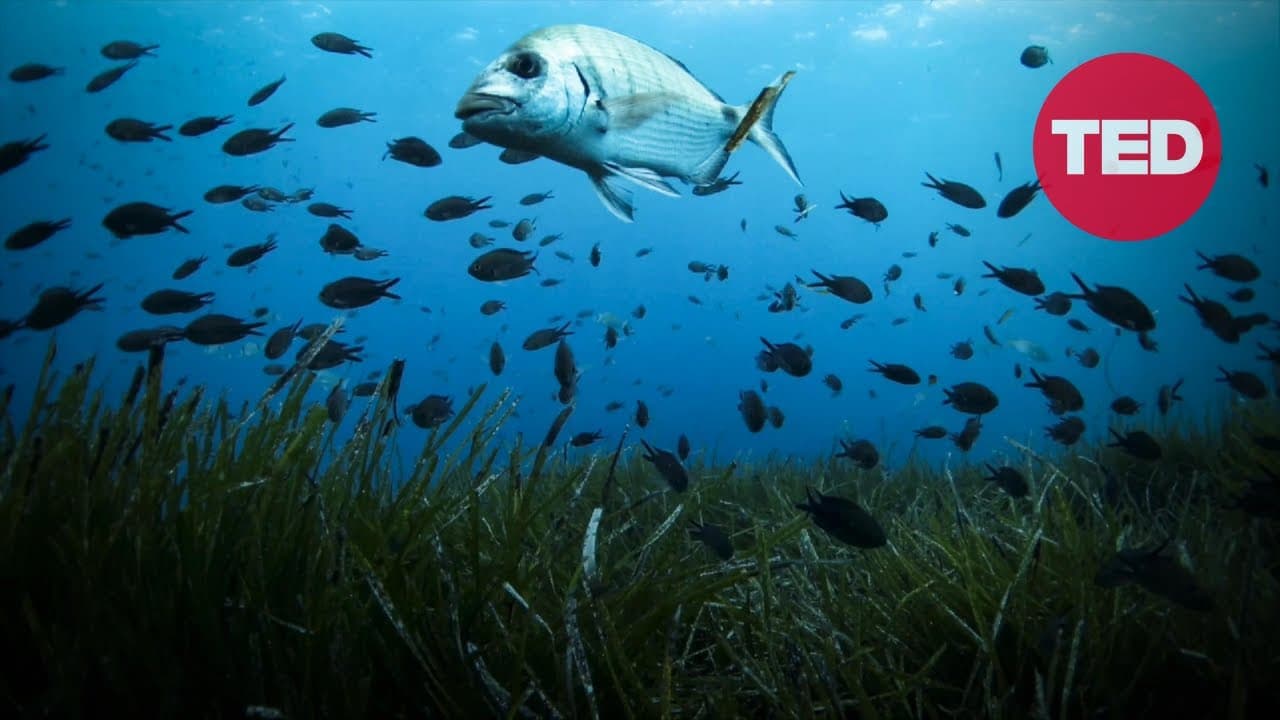
This content discusses the importance of seagrass as a carbon-removal technology, its remarkable adaptations, the need for protection and restoration, and its potential for contributing to a healthy ocean and stable climate.
Transcript
I'm here to unveil a new carbon-removal technology, one out of sight and uncelebrated. Meet our champion: seagrass. A very unlikely champion, but yet a remarkable power of carbon removal. Seagrasses occupy only 0.1 percent of the seafloor, but they remove one-third of all of the carbon that gets sequestered in the seafloor annually. They are no ord... Read More
Key Insights
- 🌿 Seagrasses are champion carbon removers, accounting for one-third of all carbon sequestered in the seafloor each year. Their large canopies and slow decomposition contribute to their effectiveness.
- 🌊 Seagrass meadows also serve as important protection for shorelines, infrastructure, and lives, especially in the face of rising sea levels and stronger storms caused by climate change.
- 🌍 Seagrasses are one of the oldest living things on the planet, with some meadows dating back 200,000 years. The world's largest seagrass meadow is found in the Bahamas.
- 🐢 Tracking green sea turtles and partnering with tiger sharks has helped researchers discover and map new seagrass meadows in poorly studied areas such as the Indian Ocean and the Red Sea.
- 🛠️ Efforts to protect seagrasses are urgent, as one-third of known seagrass areas have already been lost due to disease, pollution, mechanical damage, dredging, and trawling.
- 🌳 Seagrasses are starting to rebound and recover in Europe, North America, Japan, Australia, and China. Active restoration projects, such as releasing seagrass seeds, have been successful in expanding and restoring seagrass meadows.
- 🍚 Seagrass seeds can be consumed by humans as marine rice, providing a sustainable and nutritious crop that doesn't require arable land or fresh water.
- ⚓️ The restoration and conservation of seagrasses are crucial not only for carbon sequestration and biodiversity but also as a model for recovering and rebuilding abundance in the ocean by 2050. This can contribute to stabilizing our climate and preserving a healthy ocean for future generations.
Install to Summarize YouTube Videos and Get Transcripts
Explore YouTube Video Summarizer or Get YouTube Transcript Extractor
Questions & Answers
Q: What percentage of carbon does seagrass remove from the seafloor annually?
Seagrass removes one-third of all the carbon that gets sequestered in the seafloor annually, despite occupying only 0.1 percent of the seafloor.
Q: How long ago did a seed germinate in the seafloor, leading to the growth of a clone that now spans 15 kilometers?
The seed that gave rise to a seagrass clone spanning 15 kilometers in the Mediterranean germinated in the seafloor about 200,000 years ago, making it one of the oldest living things on the planet.
Q: Apart from carbon, what other important role do seagrass meadows play?
Seagrass meadows play a crucial role in protecting shorelines and infrastructure. They act as the first line of defense against rising sea levels and strong storms, making them essential for safeguarding property and lives in a changing climate.
Q: How is the growth and expansion of seagrass being supported and restored?
Efforts to protect and restore seagrass are underway. Active restoration projects, such as releasing millions of seagrass seeds, have led to significant expansion in certain areas, and policies are being implemented to improve water quality and promote seagrass recovery.
Q: What potential benefits do seagrass seeds offer in terms of food production?
Seagrass seeds can be consumed by humans as marine rice, offering a sustainable food source that does not require arable land, fresh water, or harmful chemicals. Utilizing seagrass seeds for food allows the meadow to continue sequestering carbon and supporting biodiversity while providing a nutritious crop.
Summary & Key Takeaways
-
Seagrass is a powerful carbon removal technology, removing one-third of carbon sequestered in the seafloor annually.
-
Seagrasses grow by extending a rhizome, forming large clones, and have the ability to raise the seafloor upwards, providing protection against sea level rise and storms.
-
Efforts to protect and restore seagrass meadows have been successful, leading to rebound and expansion of seagrasses in various regions, and the potential for active restoration and utilization of seagrass seeds.
Read in Other Languages (beta)
Share This Summary 📚
Summarize YouTube Videos and Get Video Transcripts with 1-Click
Try YouTube Summary with ChatGPT & Claude or YouTube Transcript Generator
Explore More Summaries from TED 📚





Summarize YouTube Videos and Get Video Transcripts with 1-Click
Try YouTube Summary with ChatGPT & Claude or YouTube Transcript Generator