What Are the Unique Properties of Argon Gas?
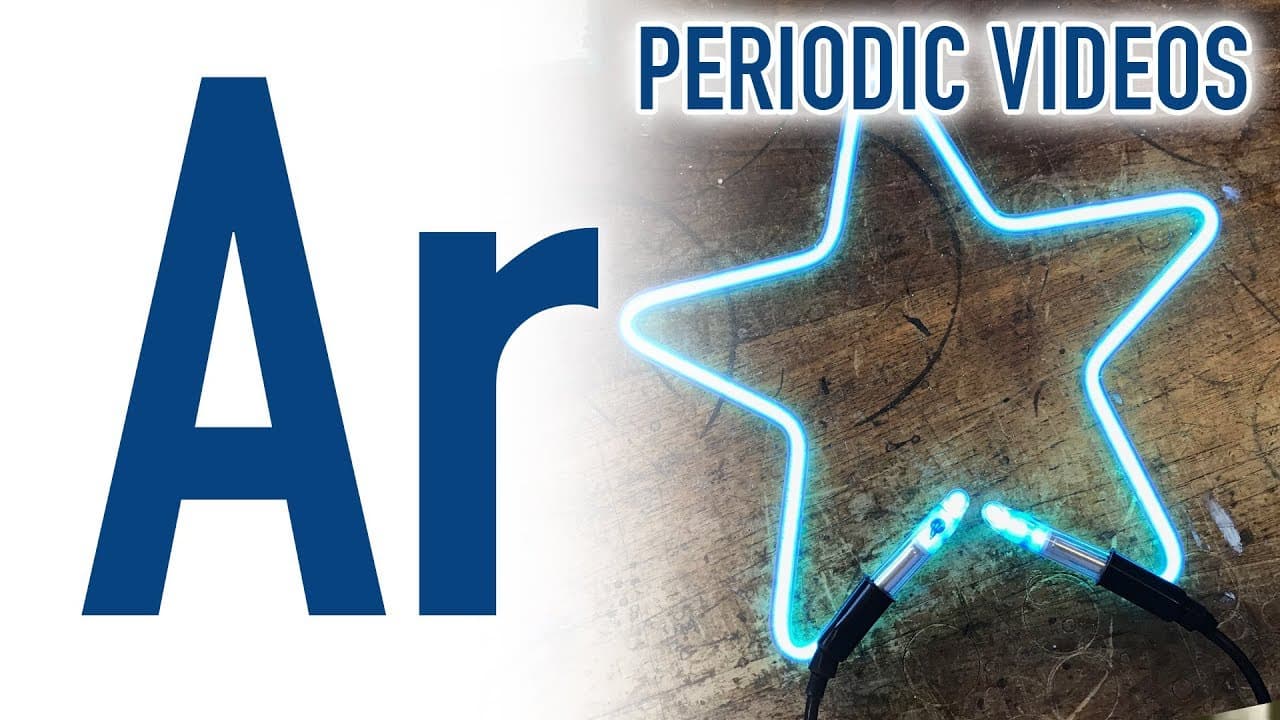
TL;DR
Argon gas is known for its unique properties, such as its ability to be liquefied at very narrow temperature ranges and transparency to infrared light, making it ideal for use in infrared spectroscopy. Additionally, it serves as an effective inert gas for handling air-sensitive compounds and acts as an insulating layer in double glazing due to its low thermal conductivity.
Transcript
Neal and I have come up with a couple of ways of showing you a transparent gas in a rather more interesting way first of all like all gases argon can be liquefied it has a melting point and a boiling point both of them slightly higher than the temperature of liquid nitrogen [Applause] they're quite unusual because there's barely 5 degrees centigrad... Read More
Key Insights
- 😎 Argon can be easily liquefied by passing it through a cooled coil, showcasing its unique properties.
- 🙂 Its transparency in infrared light makes it ideal for use in research for infrared spectroscopy.
- 😘 Argon has been involved in the creation of compounds like hydrogen argon fluorine at low temperatures.
- 😘 In double glazing, argon acts as an efficient insulator due to its low heat conductivity.
- 😒 The compound argon has interesting applications in varied fields, from research to everyday use.
- 😒 Its uses range from handling air-sensitive compounds to keeping homes warm through insulation.
- 💁 Argon, despite being inert, has been part of fascinating scientific discoveries involving compound formations.
Install to Summarize YouTube Videos and Get Transcripts
Explore YouTube Video Summarizer or Get YouTube Transcript Extractor
Questions & Answers
Q: How is argon liquefied, and what are its properties as a liquid?
Argon is liquefied by passing it through a cooled coil, showing a narrow liquid range with a melting and boiling point close together. As a liquid, it appears colorless and is used in various applications.
Q: Why is argon used in research for infrared spectroscopy, and how does it differ from water as a solvent?
Argon is used in infrared spectroscopy due to its transparency to infrared light and lack of vibration absorption. Unlike water, argon allows for clear spectra of dissolved molecules at lower temperatures.
Q: What are some interesting compounds involving argon, and how are they created?
Compounds like hydrogen argon fluorine have been created by condensing argon and HF at low temperatures and dissociating them with light. These compounds are stable only at very low temperatures and were a significant discovery.
Q: How is argon utilized in everyday applications, such as in double glazing?
Argon in double glazing helps insulate homes effectively due to its low heat conductivity. Its heavy atoms slow down heat transfer, making it a more efficient insulator than air.
Summary & Key Takeaways
-
Argon can be liquefied easily by passing it through a cooled coil, creating a colorless liquid with a narrow melting and boiling point range.
-
It is used in research as a solvent for infrared spectroscopy due to its transparency and lack of vibration absorption.
-
Argon's applications include use in handling air-sensitive compounds and as an insulator in double glazing.
Read in Other Languages (beta)
Share This Summary 📚
Summarize YouTube Videos and Get Video Transcripts with 1-Click
Try YouTube Summary with ChatGPT & Claude or YouTube Transcript Generator
Explore More Summaries from Periodic Videos 📚


Summarize YouTube Videos and Get Video Transcripts with 1-Click
Try YouTube Summary with ChatGPT & Claude or YouTube Transcript Generator