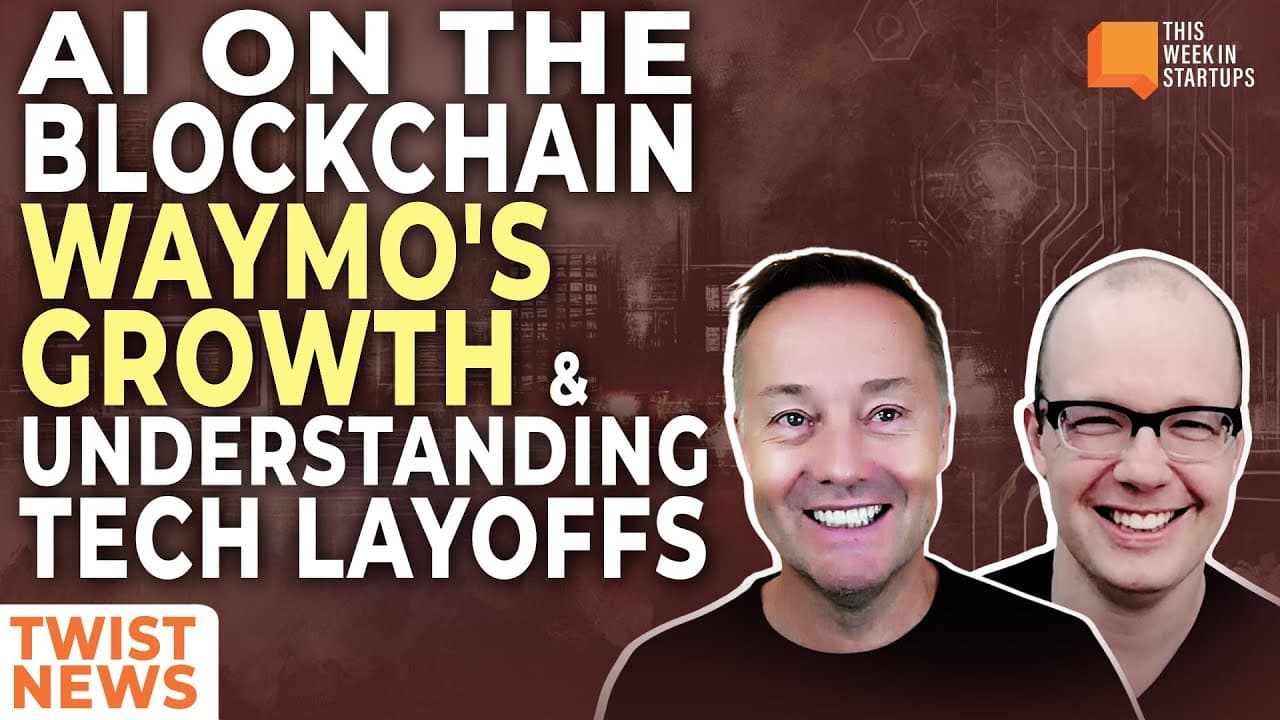
AI on the blockchain, Waymo's rise, and the truth about tech layoffs | E1996
TL;DR
The discussion covers controversies in tech startups, funding, layoffs, and emerging technologies.
Transcript
and In fairness to Jessica the job of the Eder and chief is to always have the back of their writers so she's saying like we got it right what did we technically get wrong and it reminds me of the story we talked about the other day where you know they put the Maga hats on Felicia and Ben Horowitz and I said you know they could have been more clear... Read More
Key Insights
- 💋 The competitive startup landscape is marked by skepticism around valuation and funding, prompting calls for greater transparency and accountability from companies.
- 🧑💻 Major tech companies are undergoing significant layoffs, signaling a shift toward leaner, more agile operations in a post-pandemic environment where efficiency is critical.
- 🤗 Open-source technologies are gaining traction in sectors like self-driving cars, offering promising avenues for innovation and community engagement in tech development.
- 👶 The conversation highlights a potential need for regulating or taxing technologies that replace human labor, suggesting new methods to support displaced workers.
- 😀 Traditional media is facing existential challenges in maintaining relevance amid the dominance of tech platforms that deliver news and information via digital channels.
- ❓ Successful startups often prioritize careful financial management and strategic planning to ensure sustainability and adaptability in volatile market conditions.
- 💦 The interaction between technology and labor dynamics necessitates ongoing discussion about the future of work and the societal impacts of automation.
Install to Summarize YouTube Videos and Get Transcripts
Explore YouTube Video Summarizer or Get YouTube Transcript Extractor
Questions & Answers
Q: What are the implications of Bolt's reported funding and valuation?
The reported funding and valuation of Bolt have raised skepticism due to inconsistent history and performance metrics, suggesting a lack of transparency. Concerns revolve around the credibility of the financial figures being discussed, especially considering the company’s previous struggles and competitive market dynamics where higher valuations can mislead investors and stakeholders.
Q: How do layoffs in major tech companies reflect broader market trends?
Layoffs in companies like Intel and Cisco highlight ongoing adjustments to workforce size amid economic challenges and a changing tech landscape. These reductions are often seen as strategic moves by management to increase efficiency and profitability post-pandemic, reflecting a shift toward prioritizing innovation while reducing payroll costs.
Q: What is the potential impact of open-source self-driving technologies?
Open-source self-driving technologies could revolutionize the automotive industry by increasing accessibility and collaboration in the development of autonomous vehicles. Companies like comma.ai show how community-driven approaches can lead to rapid innovation, ultimately lowering costs and improving safety and effectiveness in self-driving models.
Q: What do you think about the approach of taxing automated job-replacing technologies?
Taxing job-replacing technologies could be a novel solution to redistribute wealth created through automation, addressing social implications of job displacement. While it serves to fund public services or retraining programs, it's also a complex proposition due to the potential economic constraints on innovation and entrepreneurial ventures. The challenge lies in balancing incentives for growth with protections for workers.
Q: How do startups balance their financial structures amid economic uncertainties?
Startups often need to manage their financial structures carefully by maintaining lean operations and ensuring that every investment generates clear, measurable results. In the face of economic uncertainty, this might involve prioritizing cash flow, renegotiating terms with investors, and emphasizing operational efficiency to navigate funding and growth challenges.
Q: What are the key factors leading to the decline of traditional media in favor of tech platforms?
The decline of traditional media can be attributed to the shift of advertising dollars to tech giants like Google and Facebook, which offer more targeted and efficient advertising solutions. This change has led to reduced revenues for legacy media, forcing them to adapt or shrink in size, and creating a more concentrated landscape of information sources.
Q: How can startups avoid the pitfalls of overvaluation and funding pressures?
Startups can mitigate risks associated with overvaluation by focusing on sustainable growth, transparent metrics, and realistic projections. Engaging with investors who align with their long-term vision rather than succumbing to hyper-growth pressures can also help businesses navigate challenging funding environments without compromising their foundational values.
Summary & Key Takeaways
-
The conversation revolves around the skepticism surrounding Bolt's recent fundraising reports, as its valuation raises questions about transparency and the realism of its financial health.
-
The hosts analyze the ongoing wave of layoffs in tech companies, connecting it to a significant shift in management strategies post-COVID, and how startups are adapting to a more efficiency-driven environment with fewer employees.
-
The importance of emerging technologies like self-driving cars and open-source AI solutions is explored, highlighting potential future trends and the challenges companies face, including competition and the intricacies of investment and market strategy.
Read in Other Languages (beta)
Share This Summary 📚
Summarize YouTube Videos and Get Video Transcripts with 1-Click
Try YouTube Summary with ChatGPT & Claude or YouTube Transcript Generator
Explore More Summaries from LIVE News! 📚






Summarize YouTube Videos and Get Video Transcripts with 1-Click
Try YouTube Summary with ChatGPT & Claude or YouTube Transcript Generator