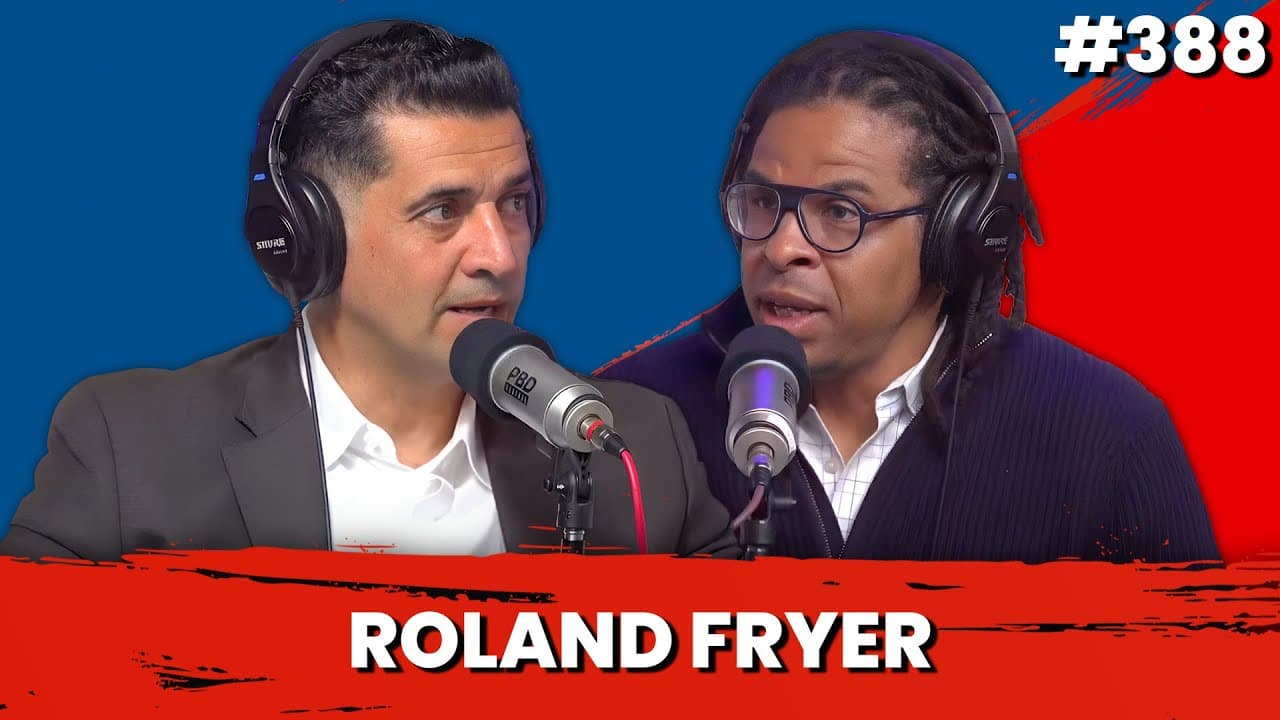
Hip-Hop A CIA Psyop | The Truth About Police Brutality | Roland G. Fryer | PBD Podcast | Ep. 388
TL;DR
Dr. Roland Fryer discusses his controversial research on racial disparities and police interaction.
Transcript
did you ever think you would make it I feel tastet Victory I know this me why would you bet on Goliath when we got bet David valueing giv values contagious this world entrepreneurs we value toomie look what I become all right so this is a a podcast I've been looking forward to doing for a long time Dr Roland fry for some of you guys that don't know... Read More
Key Insights
- 👮 Dr. Fryer’s research indicates that biases occur in lower-level police force usage but not in fatal police shootings, highlighting the complexity of racial disparities in law enforcement.
- 🤗 There is a critical call for open discussions about race and inequality, as these dialogues are often stifled in today’s discourse.
- 💯 The concept of affirmative action must evolve to encompass individual backgrounds and personal struggles rather than relying solely on race or test scores.
- 🫵 Authentic learning environments can foster diverse opinions and greater understanding, challenging the current culture of avoiding opposing views in educational settings.
- 🫵 Capitalism is viewed as a viable solution to social inequality when combined with efforts to provide equal access to opportunities.
- 💁 The personal history and resilience of individuals are essential factors in evaluating potential and should inform better educational and hiring practices.
- 🖐️ Systemic racism needs nuanced exploration, with an understanding that individual circumstances play a significant role in economic and social outcomes.
Install to Summarize YouTube Videos and Get Transcripts
Explore YouTube Video Summarizer or Get YouTube Transcript Extractor
Questions & Answers
Q: What was the major finding of Dr. Fryer's study on police interactions?
Dr. Fryer's research revealed that while there are significant racial disparities in lower-level uses of police force, there was no evidence of racial bias in fatal police shootings when controlling for situational factors. This unexpected result sparked controversy and backlash from both the academic community and the public.
Q: How did Dr. Fryer prepare for his research on police interactions?
To understand police interactions better, Dr. Fryer embedded himself within police departments, gaining firsthand experience of the challenges and realities faced by police officers. This immersive approach informed his perspective and enhanced the credibility of his findings.
Q: What aspects of affirmative action does Fryer discuss?
Fryer argues that affirmative action should not solely be based on race but should also consider an individual's unique experiences and challenges. He emphasizes the importance of recognizing latent talent that may not be captured through standardized testing.
Q: Why does Fryer believe in the importance of open dialogue about race and inequality?
Fryer believes that open dialogues about race and inequality are essential for true understanding and progress. He expresses concern over the current climate where individuals may shy away from discussing uncomfortable truths about systemic inequality for fear of backlash.
Q: What are Fryer's thoughts on the current state of education and talent assessment?
Fryer critiques the existing education system for its reliance on simplistic measures like standardized test scores. He advocates for a more nuanced approach that takes into account resilience, grit, and individual backgrounds to better identify and nurture talent.
Q: How does Fryer's childhood influence his work?
Fryer's challenging upbringing, which included encounters with poverty and systemic issues, deeply influences his commitment to improving opportunities for minorities. He channels his experiences into his research and advocacy for equitable policies.
Q: What is Fryer's perspective on the future of capitalism?
Fryer expresses optimism about capitalism's potential to address social issues. He believes that entrepreneurial endeavors can provide solutions to systemic problems if harnessed correctly and that capitalism should be seen as an avenue for social change rather than a hindrance.
Q: In what ways does Fryer believe personal narrative impacts education and opportunity?
Fryer notes that personal narratives and life experiences significantly shape individuals’ capabilities and potential. He argues that education systems must consider these narratives to create equitable chances for students from diverse backgrounds.
Summary & Key Takeaways
-
Dr. Roland Fryer, a Harvard economist, shares insights about his research on racial bias in police interactions, revealing surprising findings about police shootings.
-
Fryer emphasizes the importance of honest conversations about racial inequality and the significance of understanding individual circumstances over simplistic narratives.
-
He advocates for talent optimization in education and the need for a rigorous assessment of applicants beyond traditional metrics.
Read in Other Languages (beta)
Share This Summary 📚
Summarize YouTube Videos and Get Video Transcripts with 1-Click
Try YouTube Summary with ChatGPT & Claude or YouTube Transcript Generator