Mexico & the Brics
TL;DR
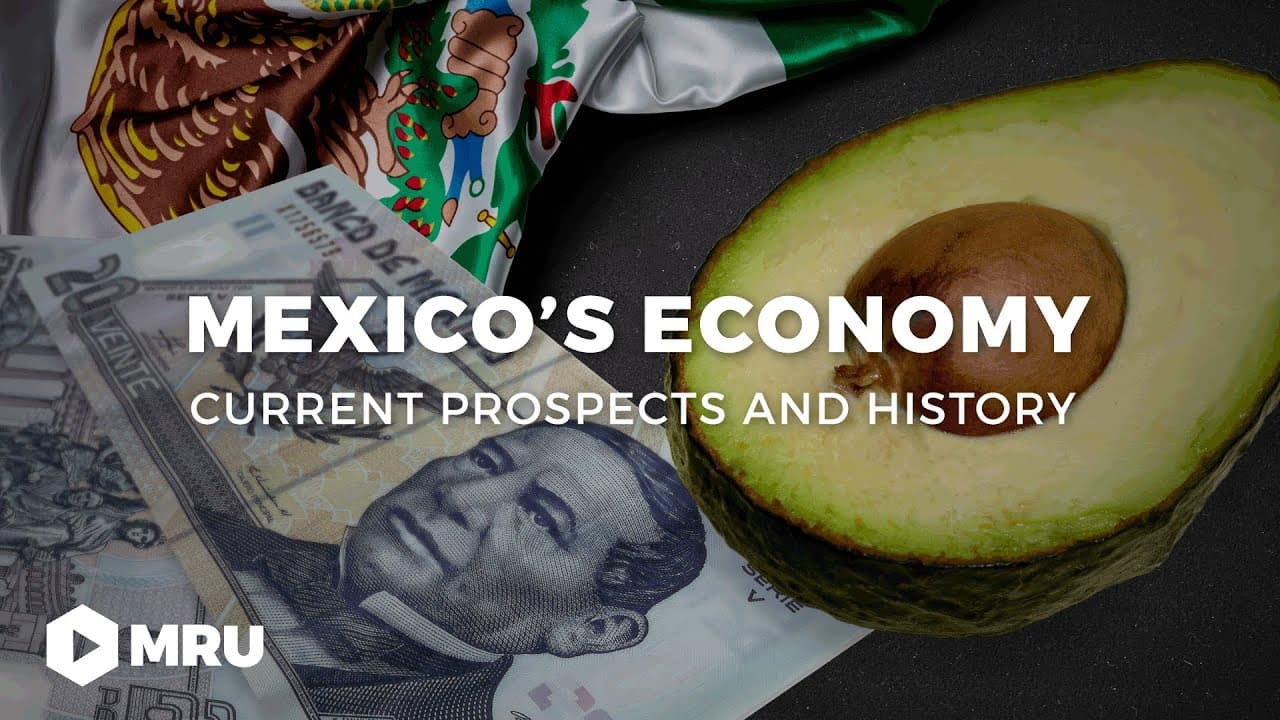
Mexico competes well with BRICS in trade, infrastructure, and health.
Transcript
The term BRIC, coined by a Goldman Sachs economists in 2001, is an acronym for the countries Brazil, Russia, India, and China. South Africa was added in 2010, making BRIC into BRICS. The term designated fast-growing, large population emerging markets that could play an important role in the global economy. As the British periodical, The Economist... Read More
Key Insights
- Mexico was excluded from the BRICS despite having qualifications comparable to the original members, highlighting its economic potential.
- Mexico offers the world's cheapest manufacturing for goods destined for the U.S., undercutting even China and Vietnam.
- In terms of internet and mobile connectivity, Mexico is competitive with BRICS, surpassing India and closely following China.
- Mexico's trade involvement is higher relative to its economy size compared to any BRICS member, with efficient customs clearance processes.
- Education in Mexico, measured by literacy rates, is on par with Russia, China, and Brazil, and significantly higher than India.
- Health indicators show Mexico with the highest life expectancy among BRICS and a high number of physicians per 1000 people.
- Despite having the second-highest per capita GDP among BRICS, Mexico's economic growth rate is much lower, raising concerns about its economic dynamism.
- Mexico's economic clout is limited by its slower growth rate compared to BRICS, despite having a larger economy than Russia.
Install to Summarize YouTube Videos and Get Transcripts
Explore YouTube Video Summarizer or Get YouTube Transcript Extractor
Questions & Answers
Q: Why was Mexico excluded from the BRICS grouping?
Mexico was excluded from the BRICS grouping despite having comparable qualifications because the original BRIC countries were identified as fast-growing, large population emerging markets. The exclusion may have been due to geopolitical considerations and the focus on the specific economies of Brazil, Russia, India, and China at the time.
Q: How does Mexico's manufacturing cost compare to BRICS countries?
Mexico offers the world's cheapest manufacturing costs for goods destined for the U.S., undercutting China and other BRICS countries like India and Vietnam. This cost advantage is due to relatively stable wage growth in Mexico compared to the rapid wage increases seen in China over the years.
Q: What are Mexico's strengths in trade and infrastructure compared to BRICS?
Mexico's trade involvement is higher relative to its economy size compared to any BRICS member. It has efficient customs clearance processes and higher quality trade-related infrastructure than some BRICS countries, making it a strong contender in global trade and an attractive destination for foreign investment.
Q: How does Mexico's education system compare to BRICS countries?
Mexico's education system, as measured by literacy rates, is on par with Russia, China, and Brazil, and significantly higher than India. This indicates a skilled labor force capable of supporting innovation and technology adoption, which is crucial for economic development and competitiveness in the global market.
Q: What health indicators highlight Mexico's standing among BRICS?
Health indicators show Mexico with the highest life expectancy among BRICS countries and a high number of physicians per 1000 people. This suggests a relatively healthy population, which can contribute positively to economic productivity and reduce healthcare-related economic burdens.
Q: Why is Mexico's economic growth rate a concern?
Mexico's economic growth rate is a concern because it is much lower than that of any BRICS country. This slower growth rate raises questions about Mexico's economic dynamism and its ability to sustain long-term development, which is crucial for competing with rapidly growing economies like China and India.
Q: How does Mexico's economic size compare to BRICS countries?
Mexico's economy is larger than Russia's but smaller than China's and India's. While Mexico has a relatively high per capita GDP, its overall economic clout is limited by its slower growth rate, which affects its influence and competitiveness in the global market compared to other BRICS countries.
Q: What sources were used for the economic data in the video?
The economic data in the video was sourced from the World Bank's World Development Indicators, accessed in December 2012. Additional information was gathered from Julian Cooper's 2006 work 'Of BRICs and Brains' and a 2012 survey by The Economist titled 'Señores, start your engines.' These sources provide comprehensive data for comparing Mexico with BRICS countries.
Summary & Key Takeaways
-
The video discusses Mexico's potential as a BRICS member, examining its economic strengths and comparing it to Brazil, Russia, India, China, and South Africa. Despite not being an official member, Mexico's economic indicators in manufacturing, trade, and health are comparable or superior to some BRICS countries.
-
Mexico's manufacturing cost advantage, competitive internet and mobile connectivity, and efficient trade infrastructure make it an attractive destination for multinational corporations. The analysis highlights Mexico's strong performance in education and health, with literacy and life expectancy rates comparable to BRICS.
-
While Mexico's economy is larger than Russia's, its growth rate lags behind all BRICS countries, raising questions about its future economic trajectory. The video concludes that Mexico's economic potential is significant, but its slower growth presents a challenge to its inclusion in BRICS.
Read in Other Languages (beta)
Share This Summary 📚
Summarize YouTube Videos and Get Video Transcripts with 1-Click
Try YouTube Summary with ChatGPT & Claude or YouTube Transcript Generator
Explore More Summaries from Marginal Revolution University 📚

Summarize YouTube Videos and Get Video Transcripts with 1-Click
Try YouTube Summary with ChatGPT & Claude or YouTube Transcript Generator