Classical Runge-Kutta, ODE4
TL;DR
The classical Runge-Kutta method is a popular numerical method used for computation in the 20th century, and it is still relevant today. This analysis also explores a simple combustion model.
Transcript
PROFESSOR: Here is the classical Runge-Kutta method. This was, by far and away, the world's most popular numerical method for over 100 years for hand computation in the first half of the 20th century, and then for computation on digital computers in the latter half of the 20th century. I suspect it's still in use today. You evaluate the function fo... Read More
Key Insights
- 🏛️ The classical Runge-Kutta method was the most popular numerical method for computation for over a century.
- ⌛ The method involves evaluating a function four times per step and is still used today due to its accuracy.
- 😀 The combustion model described in the analysis provides a simple representation of flame growth and showcases the challenge that numerical methods face in accurately capturing the transition period.
- 🏛️ The development of the classical Runge-Kutta method was attributed to Carl Runge and Martin Kutta, with Runge being more well-known for his other mathematical papers.
- 🏃 The analysis also poses exercises related to the classical Runge-Kutta method and the combustion model for further exploration.
- 🏛️ Theoretical and mathematical accuracy of the numerical results obtained using the classical Runge-Kutta method is a critical question in its reliability.
- 🏛️ The Runge-Kutta method can also be used as a classic method of numerical integration in cases where the differential equation does not involve the dependent variable.
- ☣️ When the length of the interval is not divisible by the step size, fixed step size methods like Runge-Kutta can introduce calculation hazards.
Install to Summarize YouTube Videos and Get Transcripts
Explore YouTube Video Summarizer or Get YouTube Transcript Extractor
Questions & Answers
Q: What is the classical Runge-Kutta method and how is it used in numerical computation?
The classical Runge-Kutta method is a numerical method that involves evaluating a function four times per step to calculate the final step. It was widely used in hand computation and later adapted for digital computers. This method is still in use today due to its reliability and accuracy.
Q: Who were the mathematicians or scientists behind the development of the classical Runge-Kutta method?
The method was developed by Carl Runge, a prominent German mathematician and physicist, who published it along with several other mathematical papers in 1895. Martin Kutta also independently discovered this method and published it in 1901.
Q: What is the key feature of the combustion model mentioned in the analysis?
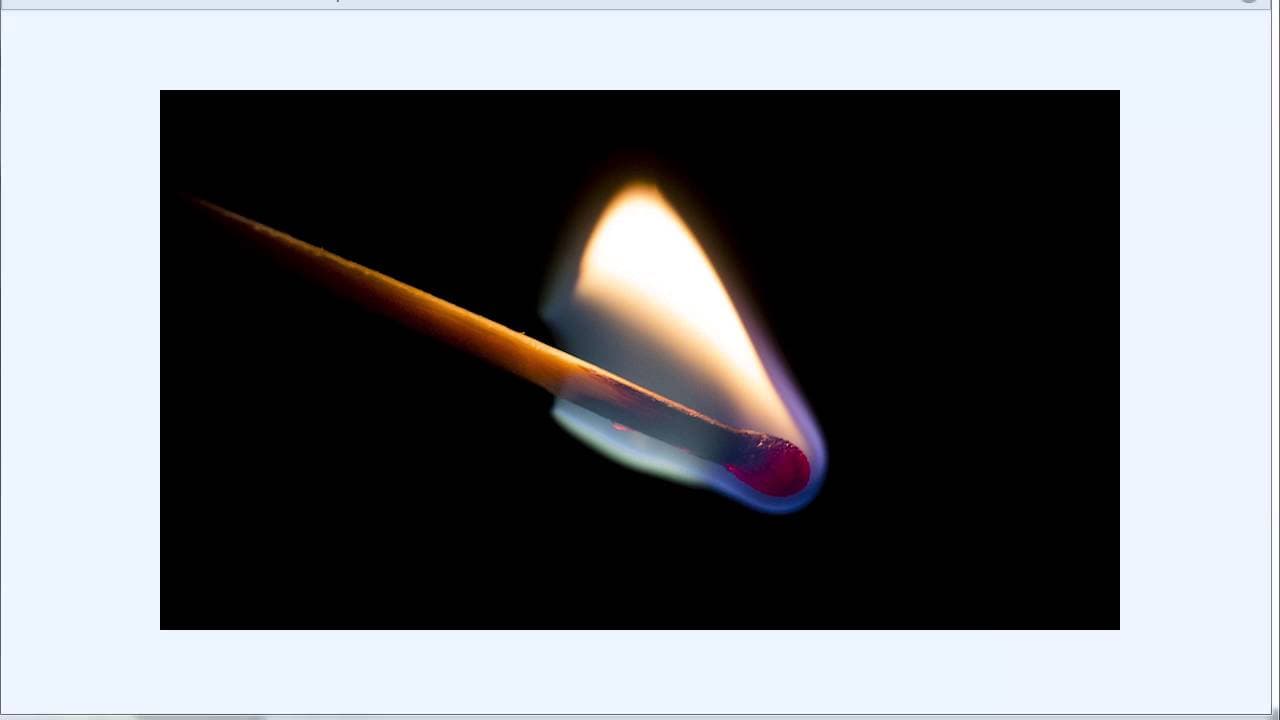
The combustion model described in the analysis focuses on the growth of a flame until it reaches a critical size. This critical size is achieved when the combustion in the interior of the flame balances the available oxygen through its surface. The model uses a dimensionless representation to describe this process.
Q: How does the analysis demonstrate the use of the classical Runge-Kutta method in solving the combustion model?
The analysis sets up the differential equation for the combustion model and solves it using the classical Runge-Kutta method. It integrates the equation over a long period of time and demonstrates how the flame grows until it reaches a critical size and stops growing.
Summary & Key Takeaways
-
The classical Runge-Kutta method is a widely-used numerical method that involves evaluating a function four times per step to calculate the final step.
-
The method was developed by Carl Runge and Martin Kutta in the late 19th and early 20th centuries, respectively.
-
The analysis also introduces a simple combustion model, where the growth of a flame is described using a dimensionless model.
Read in Other Languages (beta)
Share This Summary 📚
Summarize YouTube Videos and Get Video Transcripts with 1-Click
Try YouTube Summary with ChatGPT & Claude or YouTube Transcript Generator
Explore More Summaries from MIT OpenCourseWare 📚



Summarize YouTube Videos and Get Video Transcripts with 1-Click
Try YouTube Summary with ChatGPT & Claude or YouTube Transcript Generator