There’s a Venom For That
TL;DR
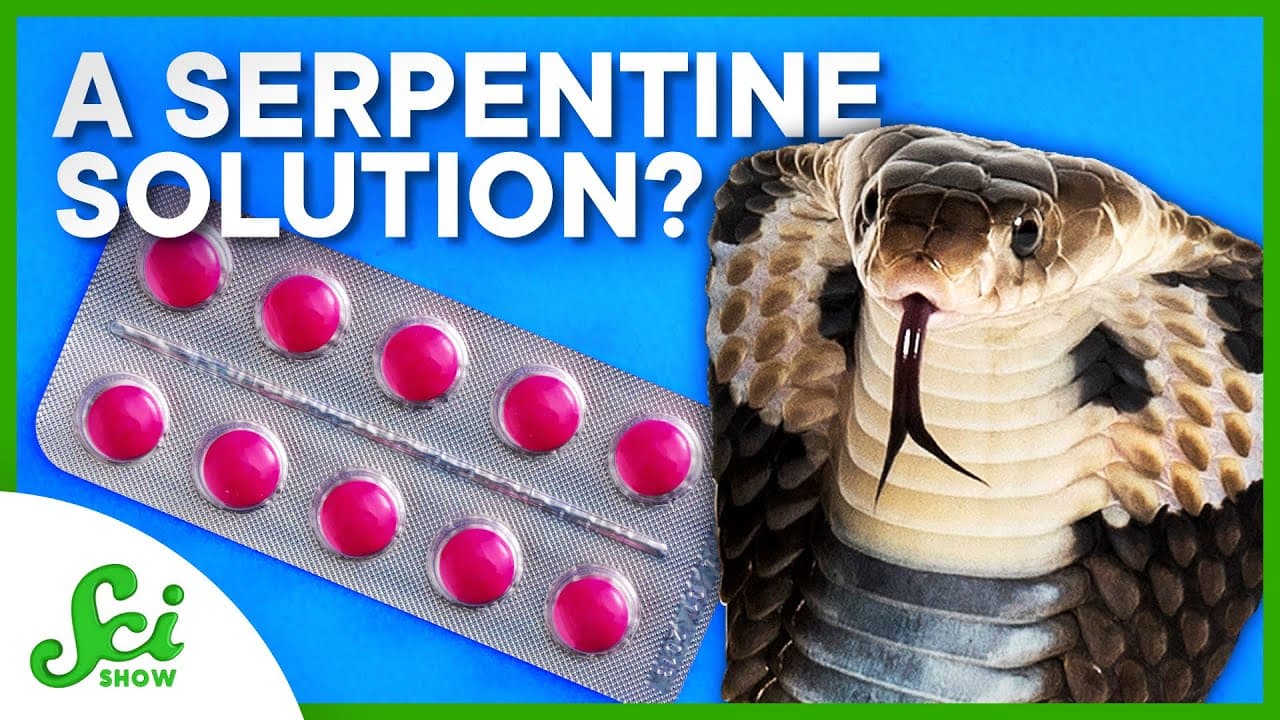
Snake venom, with its antimicrobial and anti-parasitic properties, could potentially be used to develop new drugs to combat antibiotic-resistant bacterial infections.
Transcript
Thanks to Linode Cloud Computing for supporting this episode of SciShow. Go to linode.com/scishow to learn more and get a $100 60-day credit on a new Linode account. [♪ INTRO] One of the biggest challenges in public health is preventing the rise of superbugs, relentless bacteria strains able to evade our attempts to destroy them. And as more in... Read More
Key Insights
- 🧑⚕️ Antibiotic-resistant bacterial infections pose a significant threat to global health.
- 🐍 Snake venom contains antimicrobial properties that can kill bacteria by disrupting their cell membranes.
- 👨🔬 Different snake venoms have varying levels of antimicrobial abilities, and further research is needed to determine which components are effective against specific bacteria.
- 🧑🚒 Snake venom has also shown potential in fighting off parasites, such as Leishmania.
- 🐍 Developing drugs from snake venom is challenging due to the complexity and size of the venom molecules.
- 😒 Synthesizing venom molecules for medicinal use and ensuring their compatibility with the human body are significant hurdles.
- 🥹 Colubrid snakes, which produce less potent venom, may hold promise for safer and better-tolerated treatments.
Install to Summarize YouTube Videos and Get Transcripts
Explore YouTube Video Summarizer or Get YouTube Transcript Extractor
Questions & Answers
Q: How do venomous snakes use their venom to subdue their prey?
Venomous snakes inject venom into their prey, which contains hundreds of molecules that can subdue the prey and aid in digestion. Some of these venomous molecules also have antimicrobial properties.
Q: Which bacterial infections has snake venom been shown to be effective against?
Snake venom has been tested against common troublesome bacterial infections such as E. coli, staphylococcus, and salmonella. The venom from certain species, like the King cobra, has shown effectiveness against these bacteria.
Q: What are the two main approaches in treating bacterial infections?
Bacterial infections can be treated either by stopping their growth or by disrupting their cell membranes. Snake venom appears to use the latter approach to kill unwanted microbes.
Q: Why is research focusing on colubrid snakes important?
Colubrid snakes haven't been well-studied for their antimicrobial properties, but they may offer safer and better-tolerated compounds compared to venom from more deadly snake families. Studying colubrid venom could lead to the development of medications with fewer adverse side effects.
Summary & Key Takeaways
-
Antibiotic-resistant bacterial infections are a growing global health threat, and traditional antibiotics are becoming less effective.
-
Snake venom has shown to contain antimicrobial properties that can kill bacteria by disrupting their cell membranes.
-
Different snake species have varying levels of antimicrobial abilities, and further research is needed to determine which venoms and components are effective against specific bacteria.
Read in Other Languages (beta)
Share This Summary 📚
Summarize YouTube Videos and Get Video Transcripts with 1-Click
Try YouTube Summary with ChatGPT & Claude or YouTube Transcript Generator
Explore More Summaries from SciShow 📚


Summarize YouTube Videos and Get Video Transcripts with 1-Click
Try YouTube Summary with ChatGPT & Claude or YouTube Transcript Generator