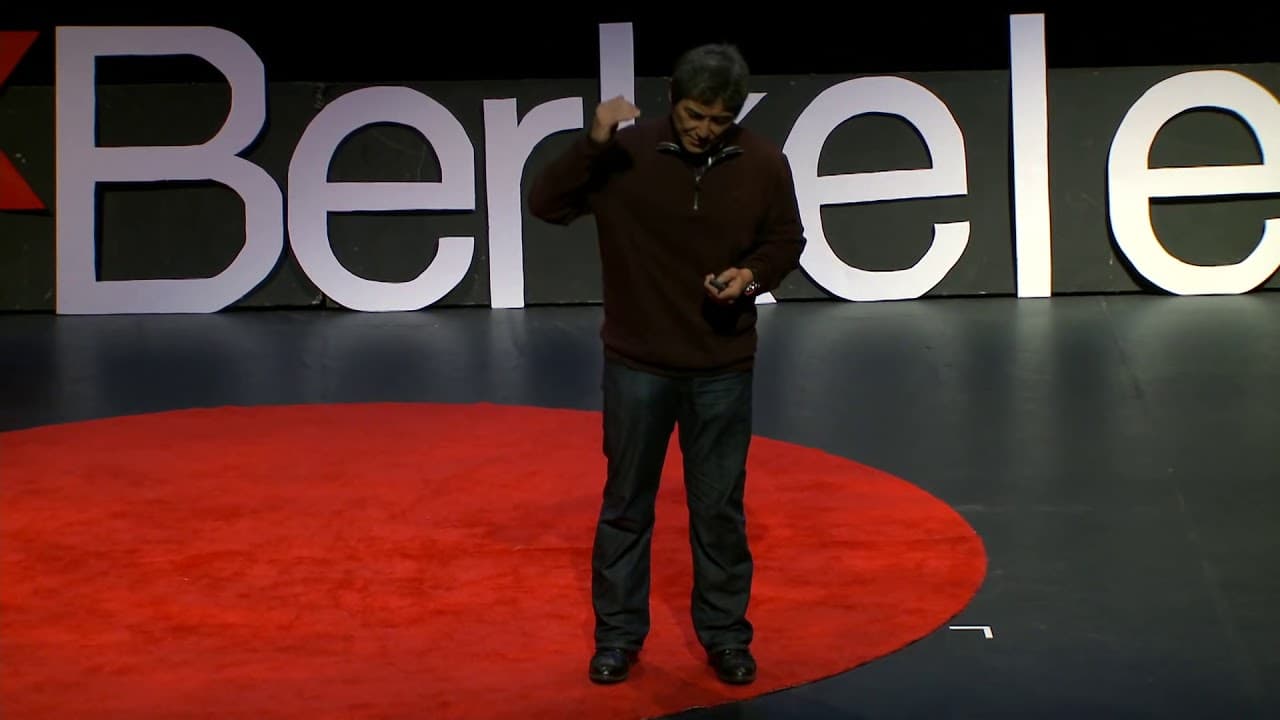
The art of innovation | Guy Kawasaki | TEDxBerkeley
TL;DR
Guy Kawasaki shares ten key points on mastering innovation.
Transcript
Transcriber: Translate TED Reviewer: Queenie Lee Thank you. Yes, it is true that I am a Stanford graduate. Don't hold that against me, okay? My son goes to Cal, so I have some link to Cal. It is really an honor to speak at any TEDx, but to open one up is really, really special. So last night I told my wife, you know, of all places, in your ... Read More
Key Insights
- Innovation starts with a desire to make meaning, not money. Companies like Apple, Google, and eBay succeeded because they aimed to democratize technology and commerce.
- Creating a mantra is crucial. Unlike a long mission statement, a mantra is a short phrase explaining why your idea should exist, such as 'Authentic athletic performance' for Nike.
- Jumping curves is essential for innovation. Instead of improving existing products incrementally, aim for revolutionary changes, like moving from ice harvesting to refrigerators.
- Great innovation has five qualities: deep, intelligent, complete, empowering, and elegant. Products should solve problems meaningfully and enhance users' lives.
- Don't wait for perfection. Release revolutionary products even if they have some imperfections. This approach allows for iterative improvements.
- Be open to unexpected uses of your products. Sometimes, customers will find new applications, as seen with Macintosh's unexpected success in desktop publishing.
- Polarizing opinions is part of great innovation. Products like TiVo and Harley-Davidson have strong advocates and detractors, which can be a sign of impactful innovation.
- Perfecting your pitch is vital. Customize introductions and follow the 10-20-30 rule: 10 slides, 20 minutes, and 30-point font for effective presentations.
Install to Summarize YouTube Videos and Get Transcripts
Explore YouTube Video Summarizer or Get YouTube Transcript Extractor
Questions & Answers
Q: What is the first step towards innovation according to Guy Kawasaki?
The first step towards innovation, according to Guy Kawasaki, is the desire to make meaning rather than money. He argues that companies should aim to change the world, as this often leads to financial success. By focusing on making a meaningful impact, companies like Apple and Google have achieved both innovation and profitability.
Q: Why does Kawasaki emphasize creating a mantra over a mission statement?
Kawasaki emphasizes creating a mantra because it is concise and powerful, capturing the essence of why a company or product exists in just a few words. Unlike lengthy mission statements that can be vague and uninspiring, a mantra is memorable and provides clear direction. For example, Nike's mantra 'Authentic athletic performance' succinctly conveys its core purpose.
Q: What does 'jumping curves' mean in the context of innovation?
'Jumping curves' refers to making significant, revolutionary changes rather than incremental improvements. Kawasaki illustrates this with the evolution from ice harvesting to refrigerators, emphasizing that true innovation occurs when companies move beyond existing paradigms to create entirely new solutions. This approach enables groundbreaking advancements and sets companies apart from competitors.
Q: What are the five qualities of great innovation according to Kawasaki?
According to Kawasaki, great innovation possesses five qualities: it is deep, intelligent, complete, empowering, and elegant. These qualities ensure that products not only solve users' problems but also enhance their lives and provide a seamless, satisfying experience. By embodying these attributes, innovations can achieve lasting impact and success in the market.
Q: How does Kawasaki suggest handling imperfections in new products?
Kawasaki suggests that innovators should not wait for perfection before releasing new products. Instead, they should embrace the concept of 'Don't worry, be crappy,' meaning it's acceptable for revolutionary products to have some imperfections initially. This approach allows for iterative improvements and ensures that groundbreaking innovations reach the market without unnecessary delays.
Q: Why is it important to let 100 flowers blossom in innovation?
Letting 100 flowers blossom means being open to unexpected uses and audiences for your products. Kawasaki explains that innovators may initially have a specific target user or application in mind, but real-world usage can reveal new opportunities. Embracing these discoveries can lead to greater success, as demonstrated by Macintosh's unexpected role in desktop publishing.
Q: What role does polarization play in great innovation?
Polarization is a common characteristic of great innovation. Kawasaki notes that impactful products often have both strong advocates and detractors, as seen with TiVo and Harley-Davidson. This polarization indicates that the product is making a significant impact and resonating with a specific audience, which can drive brand loyalty and differentiation in the market.
Q: What is the 10-20-30 rule in presentations?
The 10-20-30 rule, advocated by Kawasaki, is a guideline for effective presentations: use 10 slides, present them in 20 minutes, and ensure the font size is at least 30 points. This approach helps maintain audience engagement, ensures clarity, and accommodates the technical challenges often encountered during presentations, leading to more successful communication of ideas.
Summary & Key Takeaways
-
Guy Kawasaki emphasizes that innovation is about making meaningful changes rather than just making money. He illustrates this with examples from companies like Apple and Google.
-
He advises creating a concise mantra instead of lengthy mission statements and stresses the importance of jumping to new curves rather than improving existing ones incrementally.
-
Kawasaki outlines the qualities of great innovation, encourages releasing products with imperfections, and highlights the importance of adapting to unexpected product uses and perfecting presentations.
Read in Other Languages (beta)
Share This Summary 📚
Summarize YouTube Videos and Get Video Transcripts with 1-Click
Try YouTube Summary with ChatGPT & Claude or YouTube Transcript Generator
Explore More Summaries from TEDx Talks 📚





Summarize YouTube Videos and Get Video Transcripts with 1-Click
Try YouTube Summary with ChatGPT & Claude or YouTube Transcript Generator