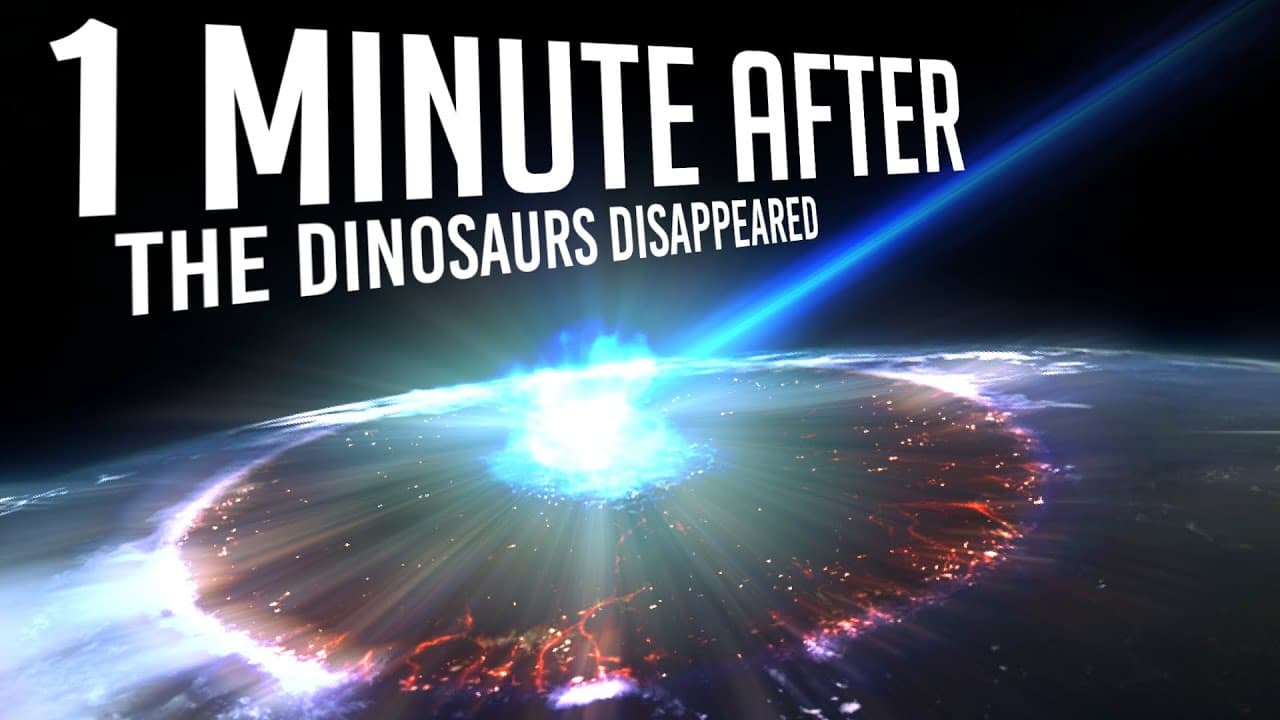
What happened In The First Minutes After The Dinosaurs Disappeared?
TL;DR
Earth's post-dinosaur extinction period was marked by devastating tsunamis, fires, acid rain, and a year-long lack of sunlight, leading to the death of 75% of living things. However, life gradually recovered, with small animals, plants like ferns, and eventually, mammals, flourishing and evolving over millions of years.
Transcript
about 66 million years ago at the end of the cretaceous period the planet lost its dinosaurs everyone knows that this happened because of a global catastrophe but what happened immediately after the mass extinction i decided to go back in time for a while and see for myself and it turns out that everything was completely different than we're used t... Read More
Key Insights
- 💱 The asteroid impact 66 million years ago caused a global catastrophe, leading to the extinction of dinosaurs and significant changes to the Earth's climate.
- 🇧🇭 The impact resulted in devastating tsunamis, forest fires, acid rain, and a year-long absence of sunlight, causing widespread destruction and death.
- 🔽 Gradually, life began to recover, with small animals, ferns, and eventually mammals adapting and evolving to repopulate the Earth.
- 🇦🇽 The recovery process took millions of years, with the oceans recovering more slowly than land ecosystems.
- 🐦 Birds and some lizards are considered surviving dinosaurs, as they adapted to the changing environment in their ability to swim, dive, or seek shelter.
- 💠 Human evolution was triggered by the asteroid impact, shaping the future of the planet.
- 🛟 While another disaster of this magnitude would have catastrophic consequences for humanity, the Earth would eventually recover and life would go on.
Install to Summarize YouTube Videos and Get Transcripts
Explore YouTube Video Summarizer or Get YouTube Transcript Extractor
Questions & Answers
Q: What were the immediate consequences of the asteroid impact on Earth?
The impact caused mega tsunamis, destroyed forests, led to acid rain, and resulted in a year-long absence of sunlight, causing the death of 75% of living things.
Q: Did any dinosaurs manage to survive the immediate aftermath of the extinction event?
It is unlikely that any dinosaurs survived due to the combination of tsunamis, earthquakes, intense heat, and fires that resulted from the impact.
Q: How long did it take for life to start recovering after the mass extinction?
Single-celled organisms and ferns were some of the first to recover, with mammals and larger species taking hundreds of thousands to millions of years to repopulate the Earth.
Q: How did the Earth gradually return to normal after the disaster?
Over time, plants like palm trees replaced ferns, providing more nutritious food for mammals. Evolution led to the appearance of humans, with the Earth eventually recovering over millions of years.
Key Insights:
- The asteroid impact 66 million years ago caused a global catastrophe, leading to the extinction of dinosaurs and significant changes to the Earth's climate.
- The impact resulted in devastating tsunamis, forest fires, acid rain, and a year-long absence of sunlight, causing widespread destruction and death.
- Gradually, life began to recover, with small animals, ferns, and eventually mammals adapting and evolving to repopulate the Earth.
- The recovery process took millions of years, with the oceans recovering more slowly than land ecosystems.
- Birds and some lizards are considered surviving dinosaurs, as they adapted to the changing environment in their ability to swim, dive, or seek shelter.
- Human evolution was triggered by the asteroid impact, shaping the future of the planet.
- While another disaster of this magnitude would have catastrophic consequences for humanity, the Earth would eventually recover and life would go on.
- Scientific knowledge about these events has been obtained through fossils, samples of Earth, and stones, providing insight into the end of the dinosaur era.
Summary & Key Takeaways
-
A massive asteroid or comet struck the Earth, causing a chain of destruction including mega tsunamis, earthquakes, and landslides.
-
The impact led to the extinction of dinosaurs, destruction of forests, acid rain, and a year-long absence of sunlight.
-
Over time, life slowly recovered, with small animals, ferns, and eventually mammals adapting and evolving to repopulate the Earth.
Read in Other Languages (beta)
Share This Summary 📚
Summarize YouTube Videos and Get Video Transcripts with 1-Click
Try YouTube Summary with ChatGPT & Claude or YouTube Transcript Generator
Explore More Summaries from Ridddle 📚





Summarize YouTube Videos and Get Video Transcripts with 1-Click
Try YouTube Summary with ChatGPT & Claude or YouTube Transcript Generator