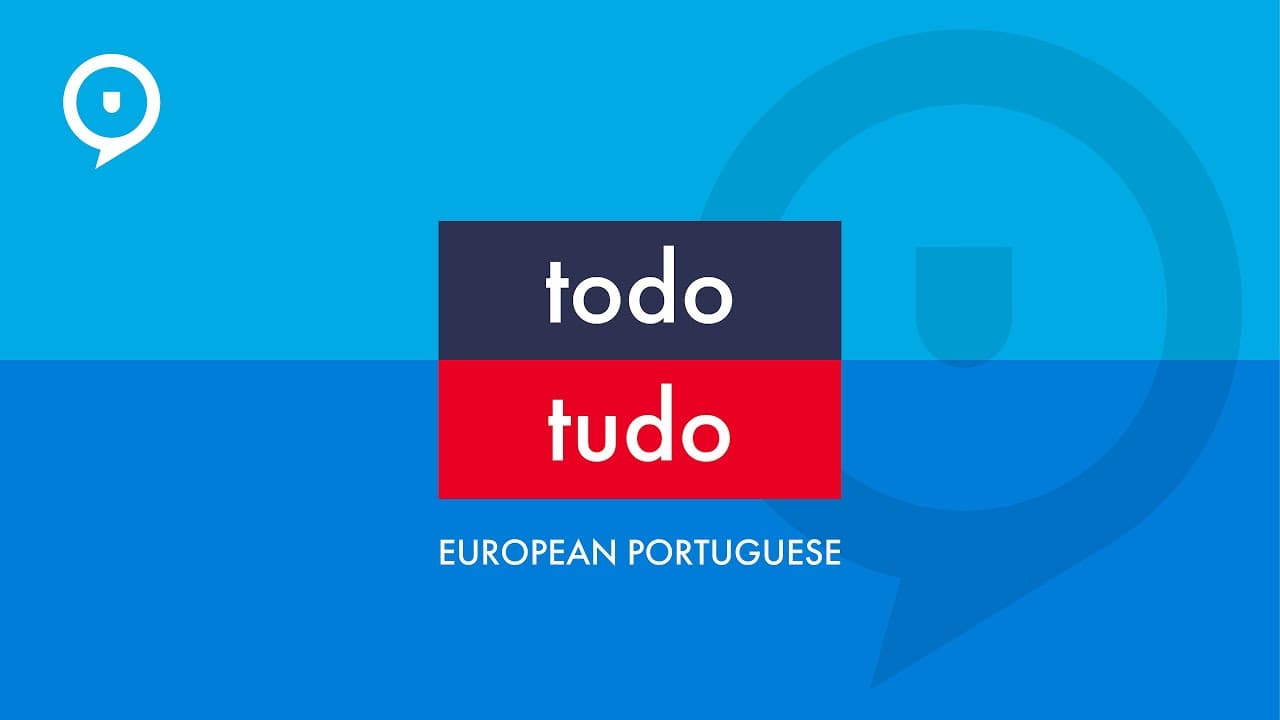
European Portuguese - todo vs. tudo (+ dialogue)
TL;DR
Explore the difference between 'todo' and 'tudo' in Portuguese.
Transcript
hola welcome to the portuguese lab podcast today we are looking at the difference between and todo i'll explain the difference with a few examples and after that you'll listen to a dialogue where you can see both words in action the translation of the examples is available on the video if you're a member of the portuguese lab academy be sure to pra... Read More
Key Insights
- The podcast explains the difference between 'todo' and 'tudo' in European Portuguese, using examples and a dialogue for clarity.
- 'Todo' translates to 'every', 'all', or 'the whole' and changes form based on the gender and number of the noun it modifies.
- 'Tudo' means 'everything' and is invariable, not changing form as it refers to verbs or actions rather than specific nouns.
- Examples with 'todo' include phrases like 'he ate the whole cake' and 'they watched all the movies', demonstrating its variability.
- Examples with 'tudo' include 'I studied everything for the exam', showing its use in referring to actions or verbs.
- The opposite of 'tudo' is 'nada', meaning 'nothing', used to express the absence of any action or understanding.
- The dialogue provided in the podcast illustrates the practical use of both 'todo' and 'tudo' in conversation.
- The Portuguese Lab Academy offers structured courses and exercises for learning European Portuguese, emphasizing grammar, vocabulary, and pronunciation.
Install to Summarize YouTube Videos and Get Transcripts
Explore YouTube Video Summarizer or Get YouTube Transcript Extractor
Questions & Answers
Q: What is the main focus of the podcast episode?
The main focus of the podcast episode is to explain the difference between 'todo' and 'tudo' in European Portuguese. It provides examples and a dialogue to illustrate how each word is used in different contexts, helping learners understand their distinct meanings and applications.
Q: How does 'todo' differ from 'tudo' in terms of usage?
'Todo' differs from 'tudo' in that it is a variable word, changing its form based on the gender and number of the noun it modifies. It translates to 'every', 'all', or 'the whole'. In contrast, 'tudo' is invariable and refers to actions or verbs, meaning 'everything'.
Q: Can you provide examples of sentences using 'todo'?
Examples of sentences using 'todo' include 'he ate the whole cake' and 'they watched all the movies'. These examples demonstrate how 'todo' changes form to match the gender and number of the noun it describes, showing its variability in different contexts.
Q: What are some examples of sentences using 'tudo'?
Examples of sentences using 'tudo' include 'I studied everything for the exam' and 'I understood everything that you said'. These sentences illustrate how 'tudo' is used to refer to actions or verbs, emphasizing its invariable nature in contrast to 'todo'.
Q: What does 'nada' mean, and how is it used?
'Nada' means 'nothing' and is used to express the absence of any action or understanding. For example, 'I didn't study anything for the exam' and 'I didn't understand anything that you said' demonstrate how 'nada' is used as the opposite of 'tudo'.
Q: What resources are available at the Portuguese Lab Academy?
The Portuguese Lab Academy offers a variety of resources for learning European Portuguese, including step-by-step online courses covering grammar, vocabulary, verb conjugations, pronunciation, and dialogues. The academy provides structured guidance, exercises, and support to help learners improve their language skills effectively.
Q: How does the podcast help in learning Portuguese?
The podcast aids in learning Portuguese by providing clear explanations of language concepts, such as the difference between 'todo' and 'tudo'. It uses examples and dialogues to illustrate these concepts in action, making it easier for learners to grasp and apply them in real-world conversations.
Q: What is the significance of understanding 'todo' and 'tudo' in Portuguese?
Understanding 'todo' and 'tudo' is significant in Portuguese because it helps learners use these words correctly in conversation. Knowing when to use each term, based on whether it refers to nouns or actions, enhances communication skills and ensures clarity in expressing ideas and actions.
Summary & Key Takeaways
-
The podcast episode focuses on differentiating 'todo' and 'tudo' in European Portuguese, providing examples and a dialogue for better understanding. 'Todo' is variable and changes with the noun's gender and number, while 'tudo' is invariable, referring to actions.
-
Listeners are encouraged to practice with exercises available at the Portuguese Lab Academy, which offers comprehensive language courses. The academy provides step-by-step guidance in grammar, vocabulary, verb conjugations, and pronunciation.
-
The episode highlights the importance of understanding these distinctions to use 'todo' and 'tudo' correctly in conversation. It also introduces the opposite term 'nada', which means 'nothing', to express the absence of action or understanding.
Read in Other Languages (beta)
Share This Summary 📚
Summarize YouTube Videos and Get Video Transcripts with 1-Click
Try YouTube Summary with ChatGPT & Claude or YouTube Transcript Generator
Explore More Summaries from Portuguese Lab 📚




Summarize YouTube Videos and Get Video Transcripts with 1-Click
Try YouTube Summary with ChatGPT & Claude or YouTube Transcript Generator