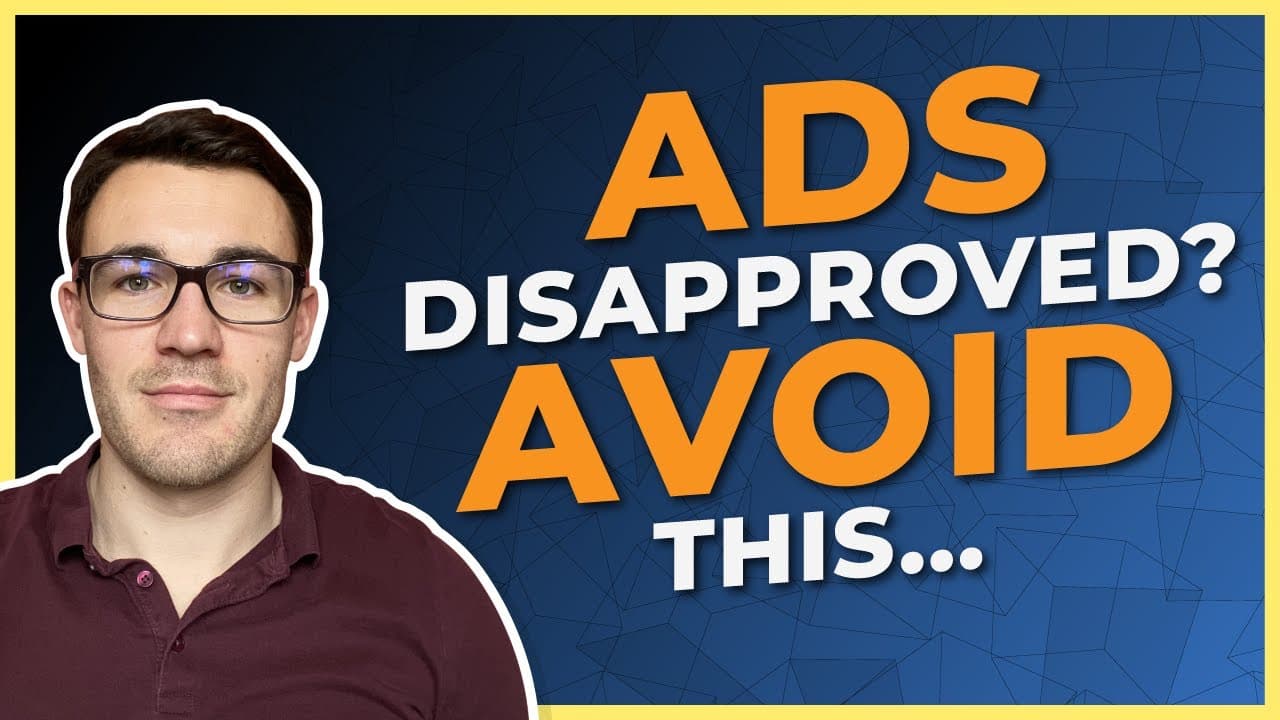
Facebook Ads Disapproved?! AVOID this...
TL;DR
Avoid personal questions in Facebook ads to prevent disapproval.
Transcript
hi guys it's ben heath from lead guru and in this video i'm going to talk about something you should really avoid if you find that you're getting your facebook ads disapproved now before i get into that should i very quickly ask you to smash a like on this video and subscribe to my channel if you are new and haven't done so already okay so there ar... Read More
Key Insights
- Facebook ads are often disapproved due to personalization in ad copy, particularly with direct questions that include 'you'.
- Avoid using direct personal questions such as 'Are you' or 'Do you' in ad headlines or primary text to reduce disapproval risks.
- Focusing on product or service benefits rather than personalizing the ad copy can help in getting ads approved.
- Using the call-out method can be effective if done correctly, by addressing groups without personalizing or using controversial identifiers.
- Avoid controversial topics such as politics, religion, ethnicity, and medical conditions in ad copy to prevent disapproval.
- Facebook's initial ad review process is algorithm-based, making it critical to avoid personalized language that the algorithm can flag.
- Rewriting ad copy to focus on general themes or benefits rather than personal identifiers can increase the likelihood of approval.
- Facebook provides less detailed reasons for ad disapproval, making it important for advertisers to preemptively adjust their strategies.
Install to Summarize YouTube Videos and Get Transcripts
Explore YouTube Video Summarizer or Get YouTube Transcript Extractor
Questions & Answers
Q: Why are Facebook ads often disapproved?
Facebook ads are frequently disapproved due to personalization in the ad copy, particularly when advertisers use direct questions that include personal pronouns like 'you'. This approach can trigger Facebook's algorithm during the initial review process, leading to disapproval.
Q: What should advertisers avoid in their Facebook ad copy?
Advertisers should avoid using direct personal questions such as 'Are you' or 'Do you' in their ad headlines or primary text. Additionally, they should steer clear of controversial topics like politics, religion, ethnicity, and medical conditions to reduce the risk of ad disapproval.
Q: How can advertisers increase the likelihood of their Facebook ads being approved?
To increase the likelihood of ad approval, advertisers should focus on highlighting the benefits of their product or service rather than personalizing the ad copy. They can use general themes or the call-out method without personal identifiers to engage the audience effectively.
Q: What is the call-out method in Facebook advertising?
The call-out method involves addressing a group or category without personalizing the message. For example, using terms like 'West Londoners' or 'Soccer Fans' can effectively capture attention without using personal pronouns that might lead to ad disapproval.
Q: Why is it important to avoid controversial topics in Facebook ads?
Controversial topics such as politics, religion, ethnicity, and medical conditions can lead to ad disapproval because they are sensitive and may not align with Facebook's advertising policies. Avoiding these topics helps in creating ads that are more likely to be approved.
Q: What role does Facebook's algorithm play in ad approval?
Facebook's algorithm is responsible for the initial review of submitted ads. It scans for personalized language and controversial content that could lead to disapproval. Understanding this process helps advertisers craft ads that are less likely to be flagged by the algorithm.
Q: How can rewriting ad copy help in getting Facebook ads approved?
Rewriting ad copy to focus on general themes or product benefits rather than personal identifiers can help in bypassing the algorithm's flags. This approach increases the chances of approval by aligning with Facebook's advertising standards and avoiding personalization.
Q: Why does Facebook provide limited reasons for ad disapproval?
Facebook provides limited reasons for ad disapproval to streamline the review process and focus on policy enforcement. This lack of detailed feedback means advertisers must proactively adjust their strategies to align with known policies and reduce the risk of disapproval.
Summary & Key Takeaways
-
Facebook ads often face disapproval due to personalization in ad copy, particularly through direct questions. To avoid this, advertisers should focus on product benefits and avoid controversial topics. Using the call-out method without personal identifiers can be effective.
-
The initial review of Facebook ads is algorithm-based, making it crucial to avoid personalized language that could be flagged. Advertisers are encouraged to rewrite ad copy by focusing on general themes and benefits rather than personal identifiers.
-
Facebook provides limited reasons for ad disapproval, so advertisers must proactively adjust their strategies. Avoiding controversial topics and direct personal questions can significantly increase the chances of ad approval.
Read in Other Languages (beta)
Share This Summary 📚
Summarize YouTube Videos and Get Video Transcripts with 1-Click
Try YouTube Summary with ChatGPT & Claude or YouTube Transcript Generator
Explore More Summaries from Ben Heath 📚

Summarize YouTube Videos and Get Video Transcripts with 1-Click
Try YouTube Summary with ChatGPT & Claude or YouTube Transcript Generator