Building an entity extraction model using BERT
TL;DR
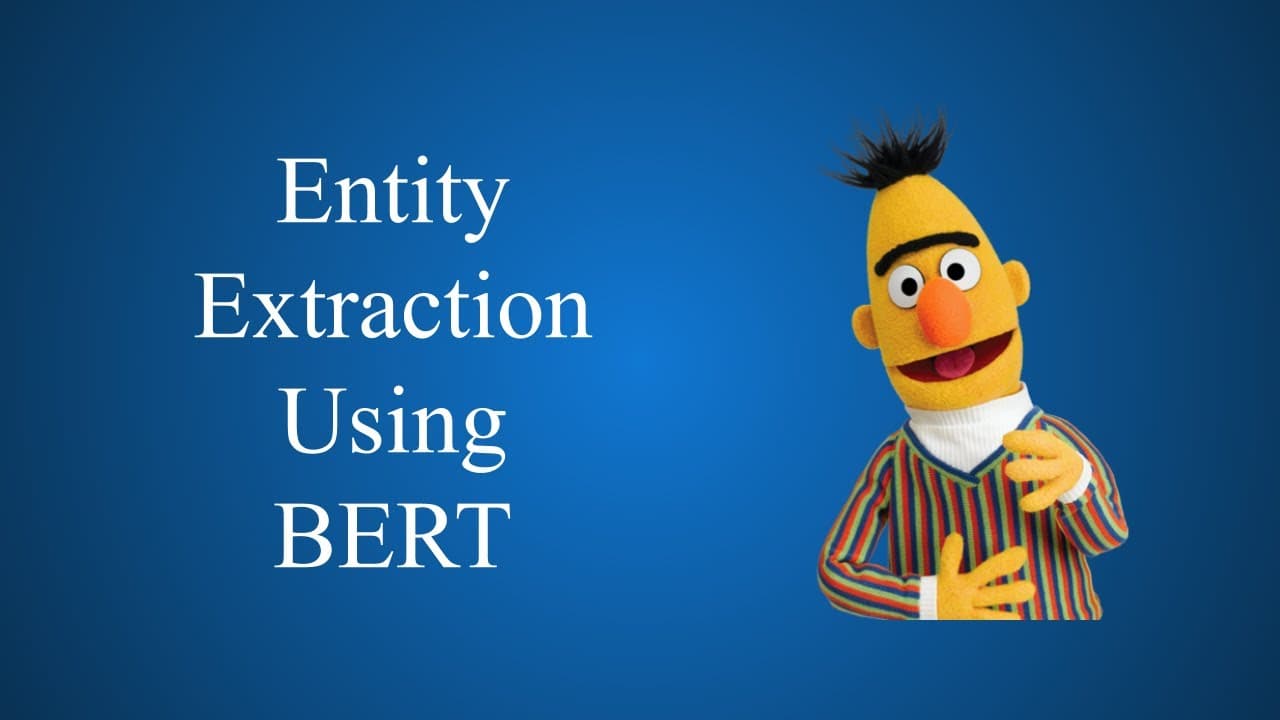
Learn how to perform entity extraction using BERT, a popular transformer-based model, for various use cases.
Transcript
hello everyone and welcome to this brand new episode which is a very special episode again and in this one I'm going to talk about entity extraction using bird so a lot of people have asked me to just to do this video and I thought it's now the right time to do this video and entity extraction using word is not really straightforward you have to th... Read More
Key Insights
- ❓ Entity extraction involves identifying and extracting different entities from text.
- ⚾ BERT-based models are commonly used for entity extraction tasks.
- 🚂 The training process involves tokenizing, encoding, and training a model using BERT.
- 😒 Use cases of entity extraction include sentiment analysis and calendar event generation.
- ❓ BERT-Cased and BERT-Uncased are popular options for entity extraction using BERT.
- 🏷️ Labels and tags are used to classify entities during the training process.
- ❓ Proper encoding and tokenization are crucial for accurate entity extraction.
Install to Summarize YouTube Videos and Get Transcripts
Explore YouTube Video Summarizer or Get YouTube Transcript Extractor
Questions & Answers
Q: What is entity extraction?
Entity extraction involves identifying and extracting different entities, such as names, places, dates, and more, from text or sentences.
Q: How are BERT-based models used for entity extraction?
BERT-based models, such as BERT-Cased and BERT-Uncased, are used to encode text representations and classify entities based on the encoded representations.
Q: What are some use cases of entity extraction?
Entity extraction is used in various applications, such as extracting important dates and times from emails to automatically create calendar events, identifying entities for sentiment analysis, and more.
Q: How does the training process for entity extraction using BERT work?
The training process involves tokenizing the text, encoding it using BERT, and training a model to classify entities based on the encoded representations. The model is trained using cross-entropy loss.
Summary & Key Takeaways
-
Entity extraction involves identifying and extracting different entities from a given sentence or text.
-
BERT-based models, such as BERT-Cased and BERT-Uncased, are commonly used for entity extraction tasks.
-
The process involves tokenizing the text, encoding it using BERT, and training a model to classify entities based on the encoded representations.
Read in Other Languages (beta)
Share This Summary 📚
Summarize YouTube Videos and Get Video Transcripts with 1-Click
Try YouTube Summary with ChatGPT & Claude or YouTube Transcript Generator
Explore More Summaries from Abhishek Thakur 📚

Summarize YouTube Videos and Get Video Transcripts with 1-Click
Try YouTube Summary with ChatGPT & Claude or YouTube Transcript Generator