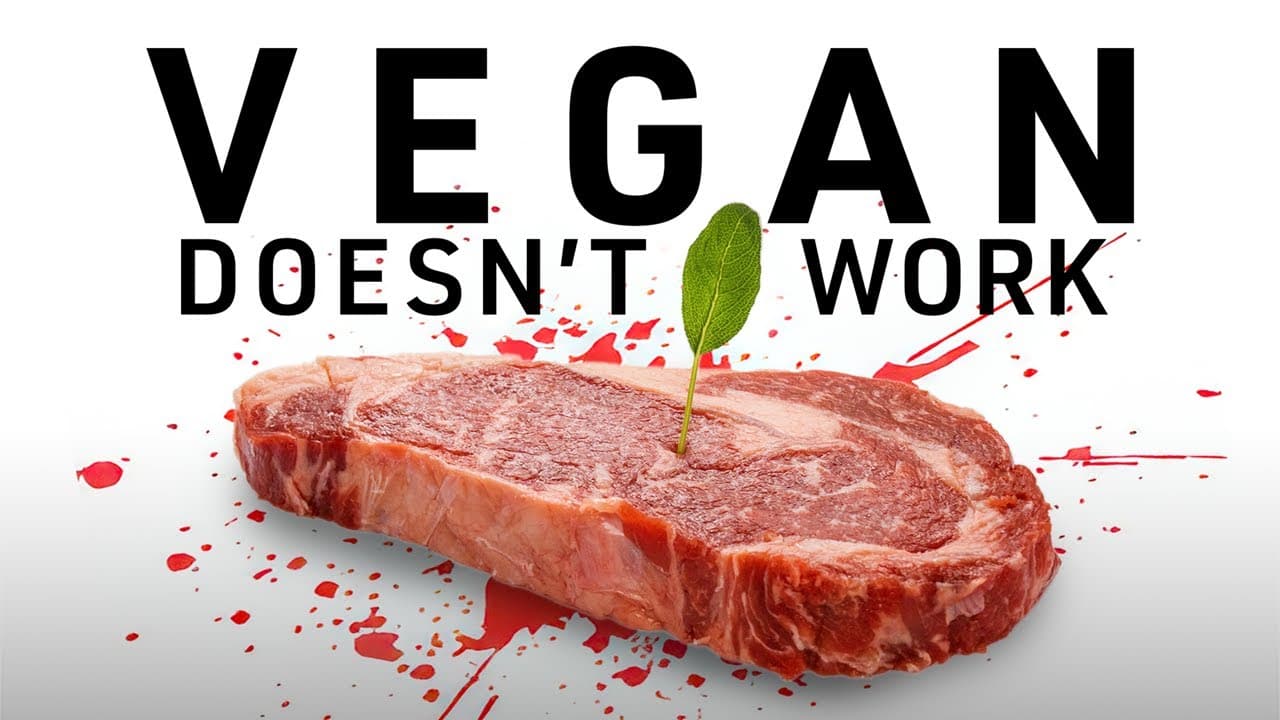
Vegan diets don't work. Here's why
TL;DR
Plant-based diets have gained popularity, but they come with risks and challenges due to nutrient deficiencies, potential digestive issues, and the complex nature of nutrient absorption and conversion.
Transcript
in 1894 a dentist was on a mission to solve a mystery that puzzled Professionals for a while why were people's teeth becoming so crooked Dr Weston a price set off on a 10-year Journey traveling to 14 different countries in search of people who naturally had excellent teeth he discovered something strange how could crooked teeth be genetic when seve... Read More
Key Insights
- 🥫 Traditional diets rich in nutrient-dense animal foods promote good oral health and straight teeth.
- 👶 Vegan diets can lead to nutrient deficiencies, digestive issues, and potential developmental concerns for infants and children.
- 🍆 Obtaining essential nutrients solely from plants can be challenging due to factors such as poor conversion rates, inhibitory compounds, and the complexity of nutrient interactions.
- ⚾ Meat and animal products provide a wide range of essential nutrients that are difficult to obtain solely from plant-based sources.
- ⚾ The track record of animal-based diets spans over a million years, while plant-based diets are relatively new and lack an extensive history of health benefits.
- 🍼 The complex nature of breast milk provides an example of the difficulty in replicating the nutritional completeness of animal-based sources.
- ⚾ Plant-based alternatives often rely on supplementation to achieve similar nutrient profiles, highlighting the challenges in creating complete replacements for animal foods.
Install to Summarize YouTube Videos and Get Transcripts
Explore YouTube Video Summarizer or Get YouTube Transcript Extractor
Questions & Answers
Q: Why did Dr. Weston A. Price's research on crooked teeth lead to a focus on nutrient-dense animal foods?
Dr. Price found that traditional diets rich in animal foods resulted in good oral health and straight teeth, while modern diets with processed foods led to crooked teeth and dental issues. This highlighted the importance of nutrient-dense animal foods for oral health.
Q: What are some challenges faced by vegans in obtaining essential nutrients?
Vegans often struggle with nutrient deficiencies, such as vitamin B12, which is only found in animal foods or synthetic supplements. They also face challenges in obtaining adequate levels of vitamin A, vitamin D, and vitamin K2 as these are primarily found in animal foods or limited plant sources.
Q: Can plant-based diets lead to digestive issues?
Yes, plant-based diets can lead to digestive issues due to factors such as high fiber content, lectins, oxalates, and phytic acid present in certain plants. These compounds can impair nutrient absorption and digestion, leading to symptoms like bloating, gas, and gastrointestinal discomfort.
Q: Why is it challenging to create a complete replacement for meat using plant-based alternatives?
Meat provides a wide range of essential nutrients like creatine, carnosine, taurine, and vitamin K2, which are difficult to obtain solely from plant-based sources. Plant-based alternatives often require supplementation to achieve similar nutrient profiles, and the absorption and conversion rates of certain plant-derived nutrients can be inefficient.
Key Insights:
- Traditional diets rich in nutrient-dense animal foods promote good oral health and straight teeth.
- Vegan diets can lead to nutrient deficiencies, digestive issues, and potential developmental concerns for infants and children.
- Obtaining essential nutrients solely from plants can be challenging due to factors such as poor conversion rates, inhibitory compounds, and the complexity of nutrient interactions.
- Meat and animal products provide a wide range of essential nutrients that are difficult to obtain solely from plant-based sources.
- The track record of animal-based diets spans over a million years, while plant-based diets are relatively new and lack an extensive history of health benefits.
- The complex nature of breast milk provides an example of the difficulty in replicating the nutritional completeness of animal-based sources.
- Plant-based alternatives often rely on supplementation to achieve similar nutrient profiles, highlighting the challenges in creating complete replacements for animal foods.
Overall, while plant-based diets can have health benefits when well-planned, they require careful consideration and supplementation to ensure the body's nutritional needs are adequately met. The long-standing track record of nutrient-dense animal foods highlights their importance in achieving optimal health and development.
Summary & Key Takeaways
-
A dentist named Dr. Weston A. Price discovered a link between crooked teeth and the introduction of processed foods, highlighting the importance of nutrient-dense animal foods for oral health.
-
The rise in veganism has led to increased interest in plant-based diets, but studies show that vegans often struggle with nutrient deficiencies and experience digestive issues.
-
The complexity of obtaining essential nutrients from plants, such as converting beta-carotene to vitamin A and absorbing vitamin D from sunlight, can pose challenges for vegans.
-
Meat and animal products provide essential nutrients like vitamin B12, iron, zinc, and calcium that are difficult to obtain solely from plant-based sources.
Read in Other Languages (beta)
Share This Summary 📚
Summarize YouTube Videos and Get Video Transcripts with 1-Click
Try YouTube Summary with ChatGPT & Claude or YouTube Transcript Generator
Explore More Summaries from What I've Learned 📚



Summarize YouTube Videos and Get Video Transcripts with 1-Click
Try YouTube Summary with ChatGPT & Claude or YouTube Transcript Generator