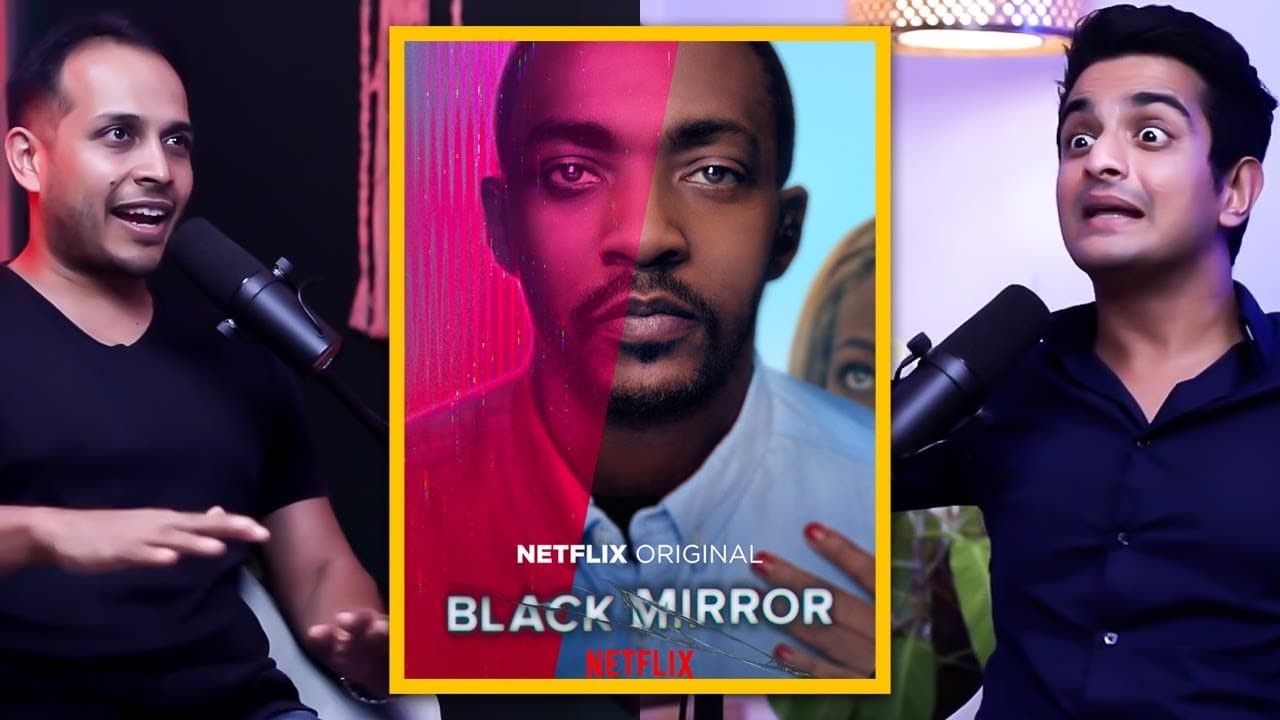
Are We Living In A Simulation? Black Mirror Is Real In 2022
TL;DR
Black Mirror illustrates the unsettling reality of technology's impact on society.
Transcript
happiness through curiosity on the runway show welcome to trs clips you're a black mirror fan i'm a black mirror fan so is harari and harari said about black mirror that it's weird how i know how he talks but you know what i mean he said it's weird that black mirrors showing these things because they are very close to what's happening in reality th... Read More
Key Insights
- 〽️ Black Mirror portrays technology's potential to alter societal norms and personal identity, prompting analysis of contemporary issues.
- 🤨 The increasing prevalence of social ratings raises concerns about personal freedoms and the implications for individual reputations.
- 💠 Technology and societal behavior are interlinked; this interdependence shapes future ethical standards and socio-economic structures.
- 🥸 The discussion about social credit systems illustrates how technology can facilitate social control under the guise of community betterment.
- 🛟 Predictions regarding machine body interfaces could redefine the nature of human interaction with technology, influencing daily life profoundly.
- 🦺 The balance between monitoring behavior for safety versus violating privacy highlights ongoing tensions in societal technological advancement.
- 🛀 Emotional responses to social pressures, as shown in Black Mirror, become significant as they shape one's public persona and potentially restrict personal agency.
Install to Summarize YouTube Videos and Get Transcripts
Explore YouTube Video Summarizer or Get YouTube Transcript Extractor
Questions & Answers
Q: How does Black Mirror relate to current technological advancements?
Black Mirror serves as a cautionary tale, presenting futuristic scenarios that echo rapidly developing technologies. The show’s depiction of societal challenges brought about by tech serves as a warning about potential outcomes if we don’t consider the implications of our innovations, particularly in areas like social media and data monitoring.
Q: What is the significance of social ratings as presented in the content?
Social ratings are becoming a reality where people's interactions and behaviors influence their social and economic opportunities. This mirrors the societal critique found in Black Mirror, where characters face consequences based on how others perceive and rate them, leading to a society where value and identity hinge on public perception.
Q: Can you explain the example of China's social credit system mentioned in the analysis?
China's social credit system incentivizes citizens to monitor and report on each other's behavior, creating a culture of social policing. This mechanism exemplifies how technology can enable surveillance and control, leading to potential violations of privacy and fostering a climate of mistrust among individuals in society.
Q: What does the speaker mean by saying "data is the new oil"?
The phrase "data is the new oil" suggests that personal data has become a highly valuable commodity in today’s digital economy. Companies harness vast amounts of personal information to drive their businesses, raising concerns about privacy and control over individual identities, reminiscent of the themes highlighted in Black Mirror.
Q: In what ways does the content describe the evolution of technology interfaces?
The speaker describes a progression from traditional computer screens to personal devices and hints at future technology where digital interfaces will integrate directly with our bodies. This evolution raises questions about privacy, consent, and the impact on human experience, echoing the speculative fears depicted in Black Mirror.
Q: How does the concept of "self-image" relate to the discussion in this content?
Self-image is critically influenced by social ratings where individuals’ perceptions of themselves can be distorted based on how others interact with and rate them. The speaker emphasizes that this not only affects personal confidence but may also have real-world consequences, such as access to credit or loans, akin to scenarios in Black Mirror.
Summary & Key Takeaways
-
The content discusses the parallels between Black Mirror episodes and emerging technologies, suggesting that dystopian scenarios depicted in the series are increasingly plausible in real life.
-
The speaker highlights the concept of "social ratings," where personal interactions and behaviors may affect socio-economic capital, similar to episodes in Black Mirror.
-
An alarming example is drawn from China’s social credit system, which incentivizes citizens to report on each other's behavior, showcasing the potential for technology to enable social policing and future dystopias.
Read in Other Languages (beta)
Share This Summary 📚
Summarize YouTube Videos and Get Video Transcripts with 1-Click
Try YouTube Summary with ChatGPT & Claude or YouTube Transcript Generator
Explore More Summaries from TRS Clips 📚





Summarize YouTube Videos and Get Video Transcripts with 1-Click
Try YouTube Summary with ChatGPT & Claude or YouTube Transcript Generator