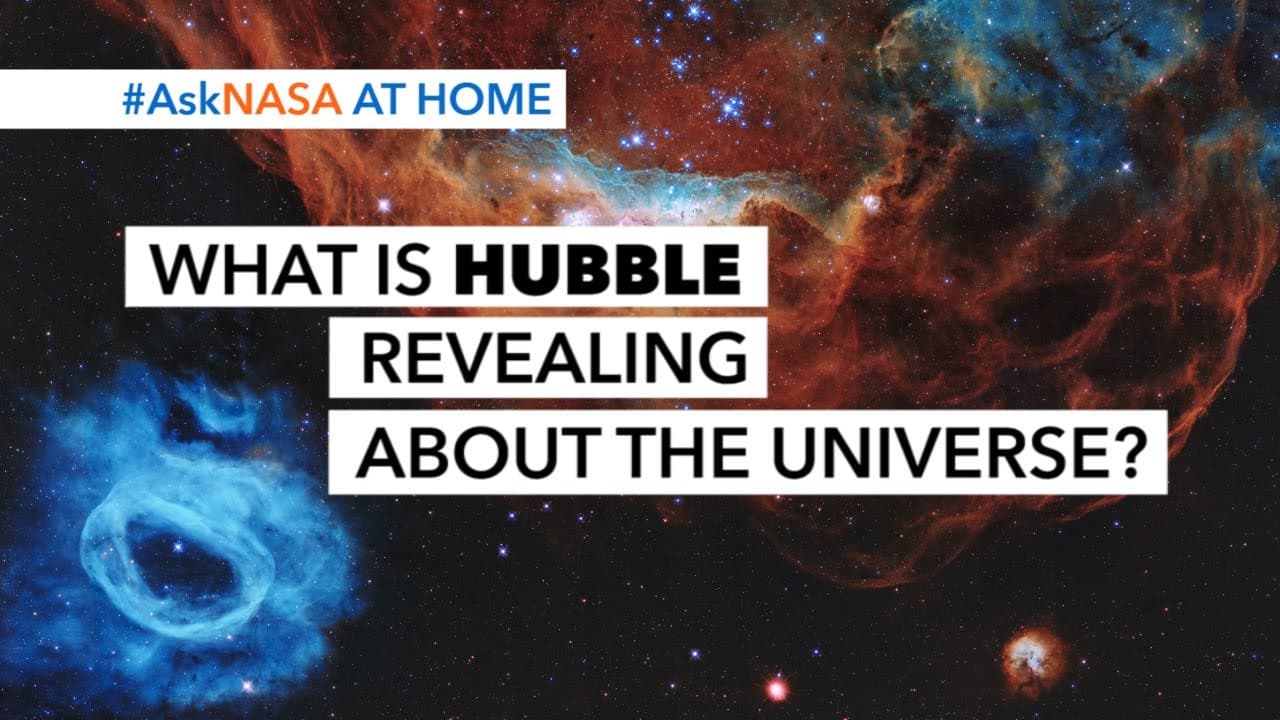
#AskNASA┃ What is Hubble revealing about the universe?
TL;DR
The Hubble Space Telescope continues to provide valuable insights into the dynamic and active nature of our universe.
Transcript
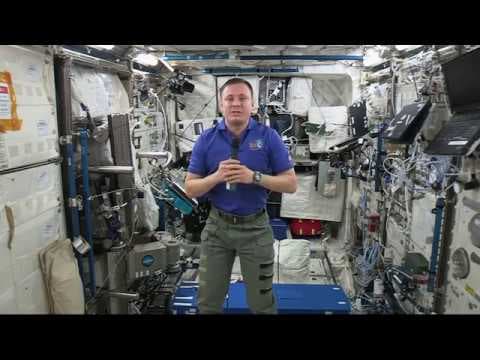
HI, I'M JENNIFER. I'M AN ASTROPHYSICIST WITH NASA'S HUBBLE SPACE TELESCOPE MISSION, WHICH OBSERVES THE UNIVERSE. THIS IS "#ASKNASA" AND I'M HERE TO ANSWER YOUR QUESTIONS. THE HUBBLE SPACE TELESCOPE HAS BEEN OPERATING FOR 30 YEARS, BUT IT'S STILL VERY POWERFUL. I THINK WE HUMANS HAVE A CURIOSITY ABOUT HOW WE FIT IN TO THE NATURAL WORLD AND HOW OU... Read More
Key Insights
- 🤩 The Hubble Space Telescope has shown that the universe is active and dynamic, with ongoing star formation and changes in our solar system.
- 😅 Exoplanets orbiting stars other than the Sun are of particular interest, with the discovery of water vapor in their atmospheres being a hot topic.
- 🧑🔬 The concept of dark energy, which accelerates the expansion of the universe, remains a mystery to scientists.
- 🫥 The Hubble Space Telescope's ability to capture images beyond the visible spectrum, such as infrared and ultraviolet, provides valuable information about celestial objects.
Install to Summarize YouTube Videos and Get Transcripts
Explore YouTube Video Summarizer or Get YouTube Transcript Extractor
Questions & Answers
Q: How does the Hubble Space Telescope receive commands and transmit data?
The Hubble Space Telescope receives commands from a control room at NASA's Goddard Space Flight Center and transmits data back to Earth. Scientists analyze this data to answer their research questions.
Q: What types of images does the Hubble Space Telescope capture?
The Hubble Space Telescope captures images of galaxies, nebulas, stars, and planets. It can see beyond the range of colors visible to the human eye, including infrared and ultraviolet wavelengths.
Q: How far back in time can the Hubble Space Telescope see?
The Hubble Space Telescope can see more than 13 billion light-years into the distant past, allowing us to observe galaxies that existed millions or even billions of years ago.
Q: What will the James Webb Space Telescope contribute to our understanding of the universe?
The James Webb Space Telescope, once launched, will provide complementary observations in the infrared part of the electromagnetic spectrum. This will offer new insights into distant galaxies and star-forming nurseries.
Summary & Key Takeaways
-
The Hubble Space Telescope has taught us that the universe is active and dynamic, with stars continuing to form and our solar system showing signs of constant change.
-
The telescope has made discoveries such as water vapor plumes on Jupiter's moon Europa and is studying exoplanets for water vapor in their atmospheres.
-
Hubble's observations have revealed that the universe's expansion is accelerating, leading to the intriguing concept of dark energy.
Read in Other Languages (beta)
Share This Summary 📚
Summarize YouTube Videos and Get Video Transcripts with 1-Click
Try YouTube Summary with ChatGPT & Claude or YouTube Transcript Generator
Explore More Summaries from NASA 📚

Summarize YouTube Videos and Get Video Transcripts with 1-Click
Try YouTube Summary with ChatGPT & Claude or YouTube Transcript Generator