Will Neuromorphic Computing Prevent AI Winter?
TL;DR
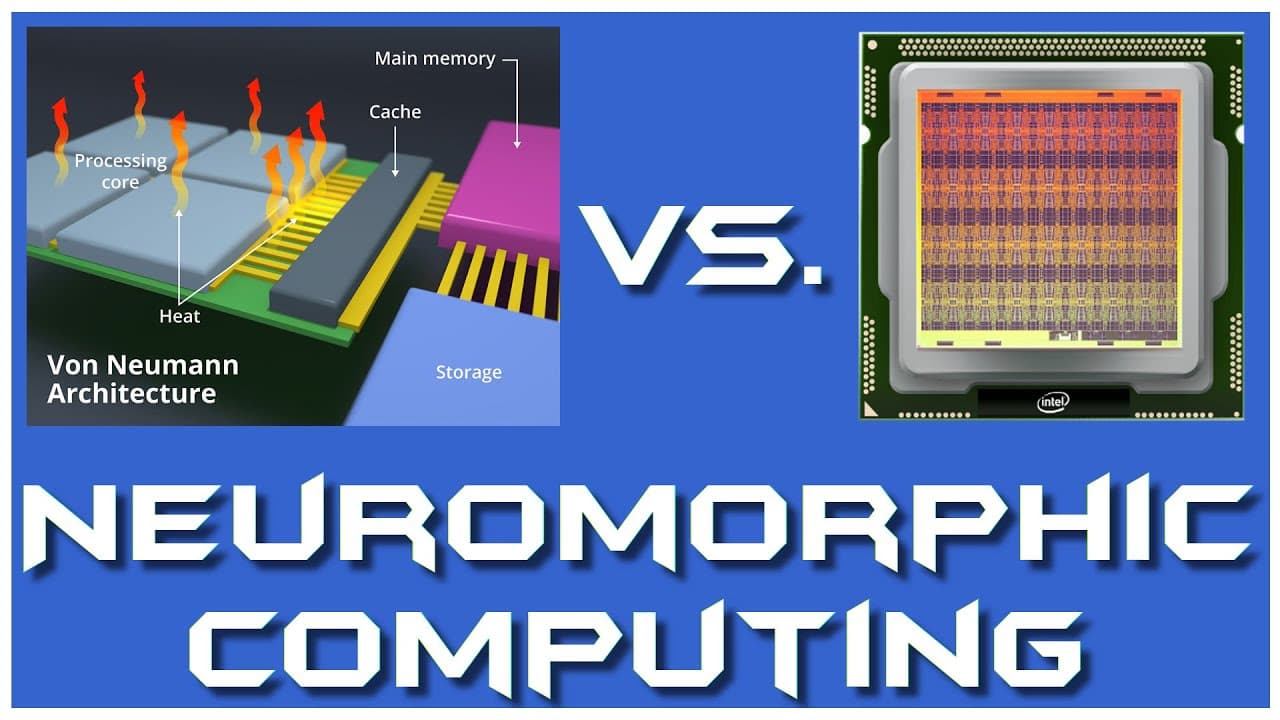
Neuromorphic computing is a promising approach to artificial intelligence that aims to mimic the functionality and power efficiency of the human brain.
Transcript
how's it going date of monkeys this is Phil from neural-net day I back with another video if you're new to the channel I'm the physicist and former semiconductor process engineer turned machine learning engineer I'm on a mission to train the next generation of data science and machine learning geniuses - make sure to subscribe so you don't miss any... Read More
Key Insights
- ✊ The human brain's power efficiency, fault tolerance, and ability to process vast amounts of information make it an ideal model for artificial intelligence.
- 💗 Neuromorphic computing reproduces the brain's functionality through pulsed voltages, plasticity, and rewiring, reducing power consumption and enabling fault tolerance.
- 👨🔬 Intel's alloy high neuromorphic research processor is a notable development, but more research and development are necessary in the field.
- 🐢 Alternative computing technologies like neuromorphic computing may become prominent if progress in deep learning slows down.
Install to Summarize YouTube Videos and Get Transcripts
Explore YouTube Video Summarizer or Get YouTube Transcript Extractor
Questions & Answers
Q: What is neuromorphic computing and how does it differ from traditional computing?
Neuromorphic computing aims to replicate the functionality of the human brain by using pulsed voltages, plasticity, and rewiring. It differs from traditional computing by focusing on low power consumption and high complexity, akin to the brain.
Q: How does the brain's power efficiency and fault tolerance compare to modern computers?
The brain operates at significantly lower power (around 20 watts) compared to modern supercomputers that consume megawatts. Additionally, the brain exhibits a high degree of fault tolerance and complexity, partially due to its slower speeds.
Q: What role does plasticity play in neuromorphic systems?
Plasticity refers to the brain's ability to change the functionality of neurons over time. Incorporating plasticity into neuromorphic systems would enhance fault tolerance and long-term reliability.
Q: How does neuromorphic computing differ from deep learning in neural networks?
Neuromorphic computing focuses on pulse signals, various transforms, and an ability to change activation functions within each unit, while deep learning neural networks rely on weighted inputs and backpropagation to modify weights.
Summary & Key Takeaways
-
Artificial intelligence has faced periods of stagnation referred to as "winters," but neuromorphic computing may offer a solution.
-
Neuromorphic computing attempts to replicate the functionality of the human brain while reducing power consumption.
-
Unlike traditional computers, neuromorphic systems rely on pulsed voltages, plasticity, and rewiring to achieve fault tolerance and complexity.
Read in Other Languages (beta)
Share This Summary 📚
Summarize YouTube Videos and Get Video Transcripts with 1-Click
Try YouTube Summary with ChatGPT & Claude or YouTube Transcript Generator
Explore More Summaries from Machine Learning with Phil 📚





Summarize YouTube Videos and Get Video Transcripts with 1-Click
Try YouTube Summary with ChatGPT & Claude or YouTube Transcript Generator