Preserving traditional recipes - 6 Minute English
TL;DR
Ghanaian recipes are vanishing; Abena Offeh-Gyimah aims to preserve them.
Transcript
Hello. This is 6 Minute English from BBC Learning English. I'm Sam. And I'm Rob. Now, all over the world people love to eat, and most of us have favourite food we like to cook. Often, this involves a recipe - that's written down instructions explaining how you combine the different items of food you are going to cook - the ingredients - into a meal... Read More
Key Insights
- Abena Offeh-Gyimah, a food writer, moved back to Ghana to rediscover and preserve traditional recipes that were being forgotten.
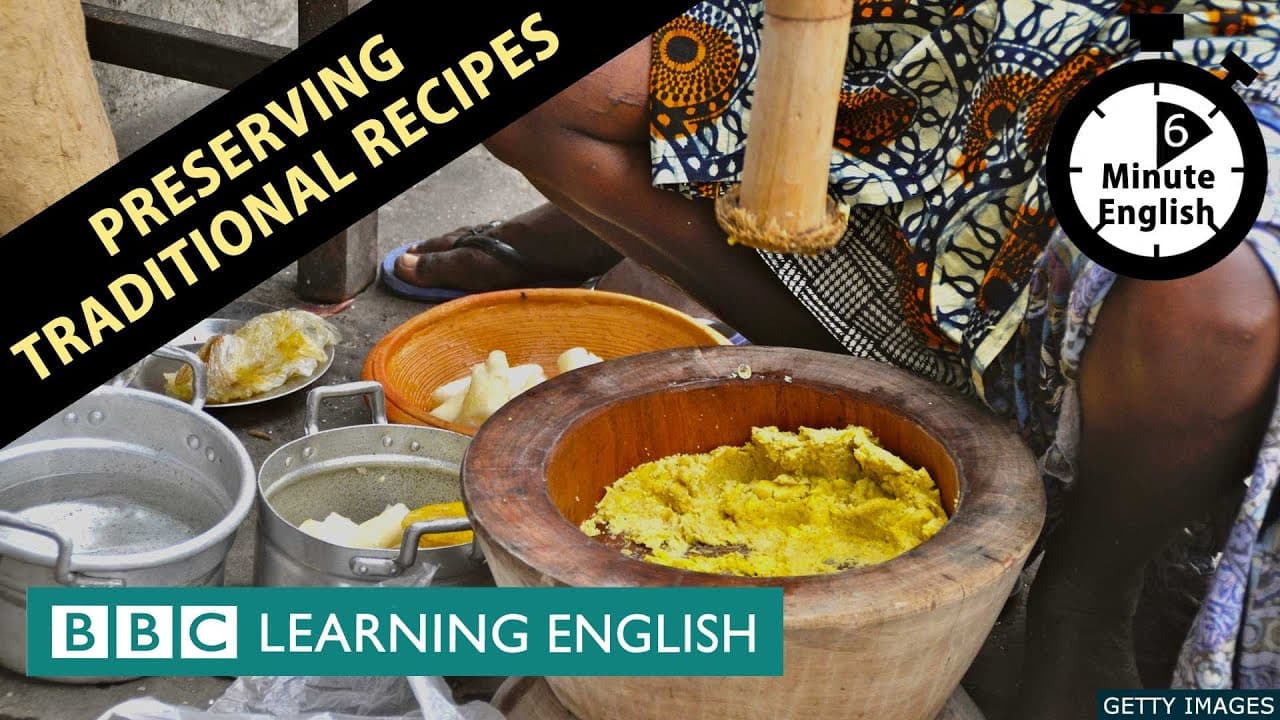
- Traditional Ghanaian cooking involves communal activities, such as using a mortar and pestle to pound ingredients like yam and plantains.
- Modern conveniences have led to a decline in traditional cooking methods, with many opting for ready-made ingredients instead.
- Abena was surprised to find that younger generations were losing cooking know-how due to the oral tradition of passing down recipes.
- She embarked on a journey across Ghana to document indigenous dishes and preserve them for future generations.
- The term 'bangers' for sausages originated from World War One when sausages would explode due to water content.
- Abena's story highlights the importance of documenting traditional knowledge to prevent cultural loss.
- Cooking is not just about sustenance but also about preserving cultural heritage and traditions.
Install to Summarize YouTube Videos and Get Transcripts
Explore YouTube Video Summarizer or Get YouTube Transcript Extractor
Questions & Answers
Q: Why did Abena Offeh-Gyimah move back to Ghana?
Abena Offeh-Gyimah moved back to Ghana to rediscover and preserve her country's traditional food culture. She was concerned about the decline in the use of traditional ingredients and cooking methods, and aimed to document these practices before they were lost to future generations.
Q: What traditional cooking method did Abena's grandparents use?
Abena's grandparents used a traditional method involving a mortar and pestle to pound ingredients like yam and plantains into a paste. This method was part of a communal cooking experience, which is being lost as people now opt for ready-made flour and modern cooking appliances.
Q: How are traditional recipes typically passed down in Ghana?
In Ghana, traditional recipes are typically passed down orally from one generation to the next, often from mother to daughter. This oral tradition means that if the knowledge is not actively preserved or documented, it risks being lost as younger generations move away from traditional practices.
Q: What changes did Abena notice in Ghana's food culture?
Upon returning to Ghana, Abena noticed that many traditional spices and ingredients were no longer being used. Modern ingredients like tomato ketchup were more common, and traditional cooking methods were being replaced by more convenient, modern techniques, leading to a loss of cultural heritage.
Q: What was the reason behind the name 'bangers' for sausages?
The name 'bangers' for sausages originated during World War One. Due to meat shortages, sausages were made with a high water content, causing them to explode with a bang when cooked. This explosive nature led to the nickname 'bangers' for sausages.
Q: What does Abena's quest highlight about cultural preservation?
Abena's quest to preserve Ghanaian traditional recipes highlights the importance of documenting cultural practices to prevent them from being forgotten. It emphasizes the role of food as a cultural artifact that connects people to their heritage and the need to actively preserve this knowledge for future generations.
Q: What is the significance of communal cooking in Ghanaian culture?
Communal cooking in Ghanaian culture is significant as it fosters social bonds and cultural continuity. Traditional methods, like using a mortar and pestle, involve group participation and shared experiences, which are integral to cultural identity. The loss of these practices reflects a broader cultural shift towards individualism and convenience.
Q: How can documenting traditional recipes benefit future generations?
Documenting traditional recipes can benefit future generations by preserving cultural knowledge that might otherwise be lost. It ensures that traditional cooking methods and ingredients are remembered and can be passed down, allowing future generations to connect with their heritage and maintain cultural diversity in a rapidly modernizing world.
Summary & Key Takeaways
-
Abena Offeh-Gyimah returned to Ghana to preserve traditional recipes after noticing a decline in their use. She documented indigenous dishes to prevent cultural loss.
-
Traditional Ghanaian cooking methods, such as using a mortar and pestle, are being replaced by modern conveniences, leading to a loss of communal cooking experiences.
-
The oral tradition of passing down recipes has resulted in younger generations losing cooking skills, prompting efforts to document and preserve these cultural practices.
Read in Other Languages (beta)
Share This Summary 📚
Summarize YouTube Videos and Get Video Transcripts with 1-Click
Try YouTube Summary with ChatGPT & Claude or YouTube Transcript Generator
Explore More Summaries from BBC Learning English 📚

Summarize YouTube Videos and Get Video Transcripts with 1-Click
Try YouTube Summary with ChatGPT & Claude or YouTube Transcript Generator