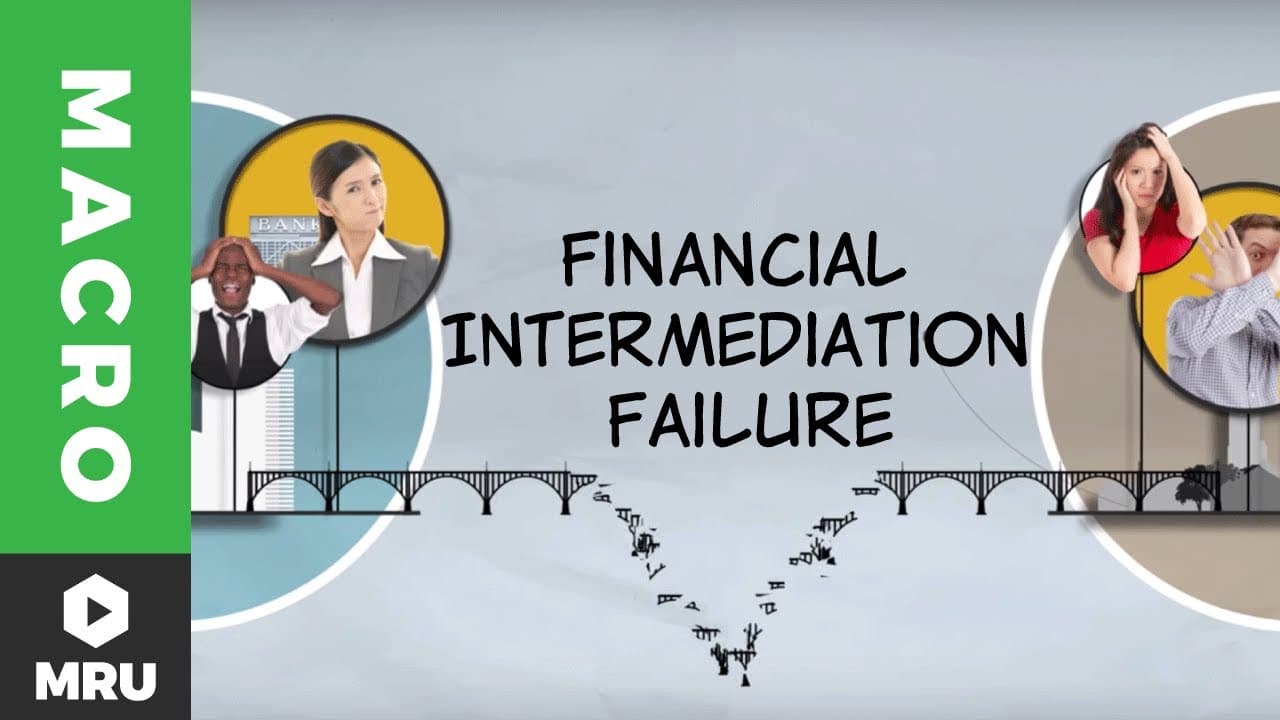
Costs of Inflation: Financial Intermediation Failure
TL;DR
Inflation affects real interest rates, impacting lenders and borrowers differently.
Transcript
♪ [music] ♪ [Alex] In our earlier video on the cost of inflation, we discussed how unexpected inflation -- it makes price signals noisier. And it encourages mistakes from price confusion and money illusion. Another cost of inflation is that it makes long-term contracting riskier. Suppose that a bank lends $100 at an interest rate of 10%. But suppos... Read More
Key Insights
- Unexpected inflation can lead to price confusion and money illusion, making price signals noisier and causing costly mistakes.
- Inflation makes long-term contracts riskier by reducing the real return on loans, redistributing wealth from lenders to borrowers.
- The Fisher Effect explains the relationship between nominal interest rates, real interest rates, and inflation, adjusting interest rates with expected inflation.
- In the 1970s, unexpected high inflation allowed borrowers with fixed-rate loans to repay with less valuable dollars, benefiting them at lenders' expense.
- Conversely, when inflation is lower than expected, borrowers face higher real interest rates, benefitting lenders and burdening borrowers.
- High and volatile inflation discourages borrowing and lending, disrupting financial intermediation and reducing economic efficiency.
- The breakdown of financial intermediation due to inflation makes coordinating savings and investments difficult, leading to a decline in total wealth.
- Predicting inflation is challenging, and mismatches between expected and actual inflation can have significant economic consequences.
Install to Summarize YouTube Videos and Get Transcripts
Explore YouTube Video Summarizer or Get YouTube Transcript Extractor
Questions & Answers
Q: How does unexpected inflation affect lenders and borrowers?
Unexpected inflation reduces the real return on loans, benefiting borrowers at the expense of lenders. For example, if inflation is higher than anticipated, borrowers can repay their loans with less valuable dollars, effectively transferring wealth from lenders to borrowers. Conversely, if inflation is lower than expected, borrowers pay higher real interest rates, benefiting lenders.
Q: What is the Fisher Effect?
The Fisher Effect, named after economist Irving Fisher, describes the relationship between nominal interest rates, real interest rates, and inflation. It suggests that nominal interest rates adjust with expected inflation to maintain a desired real interest rate. This effect is evident in historical data, where interest rates rise and fall in response to changes in inflation rates.
Q: How did inflation in the 1970s affect borrowers with fixed-rate loans?
In the 1970s, unexpected high inflation allowed borrowers with fixed-rate loans to repay their debts with less valuable dollars than anticipated. This effectively reduced the real cost of borrowing, benefiting borrowers at the expense of lenders, who received repayments in devalued currency. This scenario highlights the wealth transfer from lenders to borrowers during periods of unexpected inflation.
Q: Why is predicting inflation challenging?
Predicting inflation is challenging due to its dependence on various economic factors, including monetary policy, supply and demand dynamics, and external economic shocks. These factors can change rapidly and unpredictably, making it difficult to forecast inflation accurately. Mismatches between expected and actual inflation can have significant economic consequences, affecting interest rates and financial contracts.
Q: What happens when inflation is high and volatile?
High and volatile inflation creates uncertainty in financial markets, discouraging borrowing and lending. This uncertainty increases the risk associated with long-term contracts, such as mortgages, leading to a breakdown in financial intermediation. The resulting inefficiency in coordinating savings and investments reduces economic growth and total wealth, as financial markets struggle to allocate resources effectively.
Q: How does inflation affect financial intermediation?
Inflation affects financial intermediation by increasing the risk and uncertainty associated with lending and borrowing. When inflation is unpredictable, both lenders and borrowers become hesitant to engage in financial transactions, fearing unexpected changes in inflation rates. This reluctance can lead to a breakdown in the process of moving funds from savers to borrowers, disrupting economic activity.
Q: What role does inflation play in wealth redistribution?
Inflation can lead to wealth redistribution between lenders and borrowers. When inflation is higher than expected, borrowers benefit by repaying loans with devalued currency, effectively transferring wealth from lenders. Conversely, when inflation is lower than expected, borrowers face higher real interest rates, transferring wealth to lenders. This redistribution depends on the accuracy of inflation expectations.
Q: Why is financial intermediation important for the economy?
Financial intermediation is crucial for the economy as it facilitates the efficient allocation of resources by channeling funds from savers to borrowers. This process supports investment and consumption, driving economic growth. When inflation disrupts financial intermediation, it hampers the coordination of savings and investments, leading to reduced economic efficiency and a decline in total wealth.
Summary & Key Takeaways
-
Inflation can distort price signals and make price confusion and money illusion more prevalent, leading to costly economic mistakes. It also impacts long-term contracts by affecting the real interest rate, often redistributing wealth between lenders and borrowers based on unexpected inflation changes.
-
The Fisher Effect, named after economist Irving Fisher, describes how nominal interest rates adjust to expected inflation to maintain a desired real interest rate. Historical data shows this effect in U.S. mortgage rates, with interest rates rising and falling alongside inflation rates.
-
High and volatile inflation creates uncertainty in lending and borrowing, leading to a breakdown in financial intermediation. This disrupts the coordination of savings and investments, reducing economic efficiency and total wealth. Predicting inflation remains challenging, with significant impacts on economic outcomes.
Read in Other Languages (beta)
Share This Summary 📚
Summarize YouTube Videos and Get Video Transcripts with 1-Click
Try YouTube Summary with ChatGPT & Claude or YouTube Transcript Generator
Explore More Summaries from Marginal Revolution University 📚

Summarize YouTube Videos and Get Video Transcripts with 1-Click
Try YouTube Summary with ChatGPT & Claude or YouTube Transcript Generator