Why the "wrong side of the tracks" is usually the east side of cities | Stephen DeBerry
TL;DR
This content discusses the phenomenon of east side communities being marginalized and separated due to social, economic, and environmental factors, and emphasizes the need for inclusive and equitable design.
Transcript
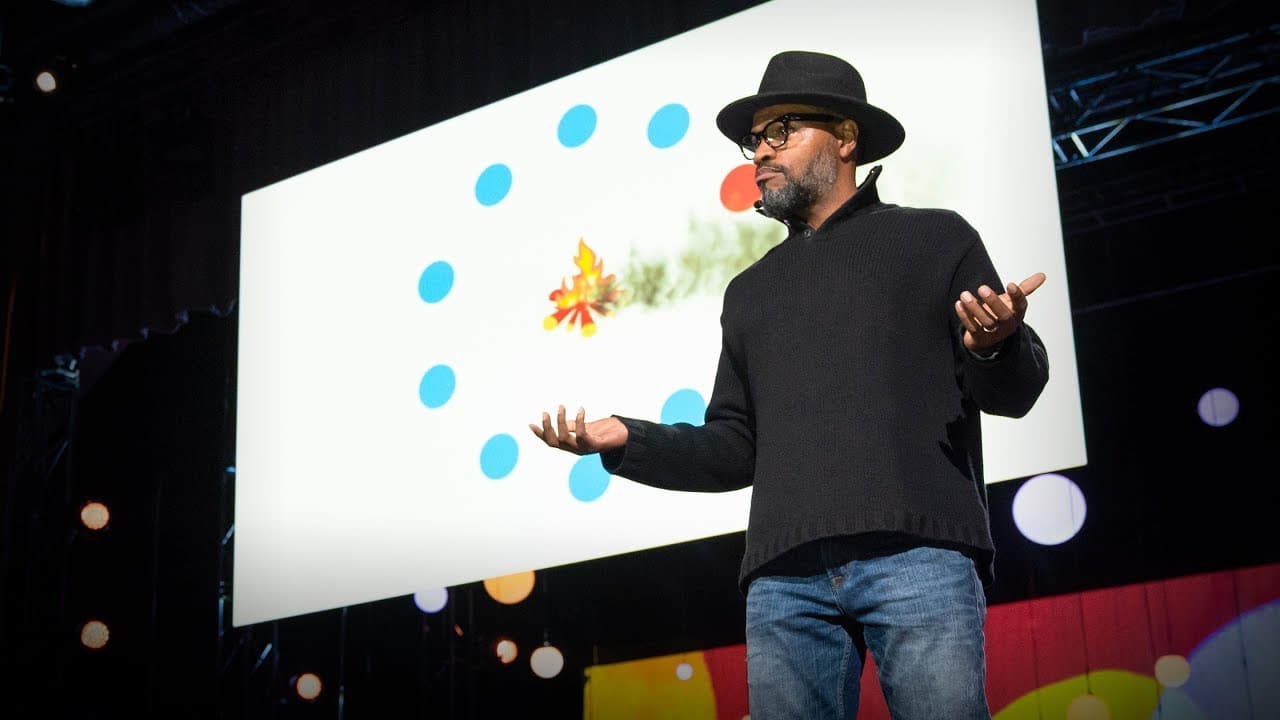
I came to talk about first principles and communities that I love -- especially East Palo Alto, California, which is full of amazing people. It's also a community that's oddly separated by the 101 freeway that runs through Silicon Valley. On the west side of the freeway in Palo Alto are the "haves," on just about any dimension you can think of: edu... Read More
Key Insights
- 🌍 Marginalized communities tend to be on the east side of cities due to the wind blowing eastward. This applies globally, including cities like East London, East Jerusalem, and East Vancouver.
- 🔍 Wind and pollution are driving marginalized communities to the east, creating a disparity by design. Economic historians in the UK have mathematically concluded this, supporting the anthropologist's observation.
- 🚧 Human design decisions, such as the segregation era in the United States, have contributed to the separation of eastside communities. Redlining and other discriminatory practices have perpetuated the cycle of low-income and disadvantaged neighborhoods.
- 💸 Sinister design decisions, from loan discrimination to infrastructure placement, have perpetuated disparity. Low property tax base, worse schools, and limited opportunities have led to a vicious downward spiral for eastside communities.
- 🛣️ Good design is the solution to the disparity. Commitment to designing for the benefit of everyone is the first principle. It requires a holistic approach to solve problems, such as creating solutions for the benefit of East Palo Alto and extending them to other eastside communities.
- 💡 Investment opportunities and policy changes can arise from solving the disparity between affluent areas like Palo Alto and disadvantaged communities like East Palo Alto in Silicon Valley. It is a chance to drive positive change and philanthropy.
- 💪 Capital, technology, and entrepreneurial talent are available to address these challenges. However, the fundamental question lies in what we are designing our economy and communities for: more disparity or a choice to come together for parity.
- 🚫 There is no wrong side of the tracks. The era of legal segregation is behind us, and it is essential to design our economy and communities with inclusivity and equality in mind.
Install to Summarize YouTube Videos and Get Transcripts
Explore YouTube Video Summarizer or Get YouTube Transcript Extractor
Questions & Answers
Q: Why are communities on the social, economic, and environmental margin often located on the east sides of places?
It turns out that wind and pollution are driving marginalized communities to the east. The Earth's rotation causes winds in the northern and southern hemispheres to blow in the same direction as the rotation, which is to the east. This phenomenon results in the east side of places experiencing more pollution and environmental challenges, leading to social and economic disparities.
Q: What are some examples of eastside communities that have experienced this disparity?
Examples of eastside communities that have faced social, economic, and environmental disparities include East Palo Alto in California, East Pittsburgh, East Detroit, East St. Louis, East Oakland, East Philly, East London, East Paris, East Jerusalem, and East Vancouver.
Q: How did human design decisions contribute to the separation of communities and the creation of disparities?
During the era of legal segregation, when most eastside communities in the United States were built, human design decisions played a significant role. Government-made maps, known as redlining, dictated where bankers should not lend, often clustering these areas on the east sides of cities. This lack of lending led to lower property tax bases, worse schools, and a less well-prepared workforce, ultimately resulting in lower incomes and perpetuating the cycle of disparity.
Q: Can the eastside dilemma be solved?
Yes, the speaker believes that the eastside dilemma can be addressed through good design. The first principle of good design is to commit to designing for the benefit of everyone. By starting with this principle, elegant solutions can be found to close the gap between communities like Palo Alto and East Palo Alto in Silicon Valley. This approach can be applied to other eastside communities, turning it into an investment opportunity and driving policy change and philanthropy.
Summary & Key Takeaways
-
East Palo Alto, California is a community separated from wealthier Palo Alto by the 101 freeway, highlighting social and economic disparities.
-
The direction of the wind contributes to marginalized communities often being located on the east side of cities.
-
Historical design decisions, such as redlining, have perpetuated inequality and led to lower incomes and limited opportunities in eastside communities. Good design principles can help address these issues and create opportunities for everyone.
Read in Other Languages (beta)
Share This Summary 📚
Summarize YouTube Videos and Get Video Transcripts with 1-Click
Try YouTube Summary with ChatGPT & Claude or YouTube Transcript Generator
Explore More Summaries from TED 📚






Summarize YouTube Videos and Get Video Transcripts with 1-Click
Try YouTube Summary with ChatGPT & Claude or YouTube Transcript Generator