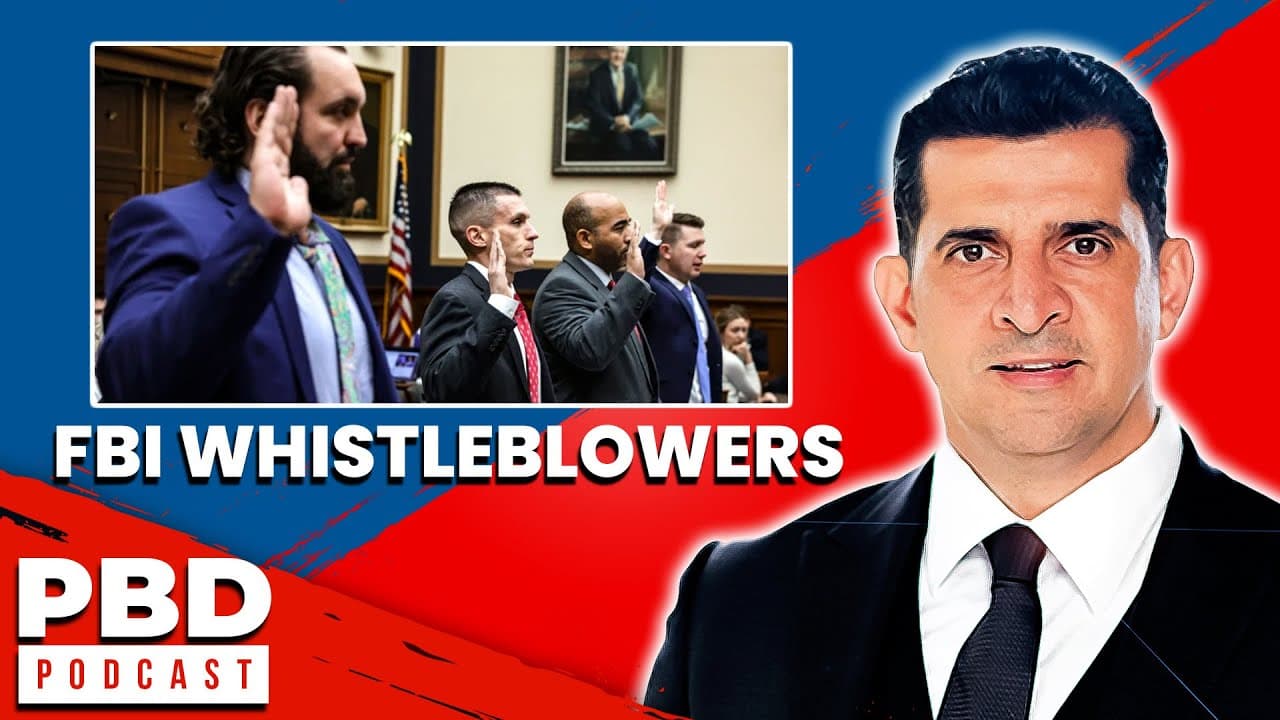
Interview With FBI Whistleblowers | PBD Podcast | Ep. 276
TL;DR
Former FBI agents reveal their experiences as whistleblowers, shedding light on issues such as stat padding, infiltration of extremist groups, and mishandling of cases during the January 6th Capitol riots.
Transcript
contagious this world entrepreneurs we get no value to hate and how they run homie look what I become okay so today's podcast is a special one obviously if you've if you've turned on the TV or you watched Clips on Twitter Facebook YouTube you have seen these faces of these two gentlemen who are are going through an interesting phase right now as th... Read More
Key Insights
- 📊 The FBI has been accused of inflating domestic terrorism statistics through the practice of stat padding.
- 👥 Infiltration of extremist groups by undercover agents and informants raises questions about methods and potential entrapment.
- ☄️ The FBI's handling of the January 6th Capitol riots has come under scrutiny, as individuals with different levels of involvement are charged and pursued.
- 🥺 Whistleblowers face significant retaliation from the FBI, leading to concerns about transparency and accountability within the agency.
Install to Summarize YouTube Videos and Get Transcripts
Explore YouTube Video Summarizer or Get YouTube Transcript Extractor
Questions & Answers
Q: What led Steve Friend and Garrett O'Boyle to become whistleblowers?
Both agents reached a tipping point after witnessing repeated instances of wrongdoing within the FBI and realizing that the agency prioritized self-interest over the pursuit of justice. They felt compelled to expose these issues and restore integrity.
Q: What are some specific examples of wrongdoing that the whistleblowers have brought to light?
They have revealed cases of stat padding, where the FBI opens multiple cases for a single incident to inflate domestic terrorism statistics. They have also exposed the infiltration of extremist groups and questionable tactics used during investigations related to January 6th.
Q: How has the FBI responded to the whistleblowers' disclosures?
The whistleblowers have faced retaliation from the FBI, including indefinite suspension and restrictions on earning above a certain income. The FBI has also attempted to discredit them and suppress their testimonies.
Q: What are the key implications of this whistleblowing case?
The case highlights the lack of transparency and accountability within the FBI. It raises concerns about the agency's priorities and its potential for politicization, as well as the need for stronger protections for whistleblowers.
Key Insights:
- The FBI has been accused of inflating domestic terrorism statistics through the practice of stat padding.
- Infiltration of extremist groups by undercover agents and informants raises questions about methods and potential entrapment.
- The FBI's handling of the January 6th Capitol riots has come under scrutiny, as individuals with different levels of involvement are charged and pursued.
- Whistleblowers face significant retaliation from the FBI, leading to concerns about transparency and accountability within the agency.
- The whistleblowers' disclosures expose a systemic issue of self-interest prevailing over dedication to the FBI's mission and the Constitution.
Summary & Key Takeaways
-
Steve Friend and Garrett O'Boyle, former FBI agents, discuss their decision to become whistleblowers and expose the agency's wrongdoing.
-
They highlight instances of stat padding, where the FBI artificially inflates domestic terrorism statistics to create the perception of a larger threat.
-
The agents also reveal the infiltration of extremist groups and questionable tactics used during investigations related to January 6th.
Read in Other Languages (beta)
Share This Summary 📚
Summarize YouTube Videos and Get Video Transcripts with 1-Click
Try YouTube Summary with ChatGPT & Claude or YouTube Transcript Generator