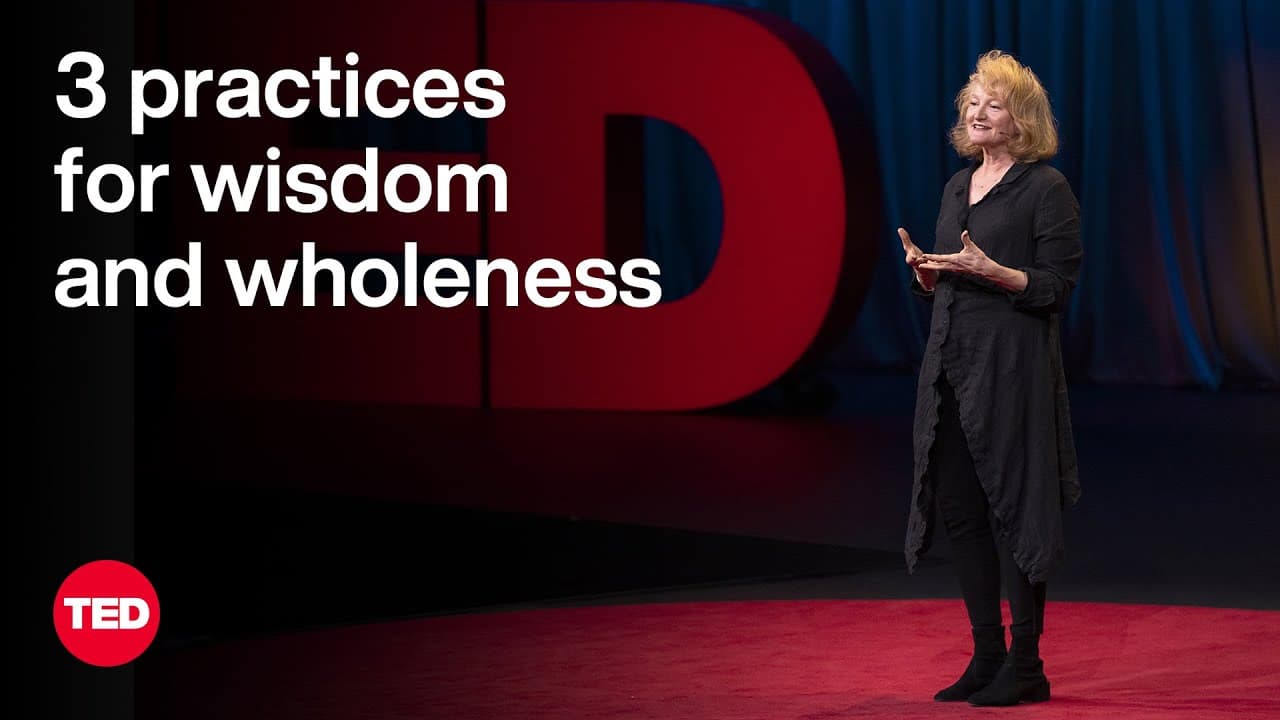
3 Practices for Wisdom and Wholeness | Krista Tippett | TED
TL;DR
In this content, the author discusses the generative narrative of our time, living with unanswered questions, and the calling for wholeness.
Transcript
Here is one way to begin to talk about what the pandemic, the post-2020 world, began to set in motion. All together, for a time, we felt for the ground beneath our feet. We remembered that the ground beneath our feet is never as solid as we believe it to be. We remembered that civilization revolves around something so tender as bodies breathing in ... Read More
Key Insights
- 🌍 The pandemic has reminded us that our world is fragile and that our actions have consequences. We have a responsibility to care for one another.
- 🌱 There is a generative narrative of our time that focuses on the positive, the growth, and the progress that is happening despite the challenges we face.
- 🧠 Our brains are wired to focus on the negative and the dangers around us. We need to consciously shift our attention to the good in order to see the abundance and potential in our world.
- ❓ Living the questions means embracing the uncertainties and complexities of life. It is through living with the questions that we can discover our own answers and find our path forward.
- 🌟 We are called to be whole human beings, both individually and collectively, and to cultivate wholeness in our societies. This does not mean achieving perfection but orienting ourselves towards what is life-giving and away from what is death-dealing.
- 🌎 Our technologies have given us the ability to think and act as a species. It is our calling to use these tools to create a more vivid and tangible reality that prioritizes the well-being of all.
- 🤝 Wisdom and wholeness emerge in moments of tension and interplay, where seemingly opposing realities coexist. It is through embracing these paradoxes that we can find balance, beauty, and growth.
- 💫 Let us begin this journey towards a more compassionate, interconnected, and flourishing world. Each of us has the power to make a difference in our own lives and in the lives of others.
Install to Summarize YouTube Videos and Get Transcripts
Explore YouTube Video Summarizer or Get YouTube Transcript Extractor
Questions & Answers
Q: What does the speaker mean by "generative narrative" and how can we start to see it?
The speaker explains that the generative narrative is the abundant reality of things going right in the world, despite the prevalent narrative of catastrophe and dysfunction. To see it, we need to actively take in the good happening around us, such as people working to be of service and making a positive impact on others. By consciously orienting ourselves towards what is good and redemptive, we can begin to shape the whole picture of the world we are working with.
Q: How does the speaker suggest we approach unanswered questions in our lives?
The speaker suggests that we should live the questions and embrace the unresolved aspects of our hearts. Drawing inspiration from poet Rainer Maria Rilke, we should love the questions themselves as if they were locked rooms or books written in a foreign language. By dwelling with the questions and allowing them to guide us, we may gradually live our way into the answers, even if they are not immediately available.
Q: What is the speaker's understanding of our calling in this time?
The speaker believes that our calling in this time is to cultivate wholeness. Rather than aspiring to perfection, becoming whole means orienting ourselves away from what is death-dealing and towards what is life-giving. We are called to think and act as a species, using our imagination, intelligence, energy, and will to create whole human beings, institutions, and societies. This calling starts inside ourselves and with the lives we've been given.
Q: How does the speaker describe the interplay of seemingly opposing realities in moments of wisdom and wholeness?
The speaker emphasizes that wisdom and wholeness emerge in moments where seemingly opposing realities are held in creative tension and interplay. These opposing realities can include power and frailty, birth and death, pain and hope, mystery and conviction, brokenness and beauty, calm and fierceness, and mine and yours. By embracing and navigating these paradoxes, we can begin to embody wisdom and contribute to the greater wholeness of the world.
Summary & Key Takeaways
-
The pandemic has reminded us of the fragility of the world and the importance of human connection.
-
There is a need to shift our focus from the narrative of catastrophe to the abundance of growth and learning that is happening.
-
Embracing unanswered questions and living with them can lead to discovery and growth, and we are called to cultivate wholeness in ourselves and in society.
Read in Other Languages (beta)
Share This Summary 📚
Summarize YouTube Videos and Get Video Transcripts with 1-Click
Try YouTube Summary with ChatGPT & Claude or YouTube Transcript Generator
Explore More Summaries from TED 📚
Summarize YouTube Videos and Get Video Transcripts with 1-Click
Try YouTube Summary with ChatGPT & Claude or YouTube Transcript Generator