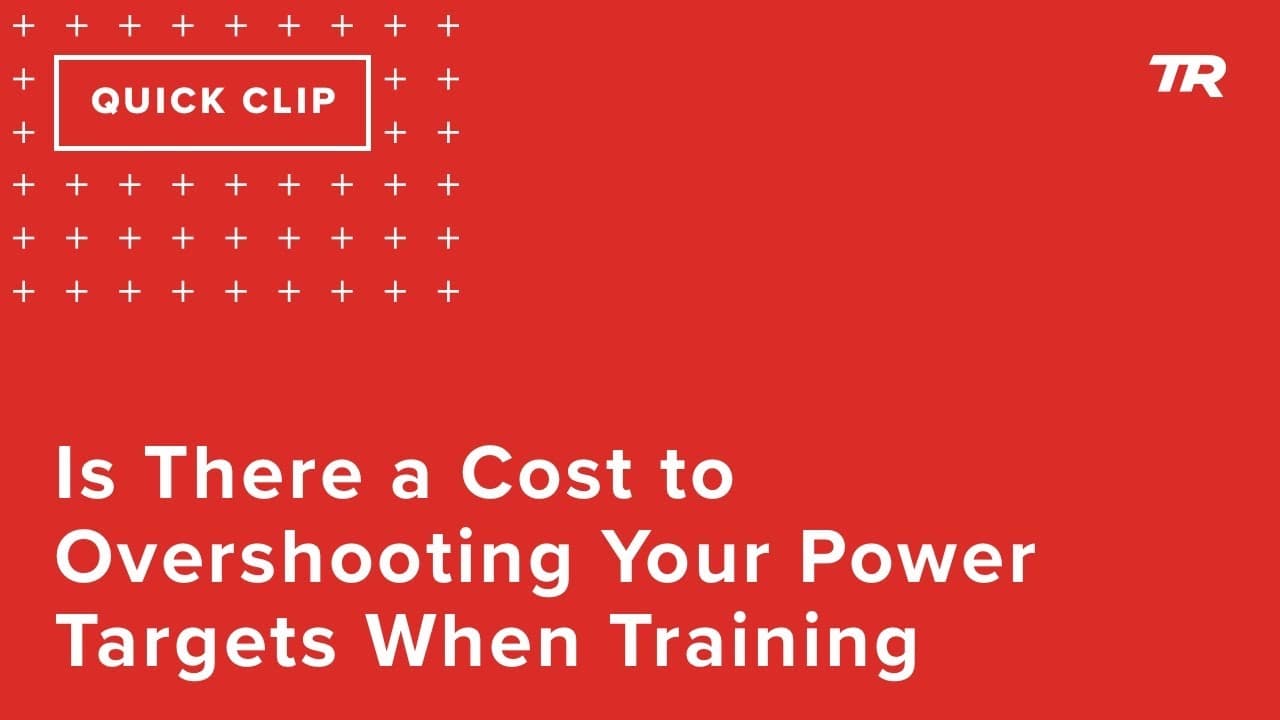
Is There a Cost to Overshooting Your Power Targets When Training? (Ask a Cycling Coach 311)
TL;DR
Cyclists can benefit by aiming for the top end of their power ranges during workouts for maximum training benefit.
Transcript
The whole thing about writing at the bottom of the range. So if you like, do you train road outside workouts, you'll be familiar with the fact of having a range for your power target rather than a specific number. Right. Uh, you've mentioned before that you'd like to ride at the north end of those ranges, right. And stay there because you want to m... Read More
Key Insights
- 🧡 Balancing intensity and specificity in power ranges is crucial for performance gains.
- 🧡 Understanding optimal power range for different training phases can improve race performance.
- 🫷 Striking a balance between pushing limits and avoiding burnout is essential in maximizing training benefits.
- 🧡 Adaptive Training can help in structuring workouts to optimize power ranges for individual cyclists.
- 🥺 Varying training approaches within power ranges can lead to better adaptation and performance improvements.
- 🫡 Focusing on specific goals in training while respecting power ranges can prevent burnout and improve race readiness.
- 🤩 Training consistency and discipline in following prescribed power ranges are key for long-term performance gains.
Install to Summarize YouTube Videos and Get Transcripts
Explore YouTube Video Summarizer or Get YouTube Transcript Extractor
Questions & Answers
Q: Why is it beneficial to aim for the top end of the power range during hard workouts?
Shooting for the top end of the range challenges your body to perform at its peak, helping build endurance and increase lactate clearance for race scenarios.
Q: How does sitting in different zones within the range affect training benefits?
Training in varying parts of the power range helps target different energy systems, leading to overall performance improvements in different cycling scenarios.
Q: What happens if one consistently overshoots or undershoots their power ranges during training?
Consistently overshooting can lead to early burnout, while undershooting may result in suboptimal performance on race days due to lack of intensity in training.
Q: How does Adaptive Training help in optimizing power ranges for cycling performance?
Adaptive Training provides tailored workouts that ensure the right mix of intensity, preventing undershooting or overshooting, leading to improved performance on race days.
Summary & Key Takeaways
-
Aim for the top end of power range for hard days to maximize training benefit.
-
Shift towards lower end of range for new workouts or specific adaptations.
-
Balancing intervals, endurance, and recovery zones is crucial for performance improvement.
Read in Other Languages (beta)
Share This Summary 📚
Summarize YouTube Videos and Get Video Transcripts with 1-Click
Try YouTube Summary with ChatGPT & Claude or YouTube Transcript Generator
Explore More Summaries from TrainerRoad 📚



Summarize YouTube Videos and Get Video Transcripts with 1-Click
Try YouTube Summary with ChatGPT & Claude or YouTube Transcript Generator