Grammar: Linking words of contrast - BBC English Masterclass
TL;DR
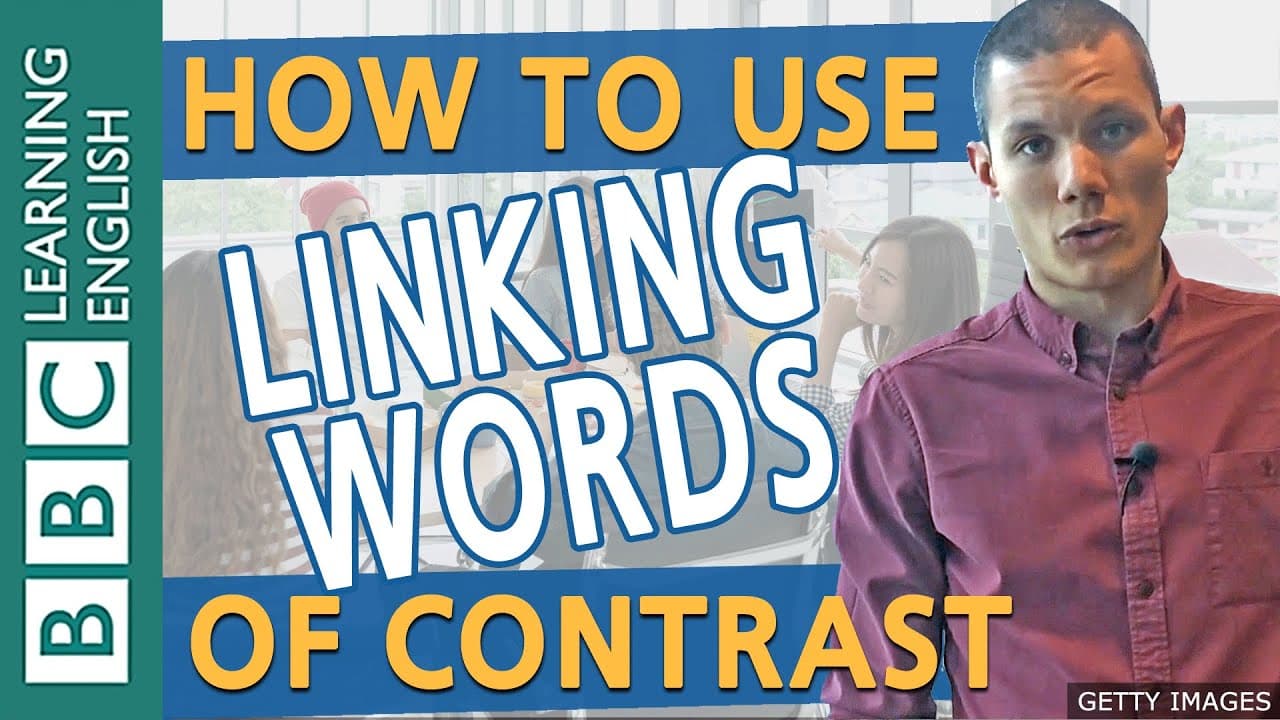
Learn four ways to express contrast and debunk myths about English people.
Transcript
Hi Guys! Dan for BBC Learning English here. This time we'll be looking at four ways of expressing contrast AND busting four myths about English people - which is me! Are you ready? Let's go! Many people think it rains in England all the time. However, this is only partly true - it rains 95% of the time and the other 5% it's overcast. Ah, well. So, ... Read More
Key Insights
- The video introduces four ways of expressing contrast: however, although, despite, and while. Each has specific grammatical rules and usage contexts.
- The word 'however' is used to introduce a contrast and is followed by a comma and a clause.
- The term 'although' can appear at the beginning or middle of a sentence, introducing a subordinate clause, and can be replaced with 'though' or 'even though'.
- 'Despite' is used before a noun or verb in the ING form and can be replaced with 'in spite of'. It can be placed at the beginning or middle of a sentence.
- 'While' is used to contrast two clauses and typically appears at the beginning of a sentence. 'Whilst' can be used in more formal contexts.
- The video humorously debunks myths about English people, such as their supposed love for queuing and the quality of English food.
- English people are portrayed as warm-hearted despite being perceived as formal, highlighting cultural nuances in social interactions.
- The presentation style is informal and engaging, aiming to educate viewers on language use while addressing cultural stereotypes.
Install to Summarize YouTube Videos and Get Transcripts
Explore YouTube Video Summarizer or Get YouTube Transcript Extractor
Questions & Answers
Q: What is the first contrastive element discussed in the video?
The first contrastive element discussed in the video is 'however'. It is used to introduce a contrast in a sentence and is typically followed by a comma and a clause. Dan uses it to address the myth about constant rain in England, explaining that it rains 95% of the time and is overcast the rest of the time.
Q: How does 'although' function in a sentence?
'Although' functions as a contrastive element that can appear at the beginning or middle of a sentence. It introduces a subordinate clause and can be replaced with 'though' or 'even though'. Dan uses it to challenge the stereotype that English people love queuing, explaining it's more about order than enjoyment.
Q: What is the grammatical rule for using 'despite'?
'Despite' is followed by a noun or a verb in the ING form, regardless of tense. It can be replaced by 'in spite of' and can appear at the beginning or middle of a sentence. Dan uses 'despite' to discuss the perception of English people as cold, highlighting their warm-heartedness once formality is overcome.
Q: How is 'while' used to express contrast?
'While' is used to join two contrasting clauses and typically appears at the beginning of a sentence. In more formal or literary contexts, it can be replaced with 'whilst'. Dan uses 'while' to humorously critique the international opinion of English food, contrasting it with his sarcastic praise.
Q: What myths about English people does Dan address?
Dan addresses several myths about English people, including the belief that it rains constantly in England, that English people love queuing, that they are cold, and that their food is bland. He uses these stereotypes to demonstrate the use of contrastive elements in English.
Q: What is the tone and style of the video?
The tone of the video is informal and humorous, aiming to engage viewers while educating them on the use of contrastive elements in English. Dan uses humor and cultural stereotypes to make the lesson more relatable and entertaining, ensuring that the educational content is both informative and enjoyable.
Q: How does Dan use humor in the video?
Dan uses humor by playfully debunking stereotypes about English people, such as their supposed love for queuing and the blandness of English food. His sarcastic remarks and playful demeanor make the educational content more engaging, as he blends language instruction with cultural commentary.
Q: What cultural insights does the video provide?
The video provides cultural insights by addressing common stereotypes about English people, such as their formality and perceived coldness. Dan highlights the warmth beneath the formal exterior and uses these cultural nuances to teach contrastive language elements, offering viewers a deeper understanding of both language and culture.
Summary & Key Takeaways
-
The video explores four methods of expressing contrast in English, using 'however', 'although', 'despite', and 'while'. Each method has distinct grammatical applications, and the video provides examples to illustrate their usage.
-
Dan humorously addresses common stereotypes about English people, such as the belief that they love queuing or that their food is bland, using these myths to demonstrate contrastive language elements.
-
The informal and engaging presentation style aims to educate viewers on English language nuances while simultaneously debunking cultural myths, offering insights into both language and cultural perceptions.
Read in Other Languages (beta)
Share This Summary 📚
Summarize YouTube Videos and Get Video Transcripts with 1-Click
Try YouTube Summary with ChatGPT & Claude or YouTube Transcript Generator
Explore More Summaries from BBC Learning English 📚
Summarize YouTube Videos and Get Video Transcripts with 1-Click
Try YouTube Summary with ChatGPT & Claude or YouTube Transcript Generator