Why Are Most Engineering Graduates in India Not Skilled?
TL;DR
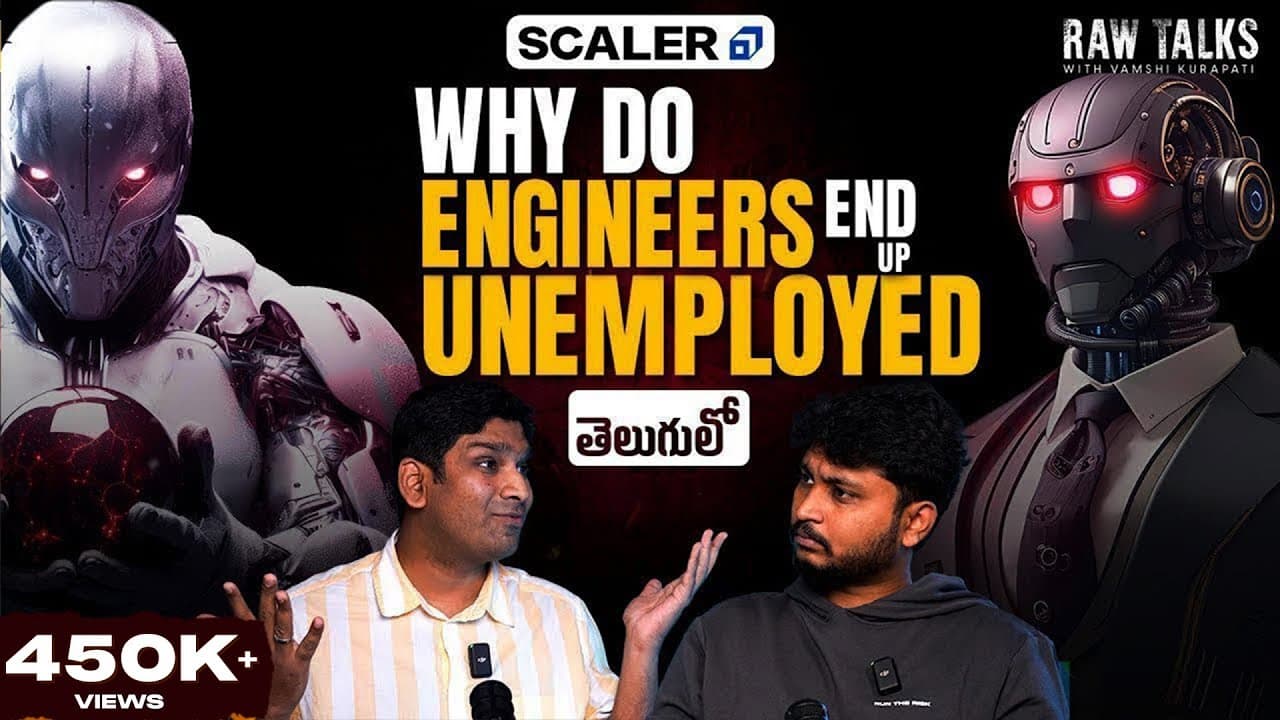
Despite India producing 1.5 million engineering graduates annually, only a small percentage possess the necessary engineering competencies. Graduates need a focus on foundational knowledge, real-world problem-solving, and innovative thinking to succeed in their careers and adapt to the evolving demands of AI and machine learning.
Transcript
he's been there second world war um more than 1.5 million Engineers are coming out I don't call them Engineers by the way they are graduates people terms of confident patience computer company the world very hard to predict what future is going to be the reason why airport pictures and now he's leading the data science and machine learning Fields h... Read More
Key Insights
- 🖤 India produces a high number of engineering graduates, but many lack relevant skills, creating a need for educational reform.
- 🈸 A focus on foundational skills, practical applications, and innovation is essential for graduates to remain competitive in the job market.
- 🛟 The rapid advancement of AI serves as both a challenge and an opportunity for job creation and skill development.
- 🎓 Significant discrepancies exist between the potential and the actual capabilities of engineering graduates, suggesting a disconnect in education quality.
- ♿ AI democratization may enable broader access to technology, benefitting diverse sectors, but also risks job displacement in some areas.
- 💇 Continuous learning and adaptation are imperative as technology, especially AI, evolves, requiring professionals to stay updated with cutting-edge tools and techniques.
- 🫵 Startups are increasingly viewed as viable career paths for young professionals, fostering a culture of innovation and entrepreneurship in India.
Install to Summarize YouTube Videos and Get Transcripts
Explore YouTube Video Summarizer or Get YouTube Transcript Extractor
Questions & Answers
Q: Why are most engineering graduates not considered actual engineers?
Many engineering graduates lack the essential skills and practical knowledge needed for engineering roles. The speaker points out that of over 1.5 million graduates in India, possibly only one percent can engineer meaningful solutions. This gap highlights issues in the education system that fail to adequately prepare students for real-world challenges.
Q: What key advice is given to recent engineering graduates?
Graduates are encouraged to focus on core fundamentals, solve real problems, and build practical solutions. By honing their skills in these areas, they can create valuable products and potentially start their own businesses, thus contributing to innovation and societal advancement.
Q: How is AI expected to impact the job market in the future?
AI is anticipated to change job functions significantly, replacing some low-skilled jobs while potentially creating new ones that require advanced skills. The discussion suggests that as AI becomes more integrated into various industries, it will drive demand for individuals capable of leveraging AI technologies effectively.
Q: What is the 'golden age' of engineering mentioned in the content?
The speaker refers to a 'golden age' in engineering due to an abundant supply of young, skilled graduates. However, to truly harness this potential, educational reforms are needed to ensure these graduates possess the skills necessary to innovate and solve real-world problems.
Q: How does the speaker view the future of AI and its ethical implications?
The speaker acknowledges that AI could be used for both beneficial and harmful purposes, similar to nuclear technology. While there is potential for AI to revolutionize sectors positively, there are concerns about its misuse in military applications or by authoritarian regimes, emphasizing the need for responsible development and governance.
Q: What are some practical steps that educational institutions can take to improve engineering curricula?
Educational institutions should integrate real-world problem solving into their curricula, focus on foundational skills in programming and mathematics, and encourage hands-on experience through internships. Ultimately, the goal is to align education with industry needs to cultivate competent and adaptable graduates.
Summary & Key Takeaways
-
The speaker highlights that while there are 1.5 million engineering graduates in India, only a small percentage possess true engineering skills. Emphasizing the need for foundational knowledge and innovation is crucial for graduates.
-
The discussion covers the importance of solving real-world problems and building practical solutions, positioning this as essential for graduates to succeed in their careers and potentially start their own ventures.
-
The rapid evolution of AI and machine learning is discussed, stressing the importance of education in these fields. The speaker argues that advancements can democratize technology access and transform industry landscapes.
Read in Other Languages (beta)
Share This Summary 📚
Summarize YouTube Videos and Get Video Transcripts with 1-Click
Try YouTube Summary with ChatGPT & Claude or YouTube Transcript Generator
Explore More Summaries from Telugu Podcast - Raw Talks With VK 📚


Summarize YouTube Videos and Get Video Transcripts with 1-Click
Try YouTube Summary with ChatGPT & Claude or YouTube Transcript Generator