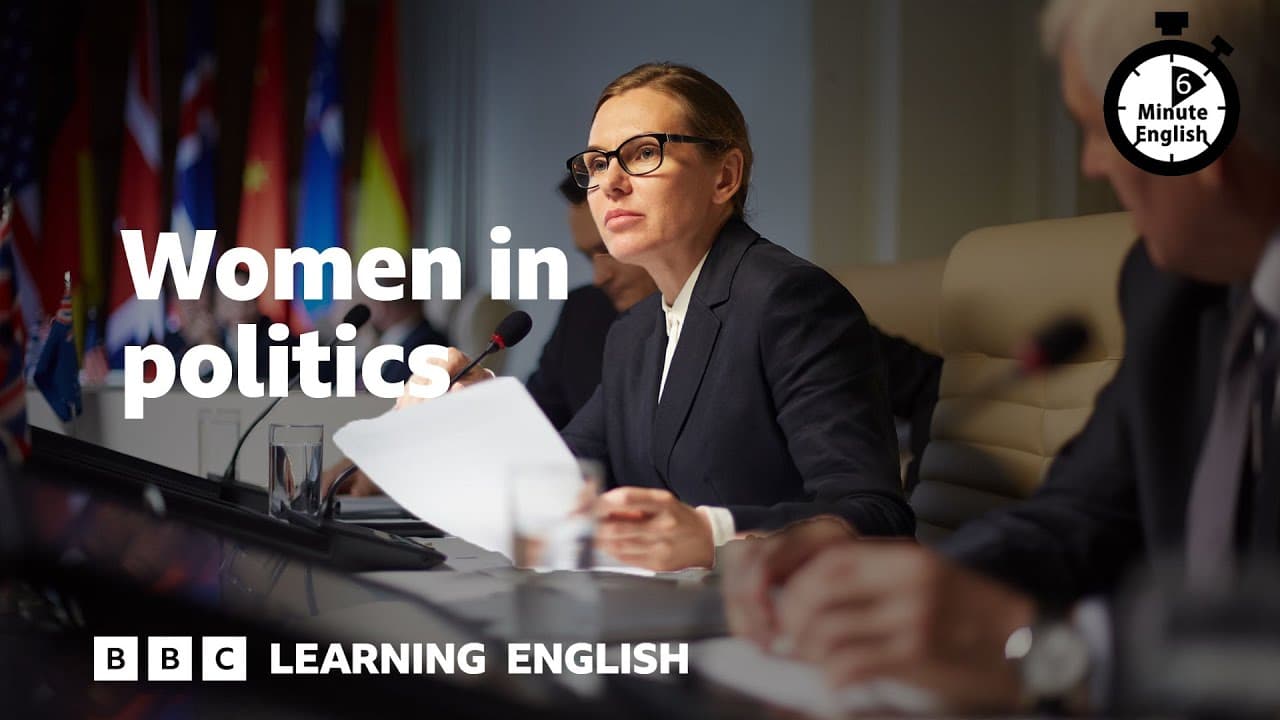
Women in politics ⏲️ 6 Minute English
TL;DR
Women face significant challenges and misogyny in politics.
Transcript
Hello. This is 6 Minute English from BBC Learning English. I'm Beth. And I'm Neil. Differences between men and women have existed forever, but in modern times imbalances in the opportunities for men and woman have widened. One area where this imbalance is widest is politics. When we think of female politicians, the names Margaret Thatcher, Angela M... Read More
Key Insights
- Despite women making up over half the world's population, only 26% of politicians are women, highlighting a significant gender imbalance in political representation.
- Misogyny, or the hatred and prejudice against women, is a major barrier for women in politics, as evidenced by the online abuse faced by leaders like Jacinda Ardern.
- Margaret Thatcher, the UK's first female prime minister, was coached to adopt a more masculine demeanor to fit into the male-dominated political sphere.
- Female politicians face more scrutiny over their behavior and attire compared to their male counterparts, discouraging many from entering politics.
- The rise of social media has exacerbated the misogynistic abuse women in politics face, making public exposure more daunting.
- Empathy and understanding, traits often associated with women, are increasingly seen as essential qualities for effective political leadership.
- Helen Clark, New Zealand's first female elected leader, emphasized that women often bring a collaborative leadership style, contrasting with the more top-down approach seen in male leaders.
- Liz Truss served as the UK prime minister for only 45 days, marking the shortest tenure in British history for any leader, male or female.
Install to Summarize YouTube Videos and Get Transcripts
Explore YouTube Video Summarizer or Get YouTube Transcript Extractor
Questions & Answers
Q: What is the main barrier for women entering politics?
The main barrier for women entering politics is misogyny, which includes the hatred and prejudice against women. This is compounded by the scrutiny and criticism women face regarding their behavior and appearance, deterring many from pursuing political careers.
Q: How did Margaret Thatcher adapt to the male-dominated political environment?
Margaret Thatcher adapted to the male-dominated political environment by being coached to adopt a more masculine demeanor, such as lowering her voice. She balanced this by maintaining a feminine appearance, illustrating the tightrope women in politics must walk to be accepted as leaders.
Q: Why are women in politics scrutinized more than men?
Women in politics are scrutinized more than men due to societal double standards that focus on their behavior and attire. This heightened scrutiny discourages many women from entering politics, as they face criticism not typically directed at their male counterparts.
Q: How has social media affected women in politics?
Social media has exacerbated the challenges women in politics face by amplifying misogynistic abuse and criticism. The online environment can be hostile, making public exposure more daunting and discouraging women from pursuing or continuing political careers.
Q: What qualities do women bring to political leadership?
Women are often seen as bringing empathy and understanding to political leadership, qualities that are increasingly valued. They are also known for a collaborative leadership style, which contrasts with the more top-down approach commonly associated with male leaders.
Q: What leadership style did Helen Clark associate with women?
Helen Clark associated a collaborative leadership style with women, emphasizing cooperation and openness to evidenced debate. This approach contrasts with a more dictatorial style, often described as 'my way or the highway,' which is less conducive to modern political needs.
Q: How long did Liz Truss serve as UK prime minister?
Liz Truss served as the UK prime minister for only 45 days, marking the shortest tenure in British history for any leader, male or female. Her brief leadership highlights the challenges and instability that can arise in political roles.
Q: What vocabulary was introduced in the discussion about women in politics?
The vocabulary introduced included 'misogyny' (hatred of women), 'coached' (specially trained), 'attire' (clothing), 'walk a tightrope' (be in a difficult situation), 'collaborative' (working together), and 'my way or the highway' (a dictatorial approach).
Summary & Key Takeaways
-
Women constitute over half of the global population but only 26% of political leaders, indicating a significant gender disparity. Misogyny is a key factor discouraging women from politics, as seen in the experiences of leaders like Jacinda Ardern.
-
Margaret Thatcher's leadership illustrated the challenges women face in politics. She had to modify her behavior and appearance to fit into the male-dominated political environment, highlighting the double standards women face.
-
Social media has intensified the scrutiny and misogynistic abuse women in politics endure. Despite these challenges, female leaders are often seen as more empathetic and collaborative, qualities essential for modern political leadership.
Read in Other Languages (beta)
Share This Summary 📚
Summarize YouTube Videos and Get Video Transcripts with 1-Click
Try YouTube Summary with ChatGPT & Claude or YouTube Transcript Generator
Explore More Summaries from BBC Learning English 📚
Summarize YouTube Videos and Get Video Transcripts with 1-Click
Try YouTube Summary with ChatGPT & Claude or YouTube Transcript Generator