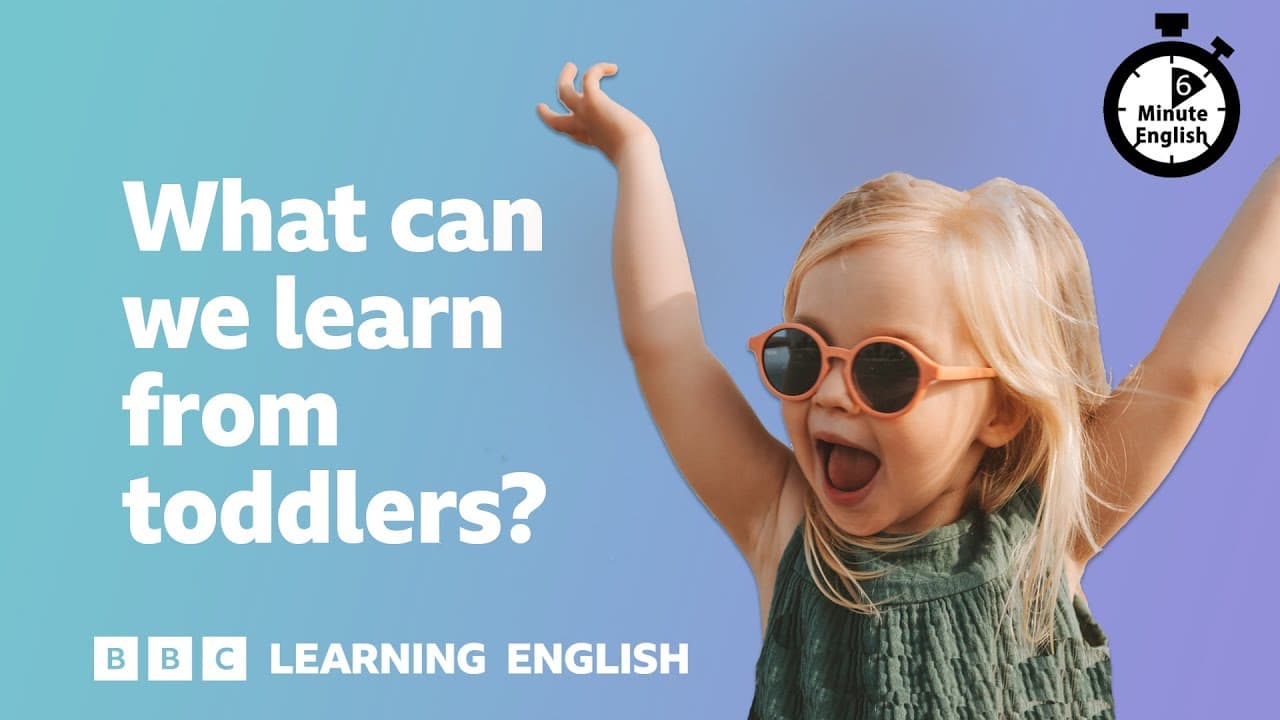
What Can Adults Learn from Toddlers' Self-Talk?
TL;DR
Adults can learn to cultivate positive self-talk from toddlers, who naturally encourage themselves with phrases like 'I can do it!' This practice helps reduce stress and counteract negative self-perception. By treating themselves as a good friend would, adults can break cycles of negativity and promote personal growth.
Transcript
Hello. This is 6 Minute English from BBC Learning English. I'm Neil. And I'm Beth. You may have one, or know someone who does, and at one time you've been one yourself. I'm talking about toddlers. A toddler is a young child, usually between two and four years old, who is learning to walk or 'toddling'. It's an important stage in a child's developme... Read More
Key Insights
- Toddlers are between two and four years old, learning to walk and understand their environment, a phase known as the 'terrible twos'.
- During this stage, toddlers often experience frustration leading to tantrums, but it's also a time of exciting personality development.
- Despite their limited independence, toddlers demonstrate valuable skills like self-talk, which adults can learn from.
- Self-talk involves speaking positively to oneself, a habit toddlers naturally possess but adults often struggle with, leading to negative self-talk.
- Dr. Hasan Merali suggests adults should adopt a toddler-like approach to self-talk, treating themselves as they would a good friend.
- Negative cycles in adults, characterized by repetitive negative thoughts, can be mitigated by adopting positive self-talk strategies.
- The most active period in a person's life is during the toddler years, contrary to the belief that they grow significantly during sleep.
- Adults can benefit from emulating toddlers' positive self-talk to decrease stress in anxiety-provoking situations.
Install to Summarize YouTube Videos and Get Transcripts
Explore YouTube Video Summarizer or Get YouTube Transcript Extractor
Questions & Answers
Q: What is a toddler and what characterizes this stage?
A toddler is a young child aged between two and four years old, characterized by learning to walk and developing an understanding of the world. This stage is often referred to as the 'terrible twos' due to the frustration and tantrums toddlers experience as they navigate their growing independence and new challenges.
Q: How do toddlers demonstrate self-talk, and why is it important?
Toddlers demonstrate self-talk by speaking positively to themselves out loud, such as saying 'Julie can do it' when accomplishing a task. This behavior is crucial as it fosters a positive inner voice, encouraging self-confidence and reducing stress, a practice that adults can benefit from by emulating.
Q: What does Dr. Hasan Merali suggest adults can learn from toddlers?
Dr. Hasan Merali suggests that adults can learn the practice of positive self-talk from toddlers. By speaking to themselves as they would to a good friend, adults can break negative cycles of self-criticism, reduce stress, and improve their mental well-being, adopting a more supportive and encouraging inner dialogue.
Q: What is the misconception about toddlers' growth during sleep?
There is a misconception that toddlers can grow up to three centimeters during sleep. While toddlers do experience growth during sleep, the actual amount is not as significant as three centimeters. The true statement about toddlers is that they are more active during this stage than at any other time in their lives.
Q: How can adults break the negative cycle of self-talk?
Adults can break the negative cycle of self-talk by adopting positive self-talk strategies used by toddlers. This involves treating oneself as a good friend, fostering a supportive and encouraging inner voice, and focusing on self-compassion rather than self-criticism, ultimately reducing stress and enhancing personal growth.
Q: Why is the toddler stage considered the most active period in life?
The toddler stage is considered the most active period in life because it involves rapid physical and cognitive development. Toddlers are constantly exploring, learning to walk, and engaging with their environment, requiring high levels of energy and activity, more so than at any other time in their lives.
Q: What is the impact of negative self-talk on adults?
Negative self-talk in adults leads to a cycle of self-criticism and disappointment, exacerbating stress and hindering personal growth. This pattern of thinking can result in a persistent negative mindset, affecting mental health and reducing overall well-being, making it crucial to adopt positive self-talk strategies.
Q: How do toddlers handle stress differently from adults?
Toddlers handle stress differently from adults by naturally engaging in positive self-talk, which helps them navigate anxiety-provoking situations. Unlike adults, who often fall into negative self-talk, toddlers encourage themselves, fostering resilience and reducing stress, a behavior that adults can learn to improve their mental health.
Summary & Key Takeaways
-
Toddlers, aged two to four, are in a critical stage of development, learning to walk and understand their world. Despite their tantrums, they also demonstrate valuable behaviors like positive self-talk, which adults can learn from to improve their own mental well-being.
-
Dr. Hasan Merali, in his book 'Sleep Well, Take Risks, Squish the Peas', highlights how toddlers naturally use self-talk to encourage themselves, a practice adults often neglect, leading to negative self-perception and stress.
-
Adopting a toddler's approach to self-talk, by treating oneself as a good friend, can help adults break negative cycles and cultivate a more positive inner dialogue, reducing stress and enhancing personal growth.
Read in Other Languages (beta)
Share This Summary 📚
Summarize YouTube Videos and Get Video Transcripts with 1-Click
Try YouTube Summary with ChatGPT & Claude or YouTube Transcript Generator
Explore More Summaries from BBC Learning English 📚
Summarize YouTube Videos and Get Video Transcripts with 1-Click
Try YouTube Summary with ChatGPT & Claude or YouTube Transcript Generator