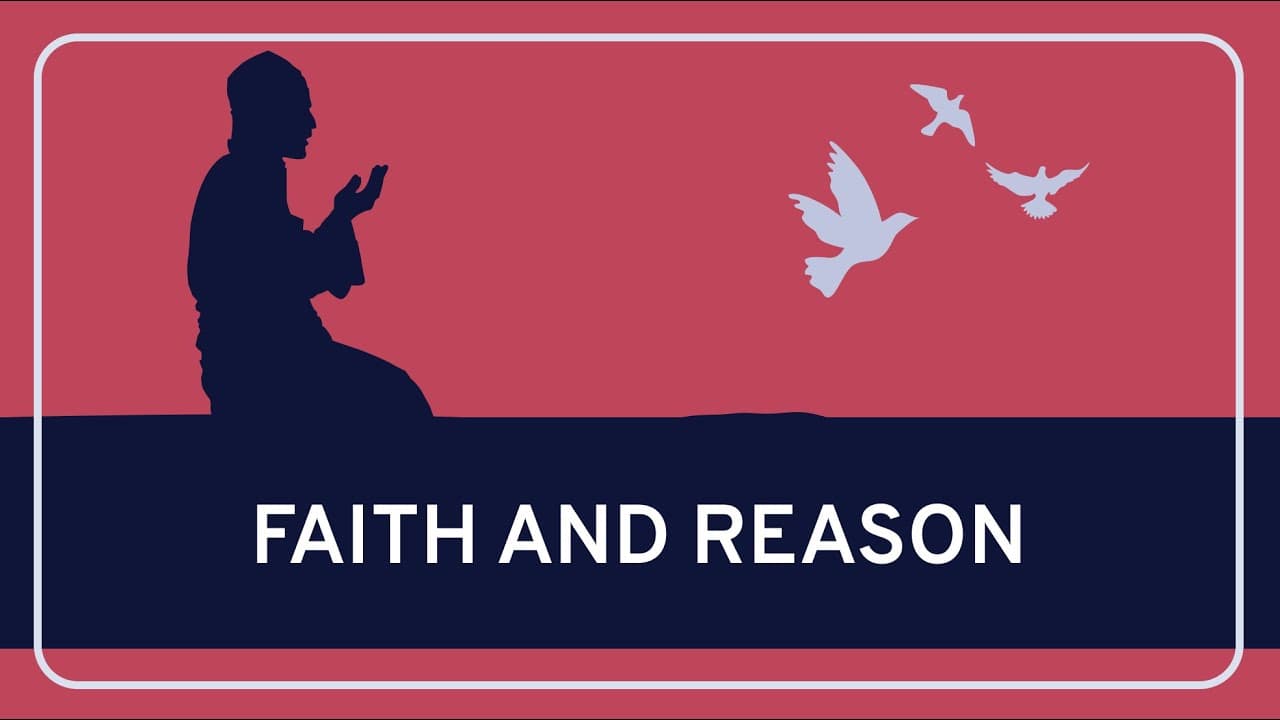
PHILOSOPHY - Religion: Reason And Faith [HD]
TL;DR
Faith and reason can coexist despite perceived conflicts.
Transcript
(intro music) Hi, my name is Greg Ganssle, and I am a Senior Fellow[br]at the Rivendell Institute at Yale University. Today, we're going to talk[br]about faith and reason. It's a very popular idea that faith and reason are opposites. That if I hold something by[br]faith, it's not also the case that I have good reasons to hold it. or if I am reasoni... Read More
Key Insights
- The terms 'believe that' and 'believe in' have distinct meanings, where 'believe that' involves truth claims and 'believe in' involves trust or commitment.
- Reason is more applicable to 'believe that' statements, as they can be supported by evidence, while 'believe in' involves personal commitment.
- Faith and reason are often perceived as opposites, but they can complement each other, especially in the context of belief in God.
- The concept of 'believe in' is complex and involves more than just acknowledging existence; it implies a commitment to certain practices or values.
- Commitment to beliefs, such as faith in God, often requires a level of certainty beyond what evidence can provide.
- Life decisions, like committing to a car journey or a relationship, often require full commitment despite uncertainty, paralleling faith commitments.
- Reason applies to assessing the truth of claims, while faith involves personal commitment, which can extend beyond available evidence.
- The relationship between faith and reason is nuanced, with reason assessing truth and faith involving personal, sometimes disproportionate, commitment.
Install to Summarize YouTube Videos and Get Transcripts
Explore YouTube Video Summarizer or Get YouTube Transcript Extractor
Questions & Answers
Q: What is the difference between 'believe that' and 'believe in'?
'Believe that' involves making truth claims that can be verified as true or false, such as 'I believe that George Washington existed.' 'Believe in,' however, involves a level of personal commitment or trust, such as 'I believe in the Constitution,' which implies confidence or trust in its principles beyond mere existence.
Q: How does reason relate to 'believe that' statements?
Reason is closely related to 'believe that' statements because these statements involve truth claims that can be supported by evidence. For instance, the claim 'I believe that God exists' can be examined through available evidence and reasoned arguments to determine its truthfulness, allowing reason to play a significant role.
Q: Why are faith and reason often seen as opposites?
Faith and reason are often seen as opposites because faith is perceived as belief without evidence, while reason relies on evidence and logical analysis. However, this perception overlooks the complexity of faith, which can coexist with reason, especially when faith involves personal commitment beyond what evidence can fully support.
Q: What role does commitment play in faith?
Commitment is central to faith, as it involves a personal dedication to beliefs or practices beyond the level of certainty that evidence can provide. For instance, believing in God not only means accepting God's existence but also committing to a relationship or trust in God, which may not be fully supported by evidence.
Q: How does the video illustrate the relationship between faith and reason?
The video uses examples like driving or flying to illustrate how we commit to actions despite uncertainty, paralleling faith commitments. It argues that while reason assesses the truth of claims, faith requires personal commitment, which can extend beyond available evidence, showing how faith and reason can coexist.
Q: What is the significance of 'believe in' in the context of faith?
'Believe in' in the context of faith signifies more than acknowledging existence; it involves a personal commitment or trust in a higher power or principle. This commitment often requires going beyond the evidence, as it encompasses a deeper relationship or trust, highlighting the complexity of faith beyond mere belief.
Q: Can faith be reasonable despite lack of evidence?
Faith can be reasonable even with limited evidence, as it involves personal commitment and trust that may extend beyond empirical support. The video suggests that while evidence can support belief, the decision to commit fully, such as in faith, often requires a leap beyond the evidence, similar to life decisions requiring full commitment.
Q: How does the video address the accusation against religious belief being unreasonable?
The video addresses the accusation by explaining that religious belief often involves a commitment beyond the level of evidence available. It argues that like other life decisions requiring full commitment despite uncertainty, faith involves personal dedication and trust, which can be reasonable even if evidence is not fully conclusive.
Summary & Key Takeaways
-
The video explores the relationship between faith and reason, challenging the common perception that they are opposites. Greg Ganssle explains that 'believe that' involves truth claims, while 'believe in' involves trust or commitment. He argues that faith and reason can coexist, especially in the context of religious belief.
-
Ganssle illustrates that life decisions often require full commitment despite uncertainty, similar to faith commitments. He uses examples like driving or flying to demonstrate how we commit fully despite less than 100% certainty, paralleling the nature of faith in God.
-
The video concludes that reason assesses the truth of claims, while faith involves personal commitment beyond evidence. The relationship between faith and reason is nuanced, with reason applying to truth claims and faith requiring a personal, sometimes disproportionate, commitment.
Read in Other Languages (beta)
Share This Summary 📚
Summarize YouTube Videos and Get Video Transcripts with 1-Click
Try YouTube Summary with ChatGPT & Claude or YouTube Transcript Generator
Explore More Summaries from Wireless Philosophy 📚
Summarize YouTube Videos and Get Video Transcripts with 1-Click
Try YouTube Summary with ChatGPT & Claude or YouTube Transcript Generator