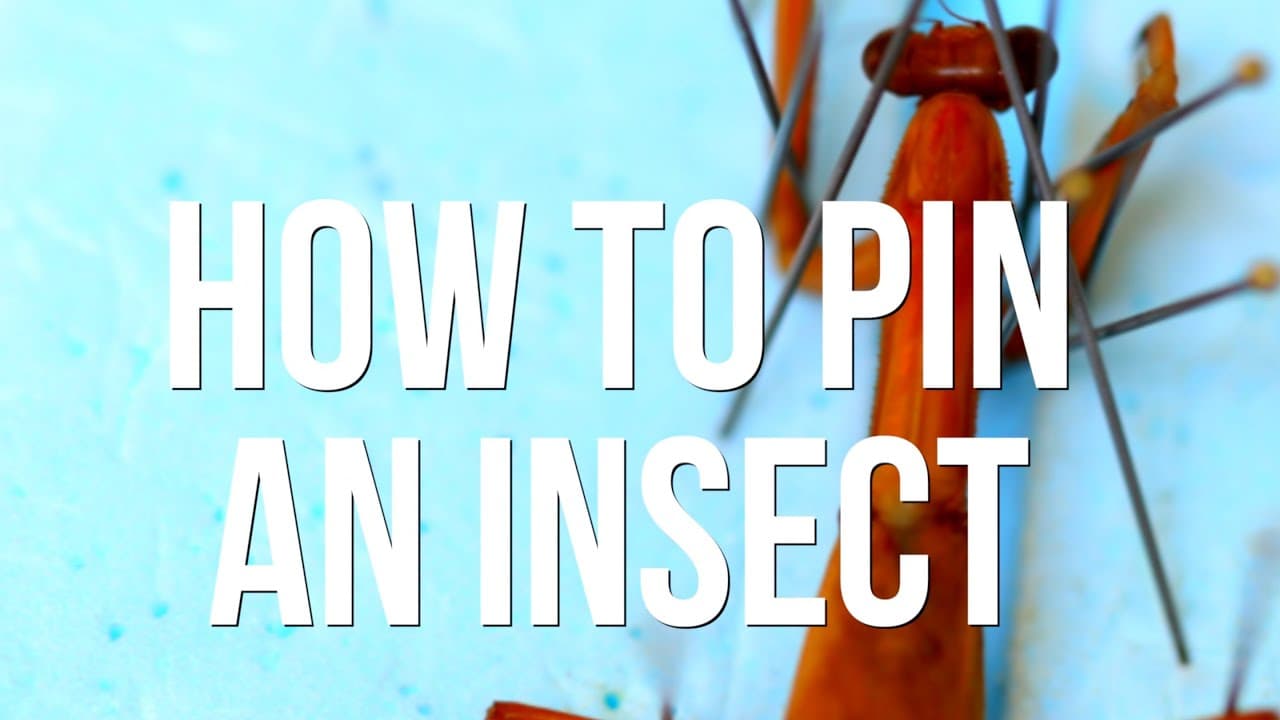
How to Pin an Insect
TL;DR
Learn how to properly pin and preserve insects by following these step-by-step instructions.
Transcript
That's not a mantid. - Yeah it is! - No, that one? - Yeah! - Really? - No. - Oh, come on! Hey! We're here with Gracen, today, who's a research assistant for Corrie Moreau, whom you will remember from the Romantic Ants episode and today we're going to show you how to pin an insect. - Yeah! - Do you have any fun stories from collecting out in the fie... Read More
Key Insights
- 🧑💻 Insects can be found in various environments, from rotting logs to horse dung.
- 😅 Rehydrating dried insects using hot water helps relax and restore flexibility to their tissues.
- 💁 Proper labeling of specimens with collection information is crucial for future research.
- 😘 Spreading the legs and wings of pinned insects aids in their examination and identification.
- 🚨 Some cicadas have lifespans longer than a few months, spending years underground before emerging for a brief breeding period.
- 😴 Insect pins, forceps, and vellum are essential tools for pinning insects.
- 🐯 Insects like the mantid, cicada, and tiger beetle can be collected from different locations around the world.
Install to Summarize YouTube Videos and Get Transcripts
Explore YouTube Video Summarizer or Get YouTube Transcript Extractor
Questions & Answers
Q: How can you rehydrate a dried insect for pinning?
Rehydrating a dried insect involves placing it in a container with hot water to relax and rehydrate the tissues. The specimen should be kept elevated on a piece of foam, and hot water can be periodically replenished to maintain a warm and steamy environment.
Q: Are there specific supplies needed for pinning insects?
Yes, necessary supplies include insect pins, forceps, vellum for pinning out wings without causing damage, scissors, and labels for documenting collection information. A piece of foam is also useful for pinning the insect while it dries.
Q: Can collection information be valuable for future research?
Absolutely, collecting and documenting information such as the date, location, and conditions of specimen collection can contribute to future research. This information provides valuable data for studying insect populations and their habitats.
Q: Why is it important to spread the legs and wings of pinned insects?
Spreading the legs and wings allows for a better examination of the morphology and wing venation. It provides a clearer view of the insect's features and helps researchers identify and study different species.
Summary & Key Takeaways
-
Gracen, a research assistant for Corrie Moreau, shares her experiences collecting insects in the field, including a memorable encounter with horses while collecting dung beetles.
-
She explains the process of rehydrating or relaxing dried insects before pinning them.
-
Gracen discusses the necessary supplies for pinning insects and the importance of labeling specimens for future research.
Read in Other Languages (beta)
Share This Summary 📚
Summarize YouTube Videos and Get Video Transcripts with 1-Click
Try YouTube Summary with ChatGPT & Claude or YouTube Transcript Generator
Explore More Summaries from thebrainscoop 📚



Summarize YouTube Videos and Get Video Transcripts with 1-Click
Try YouTube Summary with ChatGPT & Claude or YouTube Transcript Generator