Why We Can't Predict Earthquakes
TL;DR
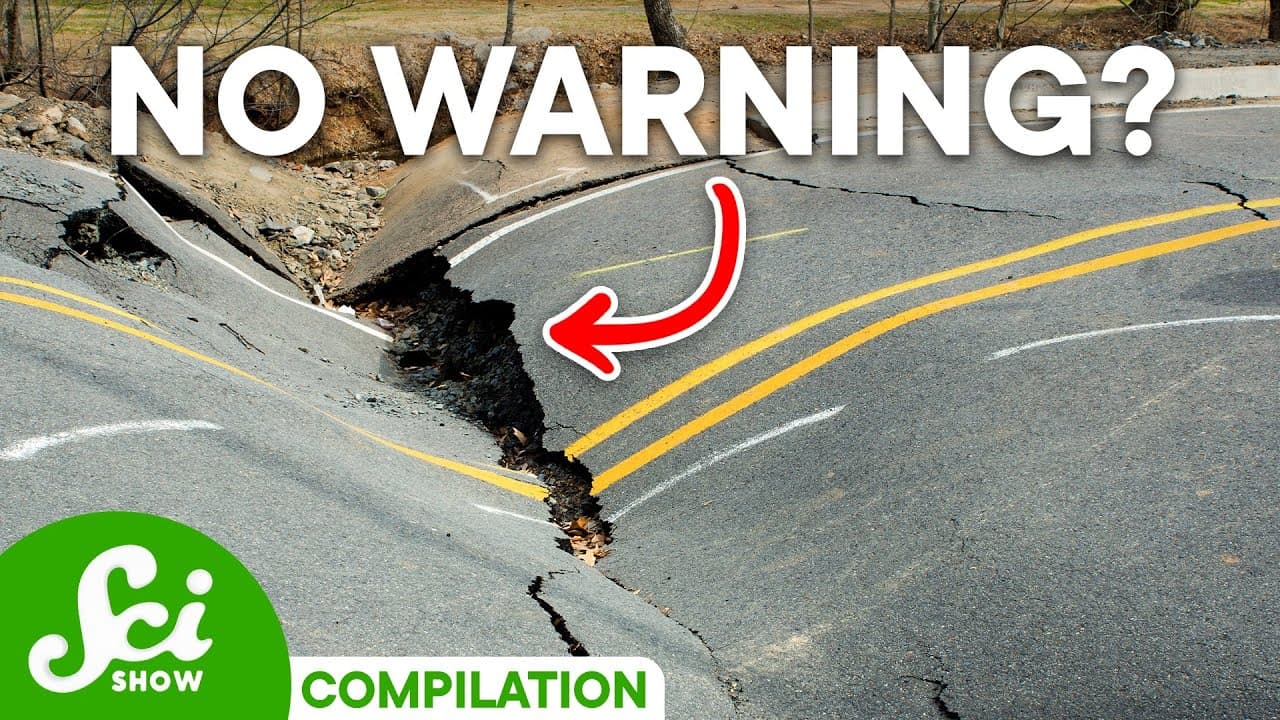
Earthquakes are difficult to predict, but scientists are studying possible indicators such as radon levels and changes in electromagnetic fields. Animals also show behavioral changes before earthquakes, but more research is needed. Engineers are developing technologies to prevent buildings from shaking during earthquakes.
Transcript
we've talked quite a bit about how difficult it is to predict earthquakes and how we prepare for them so today let's take a tour of earthquake science first up we would of course love to have more warning when an earthquake is about to strike but their origins are so deep within the earth that there's not much up here on the surface for us to detec... Read More
Key Insights
- 😀 Scientists face challenges in predicting earthquakes due to their deep origins and the complexity of studying tectonic plates.
- 😮 Potential indicators, such as rising radon levels and changes in electromagnetic fields, are being explored for earthquake prediction, but more research is needed for reliable predictions.
- 🛀 Animals have shown behavioral changes before earthquakes, but the extent of their predictive abilities is still uncertain.
- 🫢 Engineers are developing technologies, including tuned mass dampers, shock absorbers, and nature-inspired materials, to earthquake-proof buildings and increase preparedness.
- 🎓 Public education, evacuation drills, and early warning systems can also contribute to earthquake preparedness.
- 📣 While predicting mega-quakes, such as those in the Pacific Northwest, is challenging, understanding the patterns and behaviors associated with earthquakes contributes to better preparedness.
Install to Summarize YouTube Videos and Get Transcripts
Explore YouTube Video Summarizer or Get YouTube Transcript Extractor
Questions & Answers
Q: Why is it difficult to predict earthquakes?
Earthquakes originate deep within the Earth, making it challenging to detect and study their origins. Additionally, tectonic plates, which are involved in earthquakes, are thick and constantly moving.
Q: Are there any reliable indicators for earthquake prediction?
Scientists study potential indicators such as rising radon levels and changes in electromagnetic fields, but their predictive capabilities are still uncertain and require further research.
Q: Can animals predict earthquakes?
While some animals have shown behavioral changes before earthquakes, more research is needed to understand their abilities. Some believe animals can sense vibrations or changes in the air and water chemistry caused by seismic activity.
Q: How are engineers working to earthquake-proof buildings?
Engineers are using technologies such as tuned mass dampers, which are massive swinging balls inside buildings that counteract shaking. They also use shock absorbers to isolate the base of buildings from the ground. 3D-printed cement structures with nature-inspired architectures are also being explored.
Summary & Key Takeaways
-
Predicting earthquakes is challenging due to their deep origins and the difficulty of studying tectonic plates.
-
Potential indicators for earthquake prediction include rising radon levels and changes in electromagnetic fields.
-
Animals have shown behavioral changes before earthquakes, but more research is needed to understand their predictive abilities.
-
Engineers are developing technologies such as tuned mass dampers, shock absorbers, and 3D-printed cement structures to earthquake-proof buildings.
Read in Other Languages (beta)
Share This Summary 📚
Summarize YouTube Videos and Get Video Transcripts with 1-Click
Try YouTube Summary with ChatGPT & Claude or YouTube Transcript Generator
Explore More Summaries from SciShow 📚


Summarize YouTube Videos and Get Video Transcripts with 1-Click
Try YouTube Summary with ChatGPT & Claude or YouTube Transcript Generator