Lecture 16: Secrecy and Security in the Nuclear Age
TL;DR
The content explores the development of the atomic bomb, the role of espionage during the Cold War, and the ethical implications raised by the pursuit of nuclear weapons.
Transcript
[SQUEAKING] [RUSTLING] [CLICKING] DAVID KAISER: Welcome to 8.225/ STS.042. Just a quick announcement-- hopefully, you saw the message also through the Canvas course site, as well. We're going to do a similar routine for this coming week as we had done earlier this week, which is to say students' main assignment for Monday's class session this comin... Read More
Key Insights
- 😒 The revelation of the atomic bomb's use in Hiroshima and Nagasaki ended the secrecy surrounding nuclear weapons.
- 🖐️ Espionage played a role in the development of nuclear weapons, with individuals like Klaus Fuchs aiding Soviet nuclear efforts.
- 🤨 The pursuit of the hydrogen bomb raised ethical concerns and drew dissent from some members of the scientific community.
- 🥺 The perception of theoretical physicists changed following cases of espionage, leading to their association with potential communist sympathies.
Install to Summarize YouTube Videos and Get Transcripts
Explore YouTube Video Summarizer or Get YouTube Transcript Extractor
Questions & Answers
Q: What was the response to the revelation of the atomic bomb's use in Hiroshima and Nagasaki?
Many argued that there was no secret anymore, as the bombings made the existence of nuclear weapons public knowledge.
Q: Who were some of the individuals involved in nuclear espionage during the Manhattan Project?
Klaus Fuchs, Alan Nunn May, and David Greenglass were key figures involved in espionage activities, with Fuchs providing vital information to the Soviets.
Q: How did the perception of theoretical physicists change following cases of espionage?
The slippage between bombs, formulas, and theorists led to the suspicion and persecution of theoretical physicists, often accused of being influenced by communist propaganda.
Q: Was there evidence of German or Japanese espionage during World War II?
There is no evidence of German or Japanese espionage during the war, with most cases focusing on Soviet espionage.
Summary & Key Takeaways
-
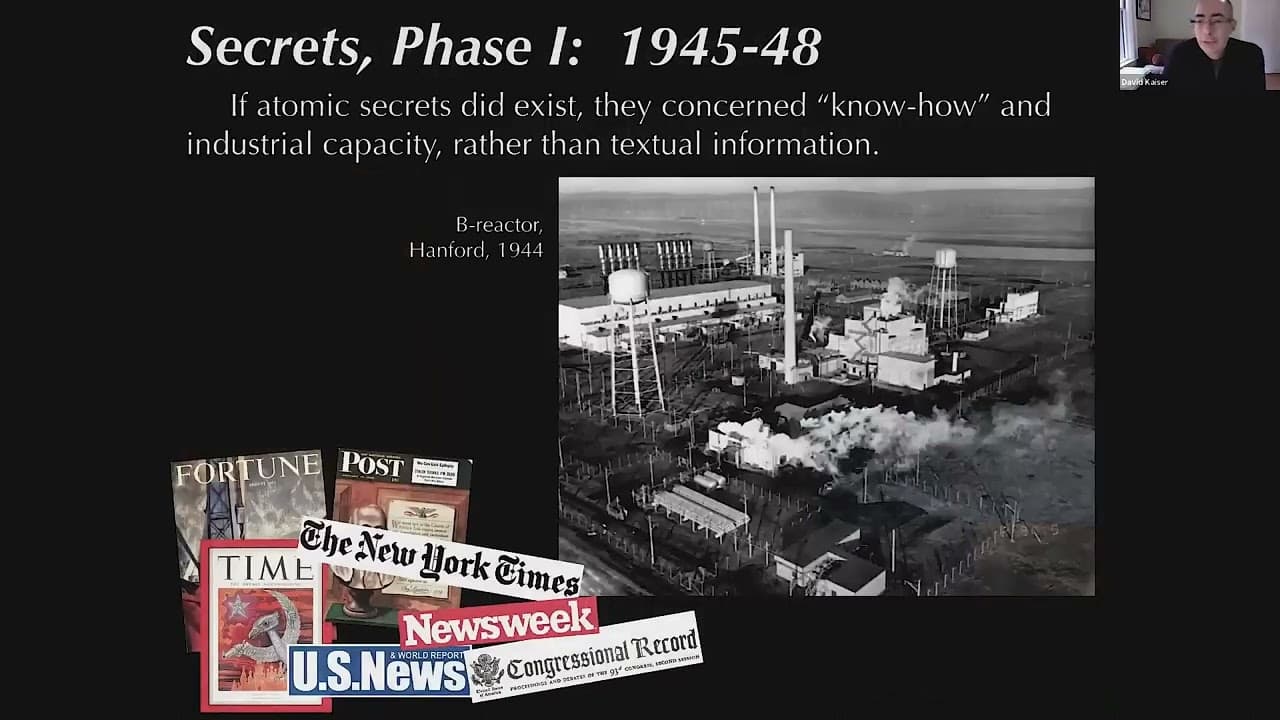
The content discusses the impact of the atomic bomb on global politics and the need to guard the "atomic secret".
-
It explores the role of espionage in the Manhattan Project, with spies like Klaus Fuchs aiding the Soviets in nuclear development.
-
The content highlights the slippage between bombs and theorists, leading to the persecution of theoretical physicists.
-
The decision to pursue the hydrogen bomb is discussed, including the dissenting opinions of the General Advisory Committee.
Read in Other Languages (beta)
Share This Summary 📚
Summarize YouTube Videos and Get Video Transcripts with 1-Click
Try YouTube Summary with ChatGPT & Claude or YouTube Transcript Generator
Explore More Summaries from MIT OpenCourseWare 📚



Summarize YouTube Videos and Get Video Transcripts with 1-Click
Try YouTube Summary with ChatGPT & Claude or YouTube Transcript Generator