Products
Features
YouTube Video Summarizer
Summarize YouTube videos
Web & PDF Highlighter
Highlight web pages & PDFs
Chat with PDF
Ask any PDF questions with AI
Ask AI Clone
Chat with your highlights & memories
Audio Transcriber
Transcribe audio files to text
Glasp Reader
Read and highlight articles
Kindle Highlight Export
Export your Kindle highlights
Idea Hatch
Hatch ideas from your highlights
Integrations
Obsidian Plugin
Notion Integration
Pocket Integration
Instapaper Integration
Medium Integration
Readwise Integration
Snipd Integration
Hypothesis Integration
Apps & Extensions
Chrome Extension
Safari Extension
Edge Add-ons
Firefox Add-ons
iOS App
Android App
Discover
Discover
Ideas
Discover new ideas and insights
Articles
Curated articles and insights
Books
Book recommendations by great minds
Posts
Essays and notes from readers
Quotes
Inspiring quotes collection
Videos
Curated videos and summaries
Explore Glasp
Glasp Newsletter
Weekly insights and updates
Glasp Talk
Interview series with great minds
Glasp Blog
Latest news and articles
Glasp Use Cases
Learn how others use Glasp
Build & Support
Glasp API
Access Glasp's API for developers
MCP Connector
Connect Glasp to Claude & ChatGPT
Community
Glasp Reddit Community
Students
Student discount and benefits
FAQs
Frequently Asked Questions
AboutPricing
DashboardLog inSign up

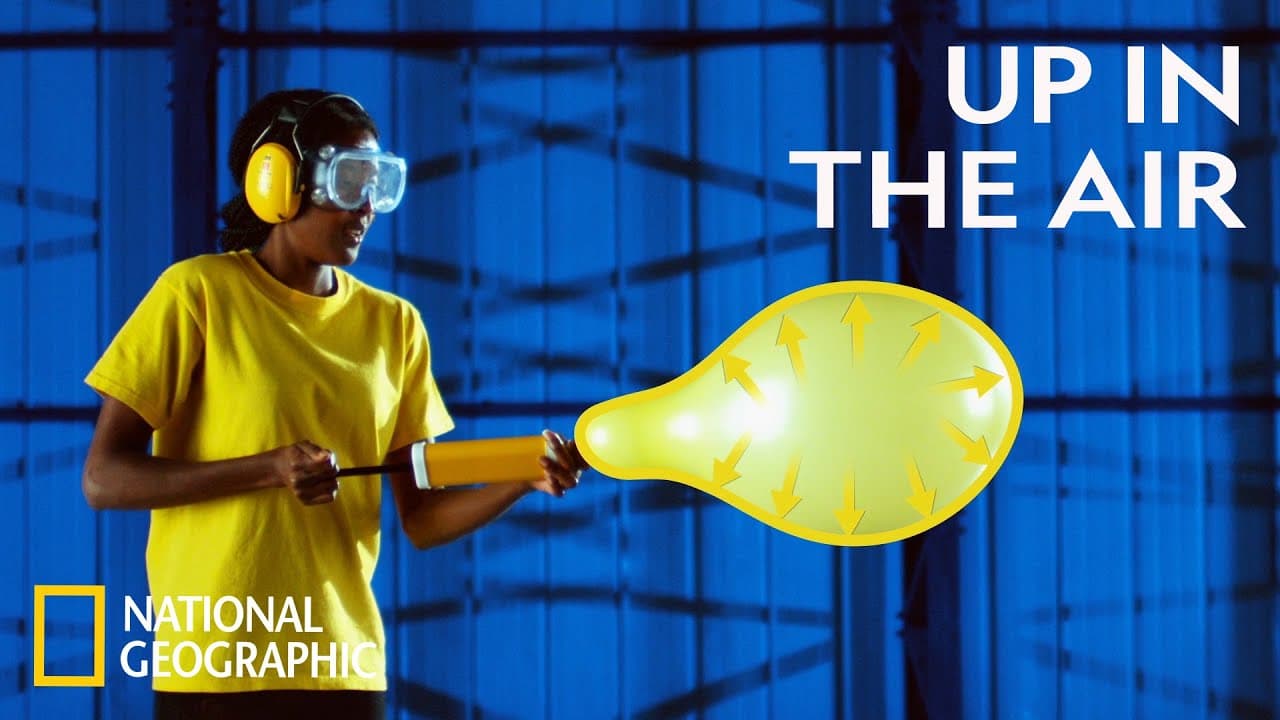
The Secret of Compressed Air | Science of Stupid: Ridiculous Fails
81.5K views
•
November 20, 2020
by
National Geographic
YouTube video player
The Secret of Compressed Air | Science of Stupid: Ridiculous Fails

TL;DR

Compressed air is used for fun experiments like rocket launches and beach trampolines, but understanding pressure differentials is key.

Transcript

Air is a remarkable substance. Not only does it allow us to breathe, which I think we can all agree is a good thing, but if you compress it and contain it, you can have loads of fun. Like defying the laws of physics. Or for wacky furniture. Whack! See? The secret to understanding and using compressed air is to realize that all it wants to do is sto... Read More

Key Insights

  • 🥺 Compressed air wants to escape from containment, leading to forces and pressure differentials in the container.
  • 👱 Understanding conservation of energy is essential in utilizing compressed air effectively.
  • 👱 Pressure changes in compressed air affect all areas of the container until pressures are equalized.

Install to Summarize YouTube Videos and Get Transcripts

Explore YouTube Video Summarizer or Get YouTube Transcript Extractor

Questions & Answers

Q: What happens when compressed air is released from a container?

When compressed air is released from a container, the high pressure inside tries to equalize with the lower pressure outside, creating a force as the air escapes. It is essential to have a container strong enough to withstand this pressure differential.

Q: How can pressure changes be related to all parts of a container?

Pressure changes in compressed air are transferred to all parts of the container due to conservation of energy. If one area of the container has compressed air, it will apply pressure to all other parts until the pressures are equal.

Q: How do experiments like rocket launches demonstrate the principles of compressed air?

Rocket launches demonstrate how pressure differentials in compressed air can create a force when released, launching the rocket due to the energy transfer caused by the compression and release of air.

Q: Why is it crucial for containers holding compressed air to have material strength?

Containers holding compressed air must have material strength to withstand pressure differentials and prevent failures due to the force exerted when the compressed air escapes. Otherwise, the container would not be able to contain the air safely.

Summary & Key Takeaways

  • Compressed air, when contained, can defy physics and be used for various experiments.

  • Understanding pressure differentials and energy conservation is crucial in using compressed air safely.

  • Examples such as rocket launches and beach trampolines showcase the fun and science behind compressed air.


Read in Other Languages (beta)

English

Share This Summary 📚

Summarize YouTube Videos and Get Video Transcripts with 1-Click

Download browser extensions on:

Try YouTube Summary with ChatGPT & Claude or YouTube Transcript Generator

Explore More Summaries from National Geographic 📚

Where Your Cat Goes May Blow Your Mind | National Geographic thumbnail
Where Your Cat Goes May Blow Your Mind | National Geographic
National Geographic
Stuffing Dead Pets | Taboo: Pets thumbnail
Stuffing Dead Pets | Taboo: Pets
National Geographic
Horseshoe Crabs Mate in Massive Beach "Orgy" | National Geographic thumbnail
Horseshoe Crabs Mate in Massive Beach "Orgy" | National Geographic
National Geographic
Mitigation and Adaptation: Human Stories of Hope | Explorers In The Field thumbnail
Mitigation and Adaptation: Human Stories of Hope | Explorers In The Field
National Geographic

Summarize YouTube Videos and Get Video Transcripts with 1-Click

Download browser extensions on:

Try YouTube Summary with ChatGPT & Claude or YouTube Transcript Generator

Apps & Extensions

  • Chrome Extension
  • Safari Extension
  • Edge Add-ons
  • Firefox Add-ons
  • iOS App
  • Android App

Key Features

  • YouTube Video Summarizer
  • Web & PDF Summarizer
  • Web & PDF Highlighter
  • Chat with PDF
  • Ask AI Clone
  • Audio Transcriber
  • Glasp Reader
  • Kindle Highlight Export
  • Idea Hatch

Integrations

  • Obsidian Plugin
  • Notion Integration
  • Pocket Integration
  • Instapaper Integration
  • Medium Integration
  • Readwise Integration
  • Snipd Integration
  • Hypothesis Integration

More Features

  • APIs
  • MCP Connector
  • Blog & Post
  • Embed Links
  • Image Highlight
  • Personality Test
  • Quote Shots

Company

  • About us
  • Blog
  • Community
  • FAQs
  • Job Board
  • Newsletter
  • Pricing
Terms

•

Privacy

•

Guidelines

© 2026 Glasp Inc. All rights reserved.