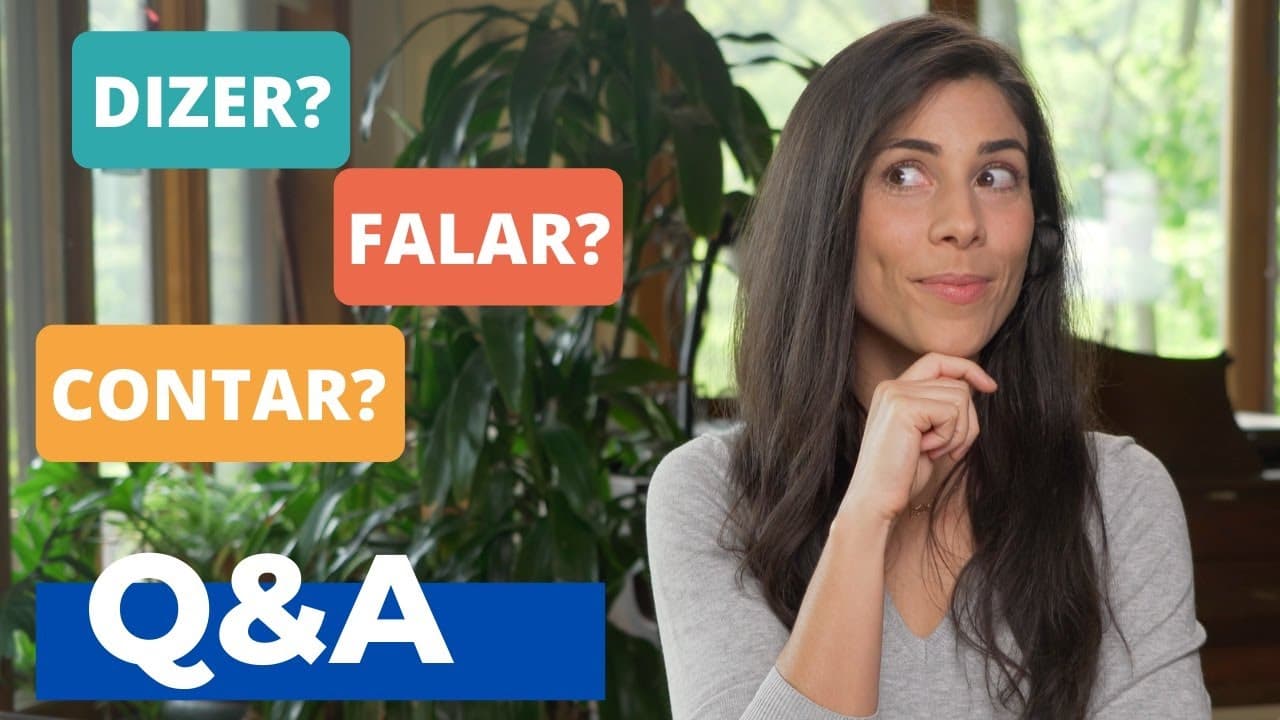
LIVE Q&A | Dizer, Falar or Contar? Cada dia or Todo dia?
TL;DR
Monthly Q&A on Brazilian Portuguese language nuances.
Transcript
hello everyone welcome to to this q a i'm very excited to be here with you today i missed you guys i haven't seen you in a while to the bone margos monika sincha james to the bone jacob joseph yeah asian to the how are you leah okay i'm very happy to be here with you today so uh if you are new to my channel i wanted to know that i teach i host this... Read More
Key Insights
- The Q&A session is a monthly event held on YouTube and Instagram, focusing on Brazilian Portuguese language learning.
- Participants are encouraged to watch previous videos and bring questions to enhance their learning experience.
- The session covers the usage of similar verbs like 'falar', 'dizer', and 'contar', explaining their interchangeable use in colloquial Portuguese.
- The difference between 'cada dia' and 'todo dia' is discussed, with 'todo dia' being more commonly used in everyday language.
- The session also touches on pronominal verbs and the significance of reflexive pronouns in Portuguese.
- The presenter highlights the importance of practicing Portuguese through listening to podcasts and reading song lyrics.
- The nuances of using 'meio' and 'meia' are explained, with attention to gender agreement and different contexts.
- Participants are encouraged to join the Speaking Brazilian YouTube Club for structured access to learning materials.
Install to Summarize YouTube Videos and Get Transcripts
Explore YouTube Video Summarizer or Get YouTube Transcript Extractor
Questions & Answers
Q: How often is the Q&A session held?
The Q&A session is held once a month, typically on the first Thursday. It is conducted on both YouTube and Instagram, providing learners with an opportunity to engage and ask questions about Brazilian Portuguese.
Q: What is the difference between 'falar', 'dizer', and 'contar'?
In Brazilian Portuguese, 'falar' means to speak or talk, 'dizer' means to say, and 'contar' means to tell. Although they can be used interchangeably in informal contexts, each verb has specific uses that learners should be aware of to use them correctly.
Q: When should 'cada dia' and 'todo dia' be used?
'Cada dia' means each day, while 'todo dia' means every day. In most contexts, 'todo dia' is more commonly used in Portuguese, especially when referring to daily routines or repeated actions. 'Cada dia' is used when emphasizing individual days.
Q: How can I improve my Portuguese songwriting skills?
To improve Portuguese songwriting, immerse yourself in Brazilian music by listening to songs and studying their lyrics. Pay attention to poetic language and metaphors used in songs. Reading and analyzing lyrics can provide insights into natural and creative expressions in Portuguese.
Q: What is the significance of pronominal verbs in Portuguese?
Pronominal verbs in Portuguese involve reflexive pronouns and can change the meaning of a verb. Understanding when to use these verbs is crucial, as they often indicate actions done to oneself. Learners should study specific cases and practice using these verbs in context.
Q: How can I access the structured learning materials from Speaking Brazilian?
You can join the Speaking Brazilian YouTube Club, which offers organized access to videos and transcripts in Portuguese and English. This resource helps learners study systematically and is available for a free one-week trial on the Speaking Brazilian website.
Q: What resources are available for learning Brazilian Portuguese?
Speaking Brazilian offers various resources, including a YouTube channel with instructional videos, a podcast available on major platforms, a blog with language tips, and a Facebook community for learners. These resources provide comprehensive support for learning Brazilian Portuguese.
Q: What is the difference between 'meio' and 'meia'?
'Meio' and 'meia' both mean half, but they must agree with the gender of the noun they modify. 'Meio' is used with masculine nouns, while 'meia' is used with feminine nouns. Understanding gender agreement is essential for using these terms correctly in Portuguese.
Summary & Key Takeaways
-
The Q&A session is a monthly event aimed at helping learners improve their Brazilian Portuguese skills by answering questions and reviewing recent video topics. Participants are encouraged to watch previous videos and bring questions to the session.
-
Key topics include the interchangeable use of verbs 'falar', 'dizer', and 'contar', the distinction between 'cada dia' and 'todo dia', and the use of pronominal verbs. The session provides practical examples and encourages participants to practice by writing sentences.
-
Additional resources such as the Speaking Brazilian YouTube Club, podcasts, and song lyrics are recommended for further learning. Participants are also invited to join the newsletter for updates on courses and events.
Read in Other Languages (beta)
Share This Summary 📚
Summarize YouTube Videos and Get Video Transcripts with 1-Click
Try YouTube Summary with ChatGPT & Claude or YouTube Transcript Generator
Explore More Summaries from Speaking Brazilian Language School 📚
Summarize YouTube Videos and Get Video Transcripts with 1-Click
Try YouTube Summary with ChatGPT & Claude or YouTube Transcript Generator