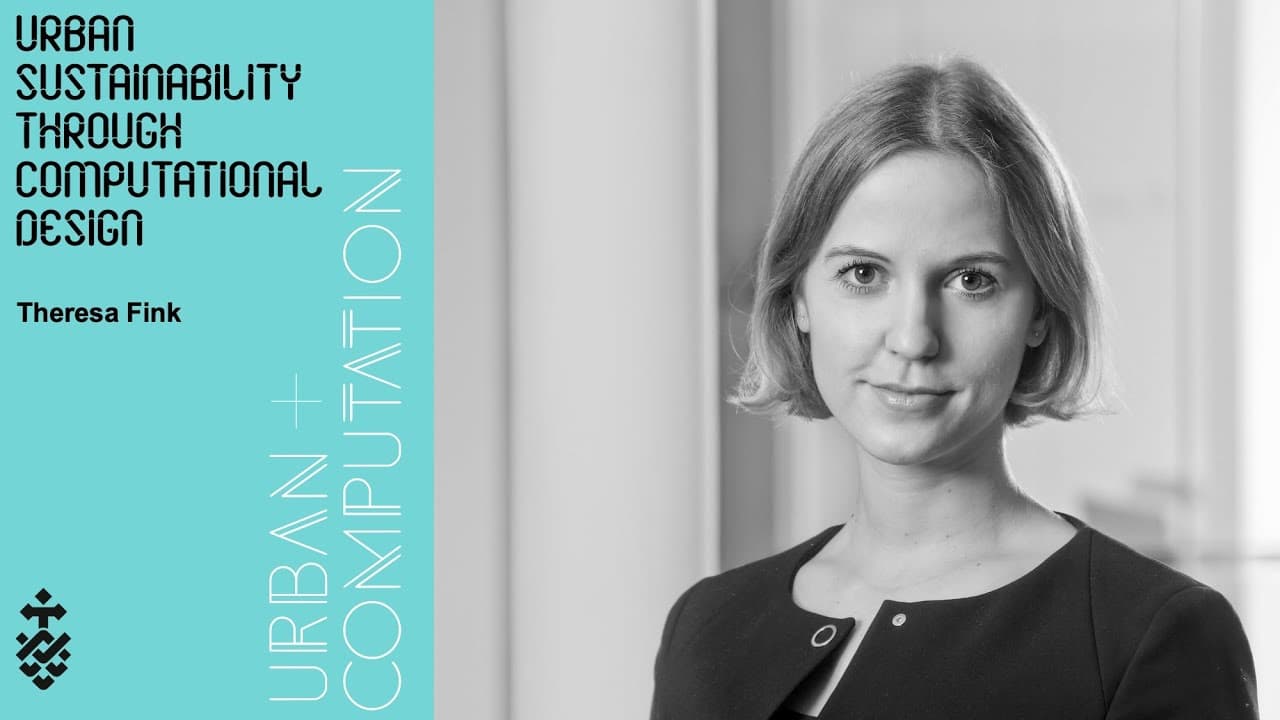
Urban Sustainability Through Computational Design
TL;DR
This lecture explores the integration of computational design and data analysis in urban development, focusing on the optimization of urban spaces for sustainability and livability.
Transcript
foreign welcome everyone um as always I'll just wait for a few minutes while the attendees list starts to populate it usually takes some time for people to filter in um and until then all right so we'll kick things off while attendees list comes in so this is our the last lecture and um I was just talking uh to Teresa about what a fantastic way to ... Read More
Key Insights
- 🎨 Computational design enables the evaluation and optimization of urban design scenarios based on performance indicators such as energy efficiency, climate resilience, and biodiversity.
- 🎨 Stakeholder engagement and citizen participation are crucial in the urban design process, facilitated through interactive tools and participatory workshops.
- 🏗️ The optimization tools and methodologies can be applied to retrofit projects to enhance the sustainability performance of existing buildings.
Install to Summarize YouTube Videos and Get Transcripts
Explore YouTube Video Summarizer or Get YouTube Transcript Extractor
Questions & Answers
Q: What is the role of computational design in urban sustainability?
Computational design allows for the efficient evaluation and optimization of design scenarios, considering factors such as energy efficiency, climate resilience, and biodiversity. It enables designers to make informed decisions and create more sustainable urban environments.
Q: How do you involve stakeholders and citizens in the urban design process?
Stakeholder engagement and citizen participation are integral to the urban design process. Tools such as interactive 3D models, augmented reality, and participatory workshops facilitate communication and collaboration, ensuring that the design reflects the needs and preferences of the community.
Q: Can the optimization tools and methodologies be applied to existing buildings?
While retrofitting existing buildings presents certain challenges, such as structural limitations, the optimized design principles and evaluation methodologies can still be beneficial. Architects and real estate developers can use these tools to assess and improve the sustainability performance of retrofit projects.
Q: How do you integrate qualitative aspects of urban space into a data-driven process?
While qualitative aspects of urban space, such as the perception of quality and aesthetics, are subjective, they can still be considered in the design process. Designers can rely on their expertise and judgment to evaluate the qualitative aspects and balance them with the quantitative data-driven insights.
Key Insights:
- Computational design enables the evaluation and optimization of urban design scenarios based on performance indicators such as energy efficiency, climate resilience, and biodiversity.
- Stakeholder engagement and citizen participation are crucial in the urban design process, facilitated through interactive tools and participatory workshops.
- The optimization tools and methodologies can be applied to retrofit projects to enhance the sustainability performance of existing buildings.
- Qualitative aspects of urban space, while subjective, can still be considered by designers using their expertise and judgment in the design process.
Summary & Key Takeaways
-
The lecture discusses the application of urban analysis and parametric planning methods in the field of urban design computation.
-
It explores the use of interactive visualization tools and simulation models to evaluate and rank different design scenarios based on performance indicators.
-
The lecture showcases case studies in urban sustainability, including the optimization of building configurations, open space design, and the integration of sustainable measures in urban development projects.
Read in Other Languages (beta)
Share This Summary 📚
Summarize YouTube Videos and Get Video Transcripts with 1-Click
Try YouTube Summary with ChatGPT & Claude or YouTube Transcript Generator